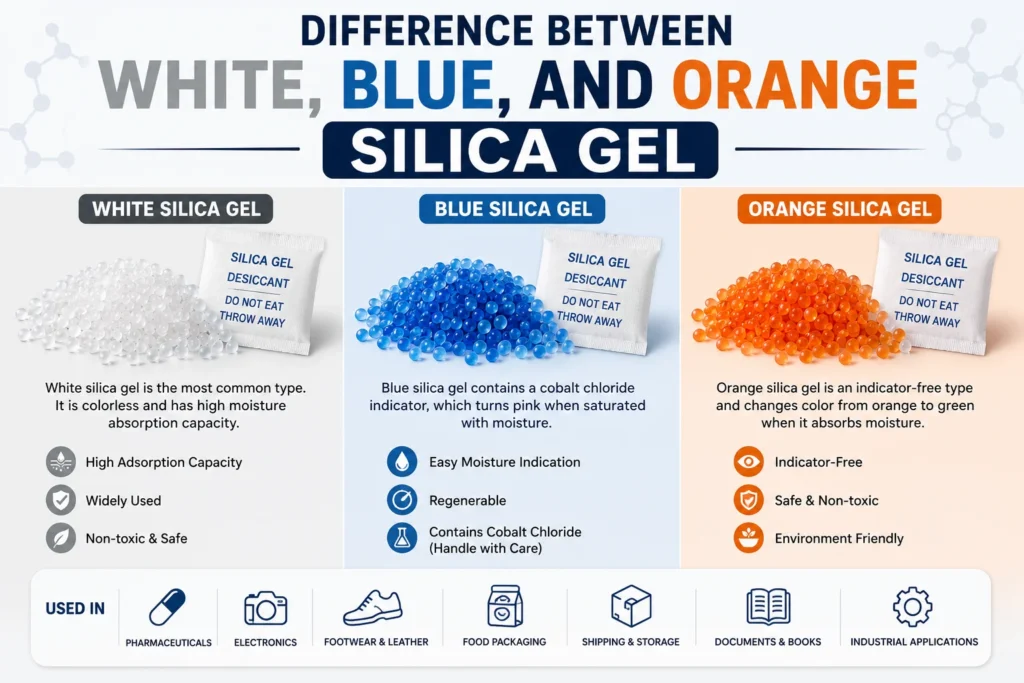
Silica gel is one of the most widely used moisture-control materials across industries such as pharmaceuticals, electronics, food packaging, logistics, and industrial storage. Commonly seen in small packets inside boxes, silica gel plays a critical role in protecting products from humidity-related damage.
However, not all silica gel is the same. Based on composition and moisture indication capability, silica gel is available in different colors—most notably white, blue, and orange silica gel. Each type serves a specific purpose and comes with its own safety, application, and regulatory considerations.
This guide explains the difference between white, blue, and orange silica gel, how each functions as a desiccant silica gel, and how to choose the right option for your moisture protection needs.
What Is Silica Gel?
Silica gel is a granular, porous form of silicon dioxide (SiO₂) engineered to adsorb moisture from the surrounding environment. Despite its name, it is not a liquid or gel-like substance but a solid material with an extremely high internal surface area.
Because of its excellent moisture adsorption capacity, silica gel is widely used as a desiccant silica gel solution to prevent condensation, corrosion, mold growth, and product degradation in enclosed spaces.
Key Properties of Silica Gel
- High moisture adsorption efficiency
- Chemically inert and odorless
- Non-corrosive and stable
- Reusable through controlled heating
- Suitable for long-term storage and transport
Silica gel is broadly categorized into non-indicating and indicating types based on whether it visually signals moisture saturation.
Types of Silica Gel Based on Color
The color of silica gel is not merely aesthetic—it reflects whether the material contains a moisture indicator and what type of indicator is used.
The three most common types are:
- White Silica Gel (Non-Indicating)
- Blue Silica Gel (Indicating with cobalt chloride)
- Orange Silica Gel (Indicating, cobalt-free)
Each type performs moisture adsorption effectively but differs in safety profile, monitoring convenience, and regulatory acceptance.
What Is White Silica Gel?
White silica gel is a non-indicating desiccant that does not change color as it absorbs moisture. It remains transparent or milky white throughout its usage cycle.
Key Characteristics of White Silica Gel
- No visual saturation indicator
- High adsorption capacity
- Non-toxic and chemically stable
- Cost-effective for bulk applications
Because it does not provide visual feedback, white silica gel is typically used in environments where moisture exposure is predictable or monitored through external humidity indicators.
Common Applications
- Pharmaceutical packaging
- Food and nutraceutical storage
- Electronics protection
- Leather goods and textiles
- Shipping containers and warehouses
White silica gel is often chosen in regulated industries where chemical indicators are unnecessary or restricted.
What Is Blue Silica Gel?
Blue silica gel is an indicating silica gel that contains cobalt chloride, a chemical compound used as a moisture indicator.
When dry, the beads appear deep blue. As moisture is absorbed, the color changes from blue to pink, signaling saturation.
Key Characteristics
- Clear visual moisture indication
- Reusable through regeneration
- High adsorption efficiency
Typical Applications
- Industrial control panels
- Electrical cabinets
- Optical instruments
- Laboratory desiccators
Safety and Regulatory Concerns
Cobalt chloride is classified as toxic and potentially carcinogenic in many regions. Due to these concerns:
- Blue silica gel is restricted in food and pharmaceutical environments
- Many industries are actively replacing it with safer alternatives
What Is Orange Silica Gel?
Orange silica gel is a modern indicating desiccant developed to replace cobalt-based blue silica gel. It uses organic, non-toxic indicators instead of heavy metals.
As it absorbs moisture, the color transitions from silica gel orange to green or becomes nearly colorless, clearly indicating saturation.
Key Characteristics
- Non-toxic and environmentally safer
- Visual moisture indication
- Comparable adsorption capacity to blue silica gel
- Fully compliant with modern safety regulations
Because it does not contain cobalt chloride, orange silica gel is widely recognized as cobalt-free silica gel, making it suitable for sensitive and regulated applications.
Common Applications
- Electronics and semiconductor packaging
- Pharmaceutical and medical devices
- Food packaging
- Export and international shipping
- Museums, archives, and libraries
White vs Blue vs Orange Silica Gel: Comparison Table
| Feature | White Silica Gel | Blue Silica Gel | Orange Silica Gel |
|---|---|---|---|
| Moisture Indicator | ❌ No | ✅ Yes | ✅ Yes |
| Color Change | None | Blue → Pink | Orange → Green / Clear |
| Toxicity | Non-toxic | Contains cobalt chloride | Non-toxic |
| Food & Pharma Safe | ✅ Yes | ❌ No | ✅ Yes |
| Regulatory Compliance | High | Low | High |
| Reusable | ✅ Yes | ✅ Yes | ✅ Yes |
How to Choose the Right Silica Gel
Selecting the right silica gel depends on your application environment, safety requirements, and monitoring needs.
Choose White Silica Gel If:
- Visual moisture indication is not required
- Cost efficiency is a priority
- Used in food, pharma, or consumer goods
- Replacement follows a fixed schedule
Choose Blue Silica Gel If:
- Used in controlled industrial environments
- Visual indication is critical
- Regulatory restrictions allow cobalt-based indicators
Choose Orange Silica Gel If:
- Safety and compliance are essential
- Visual monitoring is required
- Used in exports, electronics, or pharmaceuticals
- A long-term, regulation-friendly solution is needed
Regeneration and Reusability
All types of silica gel can be regenerated and reused when properly handled.
Regeneration Guidelines
- Heat at 110°C–120°C for 2–3 hours
- Allow to cool in an airtight container
- Avoid overheating, which may damage indicators
Both white and orange silica gel typically retain performance over multiple regeneration cycles, making them cost-effective long-term solutions.
Safety and Environmental Considerations
- Do not ingest silica gel
- Avoid exposure to damaged indicating beads
- Store unused desiccants in sealed containers
- Follow disposal guidelines, especially for cobalt-containing products
Due to growing environmental and health regulations, cobalt-free silica gel is increasingly becoming the industry standard across global markets.
You might be interested in: Desiccant Bags: The Ultimate Solution for Moisture Control
Final Thoughts
Understanding the difference between white, blue, and orange silica gel allows businesses to make informed decisions about moisture protection, safety, and compliance.
- White silica gel offers reliable, non-toxic moisture adsorption without visual indication.
- Blue silica gel provides clear color change but poses safety and regulatory challenges.
- Orange silica gel combines performance, visibility, and safety, making it the preferred choice for modern applications.
By selecting the right desiccant silica gel, you ensure product integrity, regulatory compliance, and long-term moisture control efficiency.
Frequently Asked Questions
Q1. What is the difference between white, blue, and orange silica gel?
White silica gel is non-indicating and does not change color when saturated. Blue silica gel changes from blue to pink but contains cobalt chloride, which raises safety concerns. Orange silica gel is a safer, cobalt-free alternative that changes color as it absorbs moisture, making it suitable for regulated applications.
Q2. Is orange silica gel safer than blue silica gel?
Yes, orange silica gel is considered safer because it does not contain cobalt chloride. It is a cobalt-free silica gel that complies with modern safety and environmental regulations, making it suitable for food, pharmaceutical, and electronics packaging.
Q3. What does the color change in orange silica gel indicate?
The color change in orange silica gel indicates moisture absorption. As it becomes saturated, the beads typically change from silica gel orange to green or nearly colorless, signaling that regeneration or replacement is needed.
Q4. Which silica gel is best for food and pharmaceutical packaging?
White silica gel and orange silica gel are best suited for food and pharmaceutical packaging. Blue silica gel is generally avoided in these applications due to the presence of cobalt chloride and related health concerns.
Q5. Can silica gel be reused after it absorbs moisture?
Yes, most desiccant silica gel types can be regenerated and reused by heating them at controlled temperatures. Proper regeneration restores moisture adsorption capacity, provided the silica gel is not contaminated or damaged.
