
Moisture is one of the most common — and most avoidable — causes of cargo damage in international shipping. Choosing the right container desiccant can mean the difference between goods arriving in perfect condition and a container full of mold, rust, or water-stained packaging. But with several desiccant types, formats, and sizing considerations to weigh, […]
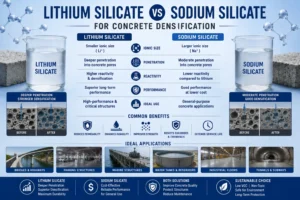
When it comes to hardening and densifying concrete floors, two chemistries dominate the market: lithium silicate and sodium silicate. Both react with free lime inside cured concrete to build a denser, harder surface — but they don’t behave the same way, and choosing the wrong one can mean extra labor, slower turnaround, or a finish […]
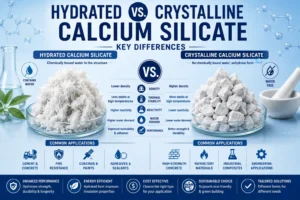
Calcium silicate is not a single compound but a family of related materials built from calcium, silicon, and oxygen. Depending on how it’s formed, calcium silicate can end up as an amorphous, hydrated powder or as an ordered, crystalline structure — and that structural difference changes almost everything about how the material performs, from surface […]
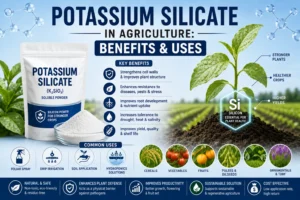
Potassium silicate is used in agriculture as a source of two nutrients at once: potassium, which plants need in large amounts, and soluble silicon, which most soils supply poorly. Applied as a foliar spray or through fertigation, it strengthens cell walls, hardens leaf surfaces against pests and fungal attack, and helps crops hold up under […]
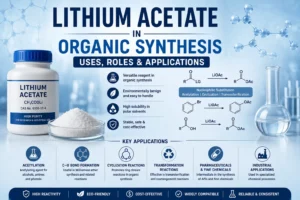
Lithium acetate (LiOAc) is a lithium salt of acetic acid that has applications across chemical synthesis, laboratory research, and industrial chemistry. In organic synthesis, lithium acetate can function as a catalyst, promoter, or reagent depending on the reaction system and desired transformation. Its relatively mild basic character and compatibility with different reaction conditions make it […]
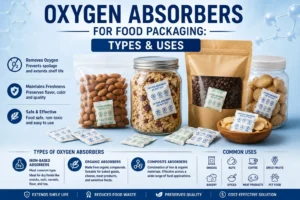
Oxygen absorbers are active packaging sachets that chemically remove residual oxygen trapped inside a sealed package. Removing that oxygen — rather than just slowing it down — is what protects packaged food from oxidation, spoilage, discoloration, and flavor loss over its shelf life. By pulling the internal oxygen level down from roughly 21% (normal air) […]
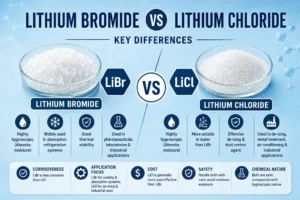
Lithium bromide and lithium chloride sit next to each other on the shelf, share the same lithium cation, and are both prized for one property: an extraordinary appetite for water. That similarity is exactly why they get confused — and why substituting one for the other can quietly wreck a system’s performance. The short version: […]
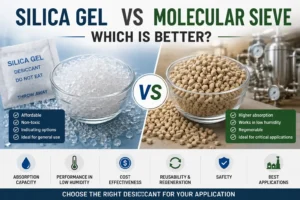
When it comes to controlling moisture — in packaging, industrial gas streams, insulated glass units, or storage tanks — two desiccants dominate the market: silica gel and molecular sieve. They’re often used interchangeably in casual conversation, but they’re chemically different materials with distinct adsorption behavior, and choosing the wrong one can mean under-performing moisture control […]
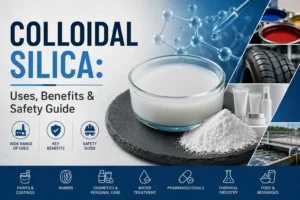
Colloidal silica is a suspension of nanoscale silicon dioxide (SiO₂) particles dispersed in a liquid, usually water. Unlike bulk silica, these particles stay suspended rather than settling out, which gives colloidal silica its defining properties: high surface area, strong binding ability, and controllable particle size. Bee Chems has manufactured colloidal silica in India since 1972, […]
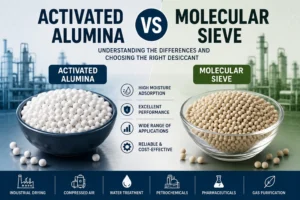
Industrial operations depend on clean, dry air and gas streams to maintain efficiency, protect equipment, and ensure product quality. Excess moisture can lead to corrosion, catalyst poisoning, product spoilage, freezing in pipelines, and expensive maintenance. This is why desiccants play such a critical role in industries ranging from petrochemicals and pharmaceuticals to electronics, compressed air […]
