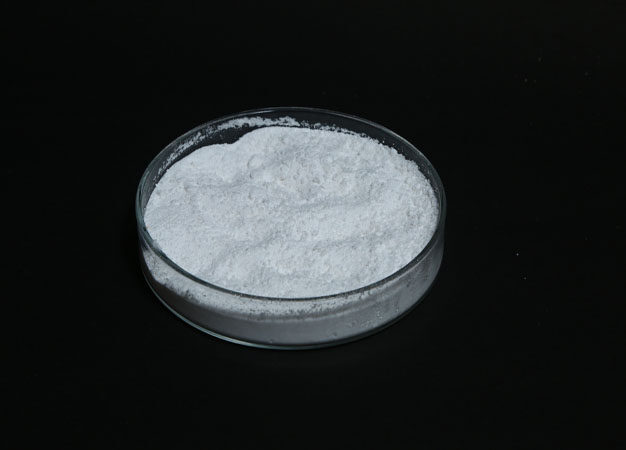
Bee Chems manufactures lithium hydroxide in the anhydrous, ultra-dry form for pharmaceutical, thermal and battery-electrolyte applications. Produced under an inert atmosphere by controlled calcination at a minimum 98% LiOH content, it is supplied in moisture-tight packing that protects the material from the atmospheric moisture and carbon dioxide it rapidly absorbs.
Lithium hydroxide is one of the more demanding alkali chemicals to manufacture and store well. Its value in a process usually depends less on headline assay than on what has not got into it — carbonate picked up from the air, or moisture absorbed between packing and use. Both are controlled at source in our plant rather than corrected later.
As a lithium hydroxide manufacturer based in Kanpur, Uttar Pradesh, we supply industrial quantities against COA, with packing and documentation configured for your process. Lithium hydroxide sits within our widerlithium salts and solutions range.
What Is Lithium Hydroxide?
Lithium hydroxide is an inorganic base — the hydroxide of lithium, and the first member of the alkali-metal hydroxide series. It is supplied as a white crystalline solid that dissolves in water to give a strongly alkaline solution, and is mildly soluble in ethanol.
Two properties define how it behaves in practice, and both follow from the small size of the lithium ion:
It is the least soluble and least basic of the alkali hydroxides. Where sodium and potassium hydroxide dissolve almost without limit, lithium hydroxide reaches roughly 12.8 g per 100 mL at 20 °C. This makes it the correct choice where a lithium ion is required but an aggressively caustic solution is not.
It is strongly hygroscopic and reacts with carbon dioxide. Left open to the air, lithium hydroxide takes up water vapour and then reacts with atmospheric CO2 to form lithium carbonate. This is not a defect — it is the basis of one of the compound’s most important applications — but it governs how the material must be packed, stored and handled.
Bee Chems supplies the anhydrous (ultra dry) grade, in which water of crystallisation has been driven off by controlled calcination under an inert atmosphere. This is the grade specified where any water content would interfere with the process.
Lithium Hydroxide Formula and Chemical Properties
The lithium hydroxide formula is LiOH. One lithium atom, one oxygen, one hydrogen, giving a molecular weight of 23.95 g/mol — the lowest of any alkali hydroxide, and the reason lithium hydroxide delivers more chemistry per kilogram than its sodium or potassium equivalents.
Property
Lithium Hydroxide Anhydrous (LiOH)
Chemical formula
LiOH
Molecular weight
23.95 g/mol
CAS number
1310-65-2
EC number
215-183-4
Appearance
White crystalline solid
Assay
min. 98% LiOH
Solubility in water (20 °C)
~12.8 g/100 mL
Solubility in ethanol
Slight
Melting point
462 °C
Decomposition
To lithium oxide (Li2O) above ~900 °C
Density
~1.46 g/cm3
pH (1% solution)
Strongly alkaline, ~11
Hygroscopicity
Rapidly absorbs moisture and carbon dioxide
UN number
UN2680
Hazard class
8 (corrosive)
The Lithium Hydroxide and CO2 Reaction
Lithium hydroxide absorbs carbon dioxide according to:
2 LiOH + CO2 → Li2CO3 + H2O
On a stoichiometric basis, 47.9 g of lithium hydroxide takes up 44 g of carbon dioxide — roughly 0.92 kg of CO2 per kg of LiOH, the highest mass efficiency of any common chemical absorbent. That single figure explains both the storage discipline this product demands and its use in confined-atmosphere life support.
Lithium Hydroxide vs Sodium Hydroxide and Potassium Hydroxide
Lithium hydroxide
Sodium hydroxide
Potassium hydroxide
Formula
LiOH
NaOH
KOH
Molecular weight
23.95
40.00
56.11
CAS number
1310-65-2
1310-73-2
1310-58-3
Solubility in water (20 °C)
~12.8 g/100 mL
~111 g/100 mL
~121 g/100 mL
Relative basicity
Weakest
Intermediate
Stronger
CO2 capacity per kg
Highest
Lower
Lower
Where the process needs the lithium ion specifically — or the highest CO2 uptake per kilogram carried — lithium hydroxide is not interchangeable with the cheaper alkalis. If you are comparing lithium salts rather than alkali hydroxides, seelithium bromide vs lithium chloride.
How Bee Chems Produces Ultra Dry Lithium Hydroxide
The anhydrous grade is made by controlled calcination under an inert atmosphere. Two elements of that matter to a buyer:
Controlled calcination. Water of crystallisation is driven off within a managed temperature profile. Overheating drives decomposition toward lithium oxide and depresses assay; underheating leaves residual moisture in a product sold specifically for being dry.
Inert atmosphere. Calcining in air would expose freshly dried, highly reactive material to atmospheric CO2 at exactly the moment it is most able to absorb it, converting surface material to lithium carbonate. Excluding air during production is what keeps carbonate low in the finished product.
Because the material is produced in our own plant rather than imported and repacked, assay and carbonate content are controlled at source — not inherited from someone else’s process and discovered on arrival.
If you are working to a defined internal specification, send it to us and we will confirm our material against it line by line.
Lithium Hydroxide Uses and Applications
Storage-Battery Electrolyte
Lithium hydroxide is used as an electrolyte additive in alkaline storage batteries. Added to potassium hydroxide electrolyte in nickel-iron and nickel-cadmium cells, it improves capacity retention and extends cycle life by moderating degradation at the positive electrode. The quantities are small relative to the electrolyte volume, which places the emphasis firmly on purity — trace metals introduced with the additive can undo the benefit.
Heat Transfer Medium
Lithium hydroxide’s thermal characteristics make it suitable as a heat transfer medium in specialised thermal systems, including thermal-storage applications where the material’s heat capacity and stable behaviour over a wide temperature range are the deciding factors.
Pharmaceutical Intermediates
Lithium hydroxide is used in the manufacture of lithium salts for drug formulations, notably those used in the treatment of bipolar disorder. Pharmaceutical synthesis routes are unforgiving of alkali-metal and heavy-metal contamination, so material destined for this use is qualified on its impurity profile rather than assay alone. It is also used more broadly in organic synthesis as a selective base, particularly in ester hydrolysis, where its comparatively mild basicity is an advantage over sodium or potassium hydroxide. For a related lithium salt used in the same field, seelithium acetate in organic synthesis.
Carbon Dioxide Absorption
Following 2 LiOH + CO2 → Li2CO3 + H2O, lithium hydroxide absorbs carbon dioxide at approximately 0.92 kg per kg — a mass efficiency no other common absorbent matches. Where the binding constraint is weight rather than cost, this makes LiOH the scrubbing medium of choice for confined atmospheres.
The same chemistry is why this product must be kept sealed. Material left open does not simply get damp; it converts progressively and irreversibly to lithium carbonate, and assay falls accordingly.
Packing: 10 kg and 25 kg heat-sealed poly/foil bags in UN drums.
The poly/foil construction is not incidental. A foil laminate provides a genuine moisture and gas barrier where plain polythene does not, and heat-sealing removes the closure as a leak path. The UN drum then provides the mechanical and regulatory protection required for a Class 8 corrosive in transit.
Storage Conditions
Keep containers tightly closed at all times
Store cool, dry and well ventilated
Keep away from acids, moisture and CO2-rich atmospheres
Do not store alongside incompatible chemicals
Reseal immediately after part-use — exposed material converts progressively to lithium carbonate, lowering assay
Where possible, decant under dry conditions and return the balance to sealed packing at once
Safety and Handling
Lithium hydroxide is corrosive and causes severe skin burns and eye damage. Dust is irritating to the respiratory tract.
Chemical-resistant gloves, goggles or face shield, and protective clothing
Adequate ventilation; respiratory protection where dust is generated
Eyewash and safety shower accessible at the point of use
On skin or eye contact, flush with water for at least 15 minutes and seek medical attention
Collect spills dry where possible; do not raise dust; do not flush to drain
A full MSDS/SDS is supplied with every consignment and is available on request.
Why Buy Lithium Hydroxide From Bee Chems
Manufacturer, not a trader — produced in our own plant at Kanpur, Uttar Pradesh, so assay and carbonate are controlled at source
Minimum 98% LiOH, supplied against batch COA
Inert-atmosphere production with controlled calcination, keeping carbonate low in the finished product
Moisture-tight heat-sealed poly/foil in UN drums, suitable for export
Full lithium salts range from a single supplier, on one set of commercial terms
Technical support on specification matching and grade selection
Ans: The lithium hydroxide formula is LiOH — one lithium, one oxygen, one hydrogen. Its molecular weight is 23.95 g/mol and its CAS number is 1310-65-2.
Q2. Is lithium hydroxide soluble in water?
Ans: Yes. Lithium hydroxide dissolves in water at approximately 12.8 g per 100 mL at 20 °C, forming a strongly alkaline solution. It is the least soluble of the alkali-metal hydroxides, but it is not insoluble.
Q3. Is lithium hydroxide an acid or a base?
Ans: Lithium hydroxide is a base — a strong base in the conventional sense, though the weakest of the alkali-metal hydroxides. A 1% solution has a pH of around 11.
Q4. What is ultra dry lithium hydroxide?
Ans: Ultra dry, or anhydrous, lithium hydroxide has had its water of crystallisation removed by controlled calcination under an inert atmosphere. Bee Chems produces it at a minimum 98% LiOH content for applications where water content cannot be tolerated.
Q5. What is lithium hydroxide used for?
Ans: It is used as a storage-battery electrolyte additive, as a heat transfer medium, and in the manufacture of lithium salts for pharmaceutical formulations. It also absorbs carbon dioxide at high capacity, forming lithium carbonate.
Q6. How much CO2 does lithium hydroxide absorb?
Ans: Stoichiometrically, about 0.92 kg of carbon dioxide per kg of lithium hydroxide, following 2 LiOH + CO2 → Li2CO3 + H2O. That is the highest mass efficiency of any common chemical CO2 absorbent.
Q7. Why must lithium hydroxide be stored sealed?
Ans: Because it is hygroscopic and reacts with atmospheric carbon dioxide. Exposed material converts progressively to lithium carbonate, which reduces assay. Bee Chems supplies it in heat-sealed poly/foil bags inside UN drums for this reason.
Q8. What is the difference between lithium hydroxide and sodium hydroxide?
Ans: Lithium hydroxide has a much lower molecular weight (23.95 vs 40.00 g/mol), is far less soluble in water, and is a weaker base. It is chosen where the lithium ion itself is required, where milder basicity is an advantage, or where CO2 capacity per kilogram matters.
Q9. Is lithium hydroxide hazardous?
Ans: Yes. It is classed as corrosive (UN2680, Class 8) and causes severe skin burns and eye damage. Handle with chemical-resistant gloves and eye protection, and consult the SDS supplied with every consignment.
Q10. What is the CAS number for lithium hydroxide?
Ans: 1310-65-2.
Give us an Opportunity, Give us the Challenges...Give the Targets to Achieve...