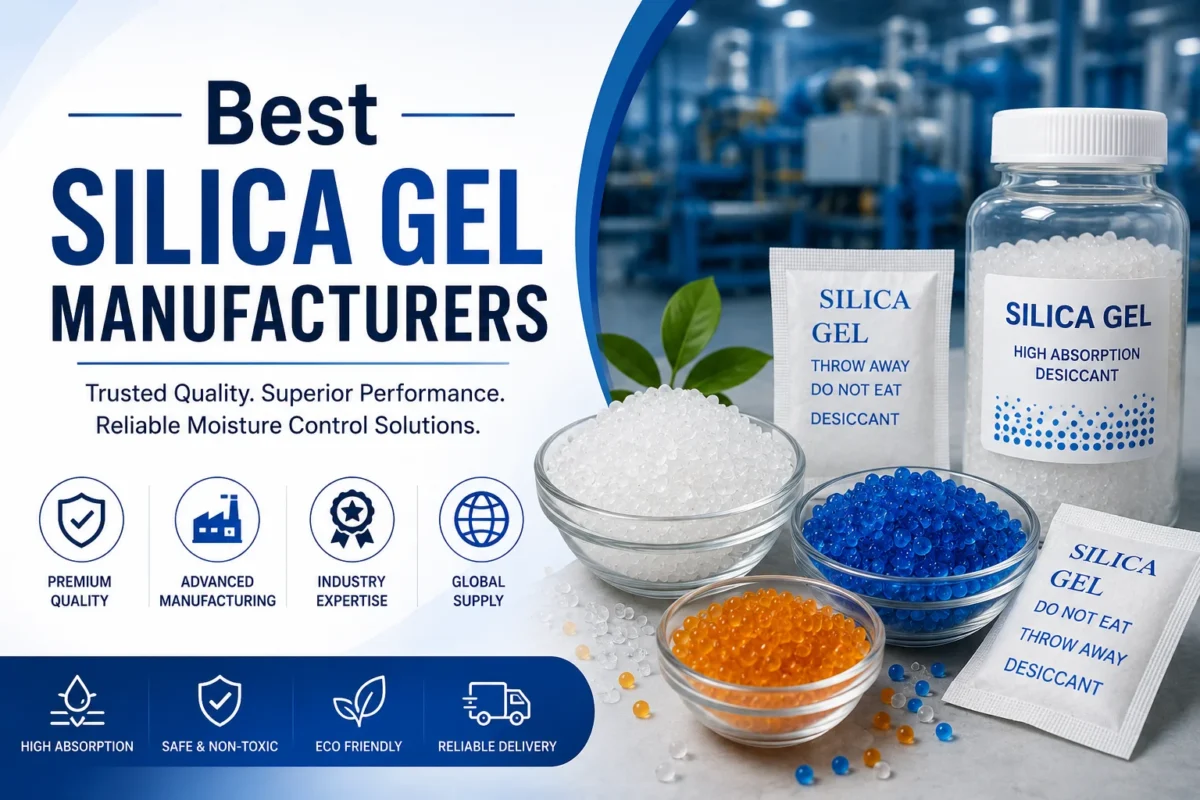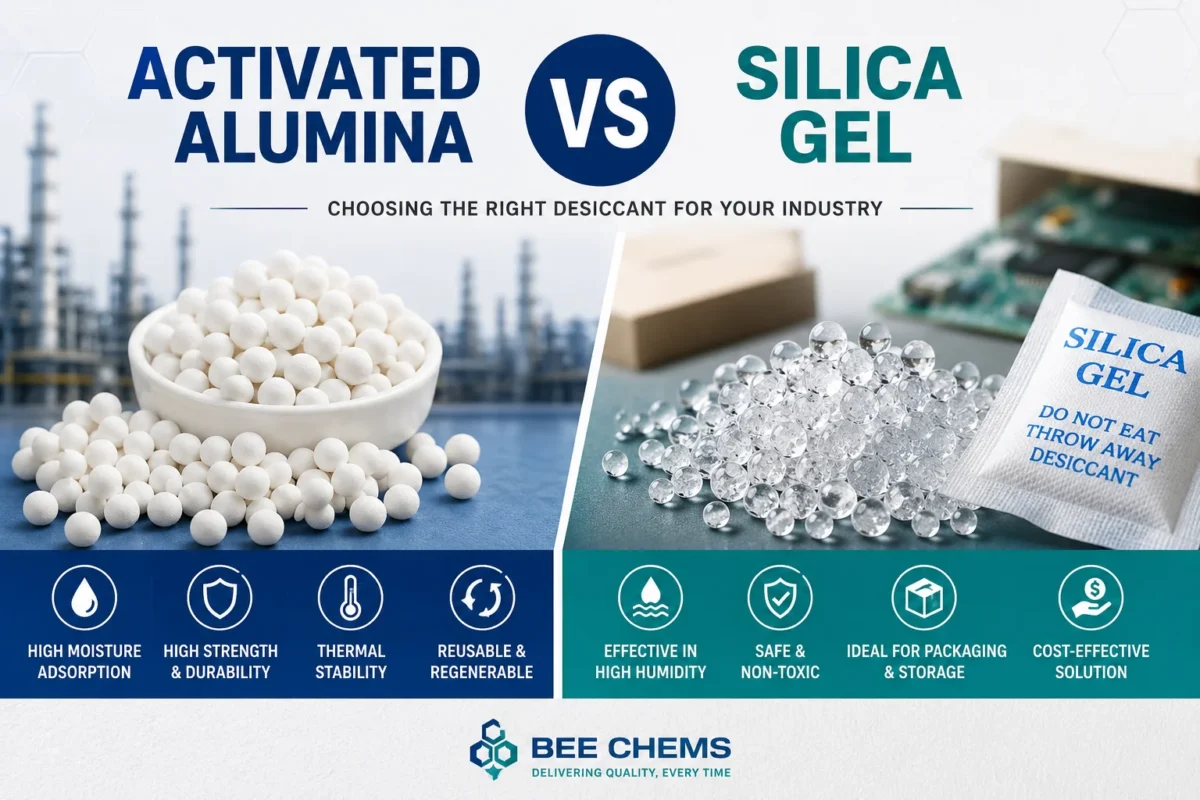
Moisture is one of the most common causes of product degradation, equipment corrosion, and process inefficiencies across industries. Whether it is pharmaceuticals, food processing, electronics, petrochemicals, or compressed air systems, uncontrolled humidity can lead to higher operational costs, reduced product quality, and shorter equipment life.
To overcome these challenges, industries rely on desiccants—materials specifically designed to adsorb moisture from air and gases. Among the many desiccants available today, activated alumina and silica gel are two of the most widely used due to their excellent moisture adsorption capabilities and versatility.
Although both materials perform the same fundamental function, they are engineered differently and deliver the best results under different operating conditions. Factors such as humidity levels, temperature, airflow, regeneration requirements, and application environment all influence which desiccant is the better choice.
This guide explains the key differences between activated alumina and silica gel, how each material works, and which one is best suited for your industrial application.
Why Selecting the Right Desiccant Matters
Choosing a desiccant is not simply about removing moisture—it is about ensuring process reliability, product quality, and long-term operational efficiency.
An unsuitable desiccant can result in:
- Reduced drying efficiency
- Increased maintenance costs
- Frequent desiccant replacement
- Equipment corrosion
- Product spoilage
- Higher energy consumption
- Production downtime
On the other hand, selecting the right moisture adsorbent can significantly improve process stability, extend equipment life, and reduce operating costs.
For industries where even small amounts of moisture can affect performance, investing in the appropriate desiccant is an essential part of maintaining consistent operations.
Understanding Industrial Desiccants
Desiccants are highly porous materials capable of attracting and retaining water molecules from surrounding air or gases through a process known as adsorption.
Unlike absorption, where moisture penetrates into the material itself, adsorption occurs on the surface of millions of microscopic pores. This large internal surface area enables desiccants to capture significant amounts of moisture without changing their physical shape.
Industrial desiccants are commonly used in:
- Compressed air drying systems
- Natural gas processing
- Pharmaceutical manufacturing
- Chemical production
- Food packaging
- Electronics storage
- Shipping and logistics
- Water treatment
- Laboratory equipment
- Industrial automation
The efficiency of a desiccant depends on factors such as pore size, surface area, mechanical strength, operating temperature, and humidity conditions.
What is Activated Alumina?
Activated Alumina is a highly porous form of aluminum oxide (Al₂O₃) produced by carefully dehydrating aluminum hydroxide under controlled conditions. This process creates a network of microscopic pores that provide an exceptionally large surface area for moisture adsorption.
Unlike many conventional drying materials, activated alumina combines high adsorption efficiency with excellent mechanical strength, making it suitable for demanding industrial environments where continuous operation is required.
Its spherical beads are designed to withstand repeated regeneration cycles while maintaining structural integrity, allowing industries to reuse the material over extended periods.
Key Characteristics of Activated Alumina
- High moisture adsorption efficiency
- Excellent crush strength
- Low dust generation
- High resistance to abrasion
- Stable performance at elevated temperatures
- Long operational lifespan
- Suitable for regeneration and repeated use
- Chemically stable in many industrial environments
These properties make activated alumina a preferred choice for applications requiring reliable moisture removal under challenging operating conditions.
How Activated Alumina Works
Activated alumina contains an interconnected network of microscopic pores. As humid air or gas passes through a bed of activated alumina, water molecules are attracted to the surface of these pores and become trapped through adsorption.
This process continues until the material reaches its adsorption capacity. Once saturated, the desiccant can often be regenerated by applying heat, which releases the retained moisture and restores its drying capability.
Its ability to withstand multiple regeneration cycles makes activated alumina an economical option for continuous industrial processes.
Common Applications of Activated Alumina
Because of its durability and adsorption performance, activated alumina is used across a wide range of industries, including:
Compressed Air Drying
Activated Alumina is widely used in heatless, heated, and blower purge air dryers to achieve low dew points and protect pneumatic systems from moisture-related damage.
Petrochemical and Oil & Gas Industries
Moisture can interfere with gas processing, refining, and pipeline operations. Activated Alumina helps remove water vapor before gases enter downstream equipment, improving process reliability.
Water Treatment
Specialized grades of activated alumina are used in water purification systems to reduce contaminants such as fluoride and arsenic while improving overall water quality.
Chemical Processing
Many chemical manufacturing processes require dry feed gases and controlled humidity. Activated Alumina provides consistent moisture control that helps maintain process efficiency.
Catalyst Support
Thanks to its high surface area and thermal stability, activated alumina also serves as an effective support material for various industrial catalysts.
What is Silica Gel?
Silica gel is a synthetic, porous form of silicon dioxide (SiO₂) known for its exceptional ability to adsorb water vapor. Despite its name, Silica Gel is a hard, granular material rather than a liquid or gel.
Its highly porous structure contains millions of microscopic cavities that efficiently capture moisture from surrounding air. Because of this, Silica Gel is one of the most commonly used desiccants for protecting products during storage, transportation, and packaging.
Silica Gel is available in several forms, including:
- White silica gel
- Blue indicating silica gel
- Orange indicating silica gel
- Fine granules
- Beads
- Sachets and packets
Each type is designed to meet specific moisture control requirements.
Key Characteristics of Silica Gel
Silica gel is valued for several reasons:
- High moisture adsorption capacity
- Chemically inert
- Non-toxic (food-grade variants available)
- Lightweight
- Easy to handle
- Available in indicating and non-indicating grades
- Reusable after regeneration
- Suitable for enclosed storage environments
These qualities make silica gel one of the most widely used desiccants across commercial and industrial applications.
How Silica Gel Removes Moisture
Like activated alumina, silica gel removes moisture through adsorption rather than absorption.
Its extensive network of microscopic pores provides an enormous internal surface area where water molecules adhere. As humidity increases, Silica Gel continues to adsorb moisture until it reaches equilibrium with the surrounding environment.
Once saturated, the material can be regenerated through controlled heating, allowing it to be reused in many applications.
Common Applications of Silica Gel
Silica gel is widely used wherever products require protection against humidity during storage or transport.
Pharmaceutical Packaging
Medicines and healthcare products are highly sensitive to moisture. Silica gel sachets help maintain product stability throughout their shelf life.
Electronics
Moisture can damage electronic components by causing corrosion and reducing performance. Silica gel is commonly included in packaging for electronic devices and spare parts.
Food Packaging
Many packaged foods require moisture control to maintain freshness, texture, and shelf life. Silica gel helps reduce humidity inside sealed packaging.
Leather and Textile Storage
Silica gel protects leather goods, footwear, garments, and fabrics from mildew and moisture damage during storage and transportation.
Shipping and Warehousing
Container shipments often experience condensation due to changing temperatures. Silica gel helps reduce excess moisture and protects goods while in transit.
Activated Alumina or Silica Gel: Is One Better Than the Other?
Rather than asking which desiccant is “better,” the more important question is:
Which desiccant is better for your operating conditions?
Both materials are highly effective, but they are designed for different environments and performance requirements.
Activated Alumina is often preferred for demanding industrial systems that require continuous operation, high mechanical strength, and reliable performance under varying temperatures.
Silica gel, on the other hand, excels in packaging, storage, transportation, and enclosed environments where humidity control is the primary objective.
Understanding these differences is the key to selecting the right desiccant—and that’s exactly what we’ll explore in the next section.
Activated Alumina vs. Silica Gel: A Detailed Comparison
Now that we’ve explored the fundamentals of both desiccants, it’s time to compare their performance across the factors that matter most in industrial applications.
Although activated alumina and silica gel are both designed to adsorb moisture, they differ significantly in terms of adsorption behavior, durability, regeneration, operating conditions, and overall suitability for specific industries.
The following comparison will help engineers, procurement teams, and plant managers choose the most appropriate desiccant based on real operational requirements.
1. Moisture Adsorption Performance
The primary purpose of any desiccant is to remove moisture effectively. However, adsorption performance varies depending on environmental conditions, particularly relative humidity and temperature.
Activated Alumina
Activated Alumina is highly effective in applications where air or gases must be dried to very low moisture levels. It continues to perform reliably even when moisture concentrations are already low, making it suitable for industrial drying systems that require low dew points.
Its controlled pore structure enables gradual and consistent moisture adsorption over extended operating cycles, which is particularly valuable in continuous-process industries.
Best suited for:
- Compressed air dryers
- Gas dehydration
- Process air drying
- Industrial gas purification
- Chemical processing plants
Silica Gel
Silica gel adsorbs moisture rapidly, especially when relative humidity is moderate to high. This makes it an excellent option for protecting products during storage, packaging, and transportation where humidity fluctuates throughout the day.
Its high adsorption capacity allows it to absorb a significant amount of moisture relative to its own weight before regeneration becomes necessary.
Best suited for:
- Packaging
- Shipping containers
- Storage cabinets
- Electronics protection
- Pharmaceutical packaging
2. Relative Humidity Performance
Humidity conditions have a direct impact on desiccant efficiency.
Activated Alumina
Activated Alumina delivers stable performance across a wide range of humidity conditions and is particularly effective when maintaining very dry operating environments.
Industries that require precise moisture control often choose activated alumina because it maintains consistent drying performance over longer operating periods.
Silica Gel
Silica gel performs exceptionally well as humidity levels increase. In enclosed spaces where moisture gradually accumulates, it quickly adsorbs water vapor and helps maintain product quality.
For applications such as warehouse storage, export packaging, and sealed containers, silica gel often provides an efficient moisture-control solution.
3. Surface Area and Pore Structure
The adsorption capability of a desiccant depends largely on its internal pore network.
Activated Alumina
Activated alumina consists of interconnected pores that provide a large surface area while maintaining excellent structural strength. Its pore distribution is optimized for industrial gas and air drying applications.
Benefits include:
- Consistent adsorption
- Low pressure drop in drying systems
- High mechanical stability
- Reliable long-term performance
Silica Gel
Silica gel possesses an extensive network of microscopic pores with an exceptionally high internal surface area. This enables rapid adsorption of water vapor under favorable humidity conditions.
Its pore structure makes it especially effective for static moisture control inside sealed packages and storage environments.
4. Mechanical Strength and Durability
Industrial drying systems subject desiccants to continuous airflow, pressure changes, vibration, and repeated regeneration cycles.
Activated Alumina
One of the biggest advantages of activated alumina is its outstanding mechanical strength.
Its spherical beads are engineered to resist:
- Crushing
- Abrasion
- Dust formation
- Mechanical wear
This durability reduces desiccant replacement frequency and minimizes pressure drop caused by broken particles.
For industrial plants operating around the clock, this translates into lower maintenance costs and improved equipment reliability.
Silica Gel
Silica gel is sufficiently durable for packaging and storage applications but is generally less resistant to mechanical stress than activated alumina.
When exposed to continuous airflow or repeated handling, it may gradually generate fine particles, making it less suitable for certain high-pressure industrial systems.
5. Thermal Stability
Temperature can significantly influence desiccant performance, especially in regeneration systems.
Activated Alumina
Activated Alumina maintains excellent stability at elevated operating temperatures.
Its thermal resistance allows it to perform effectively in regenerative dryers where repeated heating and cooling cycles are common.
This characteristic contributes to its long operational life.
Silica Gel
Silica gel also performs well across normal industrial temperatures but may gradually lose efficiency if repeatedly exposed to excessively high regeneration temperatures.
Proper regeneration practices help maximize its service life.
6. Water Resistance
Unexpected exposure to liquid water can affect desiccant performance.
Activated Alumina
Activated alumina exhibits excellent resistance to liquid water and maintains its structural integrity even in challenging industrial environments.
This makes it suitable for applications where occasional moisture surges or condensation may occur.
Silica Gel
Silica gel is designed primarily for water vapor adsorption rather than direct contact with liquid water.
Continuous exposure to liquid water may reduce its effectiveness and require more frequent regeneration or replacement.
7. Regeneration Capability
One of the major advantages of industrial desiccants is their ability to be regenerated and reused.
Activated Alumina
Activated Alumina can be regenerated through controlled heating, allowing adsorbed moisture to be removed from its pore structure.
Advantages include:
- Multiple regeneration cycles
- Long operational lifespan
- Lower replacement costs
- Consistent drying efficiency after regeneration
This makes it a cost-effective option for continuous industrial drying systems.
Silica Gel
Silica gel can also be regenerated using controlled heat.
Its regeneration process is relatively simple, making it suitable for applications where desiccant replacement or periodic maintenance is easy to manage.
For packaging applications, however, many users replace silica gel sachets rather than regenerating them due to convenience.
8. Service Life
The expected lifespan of a desiccant depends on operating conditions, contamination levels, regeneration practices, and airflow.
Activated Alumina
Activated alumina generally offers a longer service life because of its:
- High mechanical strength
- Excellent abrasion resistance
- Stable adsorption performance
- Superior regeneration capability
Properly maintained activated alumina can continue performing efficiently through numerous operating cycles.
Silica Gel
Silica gel also provides reliable performance but may require more frequent replacement in demanding industrial environments, particularly where continuous airflow or repeated handling is involved.
For static storage applications, however, its service life can be excellent.
9. Maintenance Requirements
Maintenance costs often influence the overall economics of a drying system.
Activated Alumina
Because it generates minimal dust and withstands repeated regeneration, activated alumina generally requires the following:
- Less frequent replacement
- Reduced system cleaning
- Lower maintenance downtime
- Longer intervals between servicing
Silica Gel
Silica gel is easy to replace and maintain in packaging applications.
However, industrial systems operating continuously may require more regular inspection and replacement depending on operating conditions.
10. Cost Considerations
Price is important, but the total cost of ownership is often more significant than the initial purchase price.
Activated Alumina
The initial investment may be higher than some desiccants, but its durability, long service life, and regeneration capability often reduce lifetime operating costs.
Industries operating continuously frequently recover the higher initial cost through lower maintenance expenses and longer replacement intervals.
Silica Gel
Silica gel is generally economical for packaging and storage applications.
Its affordability and ease of use make it a practical choice where desiccants are replaced periodically rather than regenerated.
When evaluating costs, businesses should consider:
- Purchase price
- Expected service life
- Regeneration costs
- Maintenance frequency
- Replacement intervals
- Downtime costs
Side-by-Side Comparison
|
Parameter |
Activated Alumina |
Silica Gel |
|
Primary Function |
Industrial drying and gas dehydration |
Packaging and humidity control |
|
Moisture Adsorption |
Excellent for deep drying and low moisture environments |
Excellent in moderate to high humidity |
|
Mechanical Strength |
Excellent |
Moderate |
|
Abrasion Resistance |
High |
Moderate |
|
Thermal Stability |
Excellent |
Good |
|
Water Resistance |
High |
Moderate |
|
Regeneration |
Multiple cycles with consistent performance |
Easily regenerated under controlled conditions |
|
Service Life |
Long |
Moderate to Long (application dependent) |
|
Continuous Industrial Use |
Excellent |
Limited for heavy-duty systems |
|
Packaging Applications |
Suitable for specialized needs |
Excellent |
|
Maintenance |
Low |
Moderate |
|
Typical Industries |
Oil & Gas, Petrochemical, Air Drying, Water Treatment, Chemical Processing |
Food, Pharma, Electronics, Logistics, Warehousing |
Quick Selection Guide
|
If Your Requirement Is… |
Recommended Desiccant |
|
Achieving low dew points in compressed air systems |
Activated Alumina |
|
Continuous industrial gas drying |
Activated Alumina |
|
Drying process air in manufacturing |
Activated Alumina |
|
Protecting electronic components during shipping |
Silica Gel |
|
Preventing moisture damage in pharmaceutical packaging |
Silica Gel |
|
Moisture control in food packaging |
Silica Gel |
|
Water treatment applications |
Activated Alumina |
|
Long-term industrial regeneration |
Activated Alumina |
|
Storage and warehouse humidity control |
Silica Gel |
Industry Applications and How to Choose the Right Desiccant
Selecting between activated alumina and silica gel goes beyond comparing technical specifications. The right choice depends on your operating environment, humidity levels, equipment design, product sensitivity, maintenance practices, and long-term operational goals.
This section explores how different industries use these desiccants and provides practical guidance to help you select the most suitable solution.
Choosing the Right Desiccant: Key Factors to Consider
Before purchasing any desiccant, evaluate the following factors:
1. Operating Environment
Start by understanding where the desiccant will be used.
Ask yourself:
- Is the application indoors or outdoors?
- Is the environment exposed to varying temperatures?
- Is humidity constant or seasonal?
- Will the desiccant operate continuously or intermittently?
Industrial processing plants often require a desiccant capable of delivering consistent performance under demanding operating conditions, while packaging applications may only require moisture protection inside a sealed environment.
2. Moisture Removal Requirement
Not every application requires the same level of dryness.
For example:
- A compressed air system may need extremely dry air to protect pneumatic equipment.
- Pharmaceutical packaging may only require enough moisture control to maintain product stability.
- Electronics shipping focuses on preventing condensation during transportation.
Understanding your target moisture level helps determine which desiccant is more appropriate.
3. Operating Temperature
Temperature influences both adsorption performance and regeneration efficiency.
Applications involving:
- High-temperature drying
- Regenerative dryers
- Continuous industrial processing
often benefit from desiccants with excellent thermal stability.
Conversely, storage and packaging applications typically operate under ambient conditions where thermal resistance is less critical.
4. Airflow and System Pressure
Some desiccants perform better in high-flow industrial systems than others.
Consider:
- Air velocity
- Operating pressure
- Pressure drop
- Mechanical vibration
A desiccant used inside an industrial air dryer experiences significantly different conditions than one placed inside a medicine bottle or shipping container.
5. Maintenance Requirements
Maintenance costs extend beyond simply replacing the desiccant.
Evaluate:
- Regeneration frequency
- Ease of replacement
- Downtime during servicing
- Labour requirements
- Expected service life
A desiccant with a higher initial investment may prove more economical if it reduces maintenance frequency and extends equipment uptime.
Industry Applications of Activated Alumina
Activated alumina is widely trusted in industries where reliable moisture removal is essential for maintaining process efficiency and equipment performance.
Compressed Air Systems
Compressed air often contains water vapour that can condense inside pipelines, valves, cylinders, and pneumatic equipment.
Activated alumina is commonly used in adsorption air dryers because it helps:
- Reduce moisture content
- Prevent corrosion
- Protect pneumatic components
- Improve equipment reliability
- Maintain consistent production quality
Its high mechanical strength also allows it to withstand continuous airflow without significant degradation.
Petrochemical and Refining Industries
Petrochemical operations require strict moisture control to ensure efficient processing and protect downstream equipment.
Activated alumina is commonly used for the following:
- Process gas drying
- Hydrocarbon processing
- Feed gas conditioning
- Refinery applications
Its durability and regeneration capability make it suitable for continuous industrial operations.
Natural Gas Processing
Water vapor in natural gas can contribute to operational challenges during transportation and processing.
Activated Alumina helps condition gas streams before they enter downstream systems, supporting efficient plant operation.
Chemical Manufacturing
Many chemical reactions require carefully controlled humidity levels.
Activated alumina assists in the following:
- Drying process gases
- Protecting catalysts
- Maintaining product consistency
- Improving production efficiency
Water Treatment
Specialized grades of activated alumina are widely used in water treatment systems.
Applications include:
- Fluoride removal
- Arsenic reduction
- Drinking water purification
- Industrial water treatment
Its high adsorption capacity makes it an effective solution for improving water quality in appropriate treatment systems.
Catalyst Support
Beyond moisture adsorption, activated alumina serves as a catalyst carrier in numerous industrial chemical processes because of its:
- High surface area
- Mechanical strength
- Thermal stability
- Chemical compatibility
Industry Applications of Silica Gel
Silica gel is widely used where products need protection against humidity during storage, transportation, or shelf life.
Pharmaceutical Industry
Many medicines and healthcare products are moisture-sensitive.
Silica gel helps maintain appropriate humidity levels inside:
- Tablet containers
- Capsule bottles
- Medical packaging
- Diagnostic kits
- Nutraceutical products
This helps preserve product quality throughout storage and distribution.
Food Processing and Packaging
Moisture can affect food quality by altering texture, flavor, and shelf life.
Silica gel is commonly used in packaging for products such as:
- Nutritional supplements
- Dry foods
- Spices
- Snacks
- Specialty food products
Its role is to help control humidity within sealed packaging.
Electronics Manufacturing
Electronic components are vulnerable to excess moisture during storage and transportation.
Silica gel is widely used for the following:
- Printed circuit boards
- Semiconductor packaging
- Communication equipment
- Consumer electronics
- Industrial electronic components
Moisture control helps reduce the risk of corrosion and condensation during shipping.
Leather and Textile Industry
Manufacturers and exporters often include silica gel with products to protect against moisture-related damage.
Common applications include:
- Leather footwear
- Handbags
- Garments
- Textile rolls
- Fashion accessories
Warehousing and Logistics
Long-distance transportation often exposes goods to changing temperatures and humidity levels.
Silica gel helps protect products during:
- Ocean freight
- Air cargo
- Export shipments
- Warehouse storage
- Long-term inventory management
Activated Alumina or Silica Gel: Which One Should You Choose?
The answer depends on your application rather than the product itself.
Choose activated alumina if you need the following:
✅ Continuous industrial drying
✅ Low dew point performance
✅ Compressed air treatment
✅ Gas dehydration
✅ Water treatment applications
✅ High mechanical strength
✅ Long service life
✅ Multiple regeneration cycles
Choose silica gel if you need the following:
✅ Packaging protection
✅ Storage humidity control
✅ Export shipment protection
✅ Pharmaceutical packaging
✅ Food packaging
✅ Electronics storage
✅ Consumer product moisture control
Common Mistakes to Avoid When Selecting a Desiccant
Choosing the wrong desiccant can increase operating costs and reduce process efficiency. Here are some common mistakes businesses should avoid.
Selecting Based Only on Price
The lowest-priced desiccant may not provide the lowest operating cost.
A product with longer service life and better regeneration performance can often reduce maintenance expenses over time.
Always consider the total cost of ownership rather than only the initial purchase price.
Ignoring Operating Conditions
Temperature, humidity, airflow, and process design all affect desiccant performance.
A desiccant that performs well in packaging may not be suitable for an industrial air dryer.
Evaluate actual operating conditions before making a selection.
Overlooking Regeneration Requirements
Reusable desiccants offer long-term cost savings only if they are regenerated correctly.
Improper regeneration can reduce adsorption capacity and shorten service life.
Follow the manufacturer’s recommended regeneration procedures to maintain consistent performance.
Choosing the Wrong Particle Size
Particle size influences:
- Airflow
- Pressure drop
- Adsorption efficiency
- Dust generation
Selecting the appropriate bead size for your equipment helps optimize system performance.
Failing to Replace Saturated Desiccant
Every desiccant has a finite adsorption capacity.
Once saturated, it must either be regenerated or replaced to maintain effective moisture control.
Regular inspection and preventive maintenance help ensure consistent performance.
Sustainability and Reusability
Many industries are focusing on reducing waste and improving resource efficiency.
Both activated alumina and silica gel can contribute to sustainable operations when used correctly.
Activated Alumina
- Long operational life
- Multiple regeneration cycles
- Reduced replacement frequency
- Lower maintenance waste
Silica Gel
- Reusable in many applications
- Easy regeneration
- Reduced packaging waste when regenerated appropriately
Selecting a durable, regenerable desiccant can help reduce operating costs while supporting sustainability initiatives.
Why Quality Matters When Choosing a Desiccant Supplier
The performance of any desiccant depends not only on the material itself but also on its manufacturing quality and consistency.
A reliable supplier should offer:
- Consistent bead size and quality
- High adsorption efficiency
- Stringent quality control
- Technical support for product selection
- Reliable supply for industrial requirements
- Products manufactured to applicable quality standards
Working with an experienced manufacturer helps ensure that the desiccant performs as expected across its intended service life.
Decision Matrix: Which Desiccant Fits Your Application?
|
Application |
Recommended Desiccant |
|
Compressed Air Dryers |
Activated Alumina |
|
Industrial Gas Drying |
Activated Alumina |
|
Petrochemical Plants |
Activated Alumina |
|
Chemical Processing |
Activated Alumina |
|
Water Treatment |
Activated Alumina |
|
Pharmaceutical Packaging |
Silica Gel |
|
Food Packaging |
Silica Gel |
|
Electronics Packaging |
Silica Gel |
|
Shipping Containers |
Silica Gel |
|
Warehouse Storage |
Silica Gel |
|
Export Logistics |
Silica Gel |
|
Consumer Product Packaging |
Silica Gel |
Why Choose Bee Chems for Industrial Desiccant Solutions?
Selecting the right desiccant is only part of the equation. Working with a reliable manufacturer is equally important to ensure consistent product quality, dependable performance, and long-term value.
At Bee Chems, we manufacture high-performance desiccants and adsorption products that help industries control moisture, improve process efficiency, and protect valuable equipment and products. With years of expertise in adsorption technologies, we serve customers across India and international markets with solutions designed for a wide range of industrial applications.
Whether your requirement is for compressed air drying, packaging, gas purification, or moisture control during storage and transportation, our technical team can help you select the most suitable desiccant for your application.
Our Product Portfolio
Bee Chems offers a comprehensive range of industrial adsorption and moisture-control products, including:
- Activated Alumina
- Silica Gel
- Colloidal Silica
- Humidity Indicator Cards
- Ethylene Absorbers
- CO₂ Absorbents
- Molecular Sieves
Each product is manufactured with strict quality control to deliver reliable and consistent performance across industrial applications.
Why Industries Trust Bee Chems
Customers choose Bee Chems because we focus on quality, consistency, and customer support.
High-Quality Manufacturing
Our desiccants are produced using carefully controlled manufacturing processes to ensure consistent adsorption performance and reliable quality.
Industry Expertise
Our team understands the moisture-control challenges faced by different industries and helps customers identify the right solution for their specific application.
Consistent Product Quality
Uniform particle size, excellent mechanical strength, and dependable adsorption characteristics help ensure reliable performance in demanding environments.
Wide Industrial Applications
Our products are trusted across sectors such as:
- Pharmaceutical manufacturing
- Food processing
- Petrochemicals
- Chemical industries
- Electronics
- Water treatment
- Packaging
- Logistics
- Automotive
- Industrial manufacturing
Customer-Centric Support
From product selection to technical guidance, we work closely with customers to help them achieve optimal performance and long-term value.
Quick Comparison Summary
|
Feature |
Activated Alumina |
Silica Gel |
|
Best For |
Industrial drying and gas dehydration |
Packaging and storage humidity control |
|
Moisture Removal |
Excellent for achieving low moisture levels |
Excellent in moderate to high humidity environments |
|
Mechanical Strength |
Excellent |
Good |
|
Regeneration |
Suitable for repeated regeneration cycles |
Can be regenerated under controlled conditions |
|
Thermal Stability |
Excellent |
Good |
|
Continuous Industrial Use |
Highly suitable |
Best for static or enclosed environments |
|
Common Applications |
Compressed air, gas processing, water treatment, chemical plants |
Pharmaceuticals, electronics, food packaging, logistics |
|
Service Life |
Long |
Moderate to long, depending on use |
At a Glance: Which Desiccant Should You Choose?
Choose activated alumina if your application involves the following:
- Industrial air dryers
- Compressed air systems
- Gas dehydration
- Water treatment
- Chemical processing
- High-temperature operations
- Continuous industrial use
Choose silica gel if your application involves the following:
- Pharmaceutical packaging
- Food packaging
- Electronics
- Shipping and export
- Warehouse storage
- Consumer goods
- Moisture protection in enclosed spaces
The right choice depends on your process requirements, environmental conditions, and maintenance strategy.
Conclusion
Effective moisture control is critical for maintaining product quality, protecting equipment, and ensuring efficient industrial operations. While both activated alumina and silica gel are trusted desiccants, they are designed to perform under different conditions.
If your application requires continuous industrial drying, gas dehydration, compressed air treatment, or water purification, activated alumina is often the preferred solution because of its durability, regeneration capability, and long service life.
If your priority is protecting products from humidity during packaging, storage, or transportation, silica gel offers an efficient and economical solution for enclosed environments.
Understanding your operating conditions, maintenance requirements, and moisture-control objectives is the key to selecting the right desiccant.
At Bee Chems, we are committed to delivering high-quality desiccant solutions backed by technical expertise and reliable customer support. Whether you need activated alumina, silica gel, or other industrial adsorption products, our team can help you identify the most suitable solution for your application.
Contact Bee Chems today to discuss your moisture-control requirements and discover desiccant solutions designed to improve efficiency, protect valuable assets, and support your industrial processes.
Frequently Asked Questions
Q1. What is the main difference between activated alumina and silica gel?
Activated alumina is designed for industrial drying, gas dehydration, and compressed air systems where low moisture levels are essential. Silica gel is more suitable for packaging, storage, and transportation, where it effectively controls humidity in enclosed environments.
Q2. Which desiccant is better for compressed air drying systems?
Activated alumina is generally the preferred desiccant for compressed air dryers because it delivers reliable low dew point performance, offers excellent mechanical strength, withstands repeated regeneration, and performs consistently in continuous industrial operations.
Q3. Can activated alumina and silica gel be regenerated and reused?
Yes. Both activated alumina and silica gel can be regenerated using controlled heating. Activated alumina is ideal for repeated industrial regeneration cycles, while silica gel is commonly reused in suitable applications or replaced when convenient for packaging needs.
Q4. Which industries commonly use activated alumina?
Activated alumina is widely used in compressed air drying, petrochemical processing, natural gas treatment, chemical manufacturing, water treatment, and catalyst support applications where dependable moisture removal and long service life are important.
Q5. Where is silica gel most commonly used?
Silica gel is commonly used in pharmaceutical packaging, food packaging, electronics, leather goods, warehousing, and export shipments. It helps reduce humidity inside sealed packages and protects moisture-sensitive products during storage and transportation.
Q6. How do I choose between activated alumina and silica gel?
The right choice depends on your application, humidity level, operating temperature, airflow, maintenance requirements, and regeneration needs. Industrial drying systems usually benefit from activated alumina, while packaging and storage applications often use silica gel.
Q7. Why is selecting the right desiccant important?
Choosing the appropriate desiccant improves moisture control, protects equipment and products, reduces maintenance costs, extends equipment life, and supports efficient industrial operations. The right solution also helps minimize downtime and operating expenses.
Q8. Why choose Bee Chems for industrial desiccant solutions?
Bee Chems supplies high-quality industrial desiccants, including activated alumina, silica gel, colloidal silica, humidity indicator products, and absorbents. The company focuses on consistent quality, technical support, and reliable solutions for diverse industries.