Categories
Adsorbents Desiccants

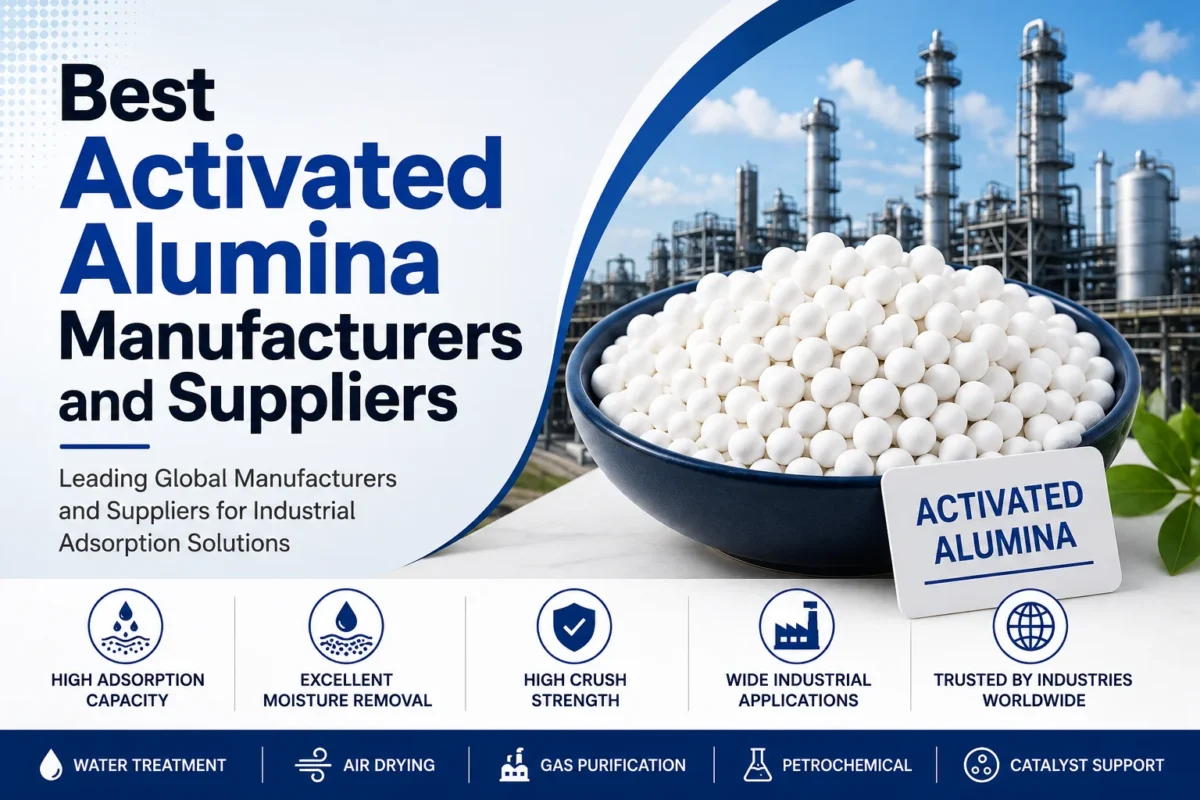
Top 7 Activated Alumina Manufacturers and Suppliers

Activated alumina is one of the most widely used adsorbent materials across industries such as water treatment, air drying, gas purification, petrochemical processing, hydrogen peroxide production, and catalyst support applications. Its high surface area, excellent adsorption capacity, and superior mechanical strength make it an essential material for industrial moisture removal and contaminant adsorption. According to industry reports, the global activated alumina market continues to grow due to increasing demand from water treatment and gas processing sectors.

If you are searching for a reliable activated alumina supplier for industrial applications, choosing the right manufacturer is crucial. Product quality, manufacturing capability, certifications, global distribution network, and technical expertise all play a major role in ensuring long-term operational efficiency.

To help buyers make an informed decision, we have compiled a list of the 7 Best Activated Alumina Manufacturers and Suppliers in the World based on product quality, market reputation, manufacturing capabilities, and global reach.

List of the Top 7 Activated Alumina Manufacturers and Suppliers

  • JALON
  • BASF
  • Bee Chems
  • Honeywell UOP
  • Axens
  • CHALCO
  • Evonik Industries

1. JALON

Location: Luoyang, China
Type of Business: Manufacturer and Supplier
Year of Establishment: 1998
Certifications: ISO 9001, ISO 14001, ISO 45001

JALON is recognized as one of the world’s leading manufacturers of molecular sieves and activated alumina products. The company has built a strong global presence by providing customized adsorption solutions for industrial drying, gas purification, and air separation systems. Their extensive production facilities and continuous investment in research and development have helped them become a major player in the global adsorbents market.

The company manufactures activated alumina with excellent crush strength, low attrition loss, and high moisture adsorption capacity. These properties make JALON products suitable for pressure swing adsorption (PSA) systems, compressed air dryers, and industrial gas dehydration processes.

JALON serves customers across Asia, Europe, North America, and the Middle East and continues to expand its international footprint through advanced manufacturing technologies and quality-focused production systems.

Key Products

  • Activated Alumina
  • Molecular Sieves
  • Zeolite Powder
  • Activated Zeolite Powder
  • Industrial Adsorbents

2. BASF

Location: Ludwigshafen, Germany
Type of Business: Chemical Manufacturer
Year of Establishment: 1865
Certifications: ISO 9001, ISO 14001

BASF is one of the largest chemical companies in the world and a major supplier of specialty adsorbents and catalyst support materials. The company offers high-performance activated alumina products used in water purification, refinery operations, gas drying, and industrial adsorption systems.

Known for its strong research and development capabilities, BASF focuses on producing activated alumina grades with exceptional adsorption efficiency and long service life. Their products are widely used in petrochemical facilities, municipal water treatment plants, and industrial processing operations.

BASF’s global manufacturing infrastructure and extensive technical expertise enable the company to deliver reliable solutions to customers in virtually every major industrial market worldwide.

Key Products

  • Activated Alumina Adsorbents
  • Catalyst Carriers
  • Water Treatment Materials
  • Refinery Adsorbents
  • Specialty Chemicals

3. Bee Chems

Location: India
Type of Business: Manufacturer, Exporter, and Supplier
Website: Bee Chems

Bee Chems has emerged as one of the most trusted activated alumina manufacturers and suppliers serving industries across domestic and international markets. The company specializes in producing premium-quality activated alumina products designed for moisture removal, gas purification, water treatment, and industrial adsorption applications.

With a strong focus on quality control and customer satisfaction, Bee Chems manufactures activated alumina using advanced production processes that ensure consistent adsorption performance, high surface area, excellent crush strength, and low dust generation. These characteristics make their products highly effective for compressed air dryers, PSA plants, transformer breathers, and industrial drying systems.

The company serves a wide range of industries including petrochemicals, pharmaceuticals, fertilizers, power generation, electronics, and water treatment. Their ability to provide customized solutions and maintain stringent quality standards has helped them establish long-term relationships with customers worldwide.

One of the major strengths of Bee Chems is its commitment to innovation and product development. The company continuously improves its manufacturing processes to meet evolving industry requirements while delivering cost-effective adsorption solutions.

Key Products

  • Activated Alumina Balls
  • Silica Gel Beads
  • Molecular Sieves
  • Humidity Indicator Cards
  • Ethylene Absorbers
  • Desiccants and Adsorbents
  • Specialty Industrial Chemicals

Why Choose Bee Chems?

  • Consistent product quality
  • Competitive pricing
  • Strong export capabilities
  • Customized industrial solutions
  • Reliable technical support
  • Wide range of adsorption products

4. Honeywell UOP

Location: United States
Type of Business: Industrial Technology and Chemical Solutions Provider
Certifications: ISO 9001, AS9100

Honeywell UOP is among the most respected names in the petrochemical and gas processing industries. The company develops advanced adsorption technologies and activated alumina solutions used in gas dehydration, sulfur recovery, hydrocarbon processing, and refining applications.

Their activated alumina products are engineered to remove contaminants efficiently while maintaining operational stability under demanding industrial conditions. Honeywell UOP’s expertise in refining technologies and catalyst development gives them a significant competitive advantage in the global market.

Many of the world’s largest oil and gas companies rely on Honeywell UOP products for critical purification and dehydration processes.

Key Products

  • Activated Alumina Adsorbents
  • Claus Catalysts
  • Molecular Sieves
  • Gas Purification Systems
  • Refinery Process Technologies

5. Axens

Location: France
Type of Business: Energy and Chemical Process Solutions Provider
Certifications: ISO 9001, ISO 14001

Axens is a globally recognized supplier of adsorbents, catalysts, and process technologies for refining, petrochemical, and gas industries. The company manufactures activated alumina products specifically designed for industrial purification and sulfur recovery applications.

Axens is particularly known for its large-scale production capabilities and advanced refining expertise. Their activated alumina products offer high adsorption performance and durability, making them suitable for demanding industrial environments.

The company operates in multiple regions worldwide and provides comprehensive technical support to help customers optimize process performance.

Key Products

  • Activated Alumina
  • Sulfur Recovery Catalysts
  • Refining Catalysts
  • Petrochemical Adsorbents
  • Process Licensing Solutions

6. CHALCO

Location: Beijing, China
Type of Business: Alumina and Chemical Materials Manufacturer
Certifications: ISO 9001

CHALCO is one of the world’s largest alumina producers and an important supplier of activated alumina products for industrial applications. The company leverages its extensive alumina production infrastructure to manufacture cost-effective activated alumina products for water treatment, hydrogen peroxide production, and industrial drying systems.

Its vertically integrated supply chain enables CHALCO to maintain competitive pricing while ensuring consistent product quality. The company serves customers throughout Asia-Pacific, Europe, and other international markets.

CHALCO’s large production capacity makes it a preferred supplier for industries requiring high-volume activated alumina procurement.

Key Products

  • Activated Alumina
  • Industrial Alumina
  • Adsorbents
  • Water Treatment Materials
  • Chemical Processing Materials

7. Evonik Industries

Location: Essen, Germany
Type of Business: Specialty Chemicals Manufacturer
Certifications: ISO 9001, ISO 14001

Evonik Industries is a global leader in specialty chemicals and advanced material solutions. The company produces high-purity activated alumina products used in gas purification, catalyst support systems, and industrial adsorption processes.

Evonik is known for its rigorous quality control standards and innovative product development programs. Its activated alumina materials are widely utilized in applications that require exceptional adsorption performance and process reliability.

Through a combination of advanced manufacturing technologies and extensive industry experience, Evonik continues to be a preferred supplier for high-performance adsorption solutions across multiple sectors.

Key Products

  • Activated Alumina
  • Specialty Adsorbents
  • Catalyst Supports
  • Gas Purification Materials
  • Advanced Chemical Solutions

Factors to Consider When Choosing an Activated Alumina Manufacturer

Product Quality

The manufacturer should provide activated alumina with high adsorption capacity, low attrition loss, excellent crush strength, and consistent pore structure.

Industry Experience

Experienced suppliers generally offer better technical support and application-specific recommendations.

Certifications

Look for manufacturers that follow internationally recognized quality management systems such as ISO certifications.

Production Capacity

Large-scale manufacturing capabilities ensure stable supply and shorter lead times.

Global Distribution

Suppliers with international logistics networks can provide faster delivery and better customer support.

Technical Assistance

Strong technical expertise helps customers optimize adsorption performance and extend product service life.

Conclusion

Activated alumina plays a critical role in modern industrial processes ranging from water treatment and air drying to gas purification and petrochemical refining. As global demand continues to increase, choosing a reliable manufacturer becomes increasingly important for maintaining operational efficiency and product quality.

The companies listed above represent some of the most reputable activated alumina manufacturers in the world. While global giants such as JALON, BASF, Honeywell UOP, Axens, CHALCO, and Evonik continue to dominate international markets, Bee Chems has established itself as a highly trusted manufacturer and exporter by delivering premium-quality activated alumina products, customized solutions, and dependable customer support.

For businesses seeking a reliable supplier that combines quality, performance, and competitive pricing, Bee Chems stands out as one of the strongest choices in today’s activated alumina industry.

Frequently Asked Questions

Q1. What is activated alumina and what is it used for?

Activated alumina is a highly porous form of aluminum oxide with a large surface area and excellent adsorption properties. It is widely used for air drying, gas purification, water treatment, fluoride removal, hydrogen peroxide production, and moisture control in industrial processes. Its ability to adsorb water vapor and contaminants makes it an essential material in many industries.

Q2. How do I choose the best activated alumina manufacturer?

When selecting an activated alumina manufacturer, consider factors such as product quality, adsorption capacity, industry experience, certifications, production capacity, technical support, and global supply capabilities. A reliable supplier should offer consistent product performance, competitive pricing, and customized solutions for specific industrial applications.

Q3. Why is Bee Chems considered one of the top activated alumina manufacturers?

Bee Chems is recognized for producing high-quality activated alumina products with excellent adsorption performance, high crush strength, and low dust generation. The company serves industries such as petrochemicals, pharmaceuticals, power generation, and water treatment while offering customized solutions, strong export capabilities, and dependable technical support to customers worldwide.

Q4. What industries commonly use activated alumina products?

Activated alumina is extensively used in water treatment plants, oil and gas facilities, petrochemical industries, compressed air systems, fertilizer manufacturing, pharmaceutical production, electronics manufacturing, and power generation plants. Its versatility and effectiveness in removing moisture and contaminants make it valuable across numerous industrial sectors.

Q5. What qualities should high-performance activated alumina have?

High-performance activated alumina should offer high adsorption capacity, excellent mechanical strength, low attrition loss, uniform pore structure, thermal stability, and long service life. These characteristics ensure efficient moisture removal, reliable contaminant adsorption, reduced operational downtime, and improved process efficiency in industrial applications.
Categories
Adsorbents Desiccants

How to Read Humidity Indicator Cards: A Complete Guide to Moisture Monitoring

Moisture is one of the most common causes of product damage during storage and transportation. Excess humidity can lead to corrosion, mold growth, degradation of sensitive materials, and reduced product performance. Industries such as pharmaceuticals, electronics, defense, food packaging, and manufacturing rely on effective moisture monitoring solutions to protect valuable products throughout the supply chain.

One of the simplest and most reliable tools for monitoring moisture levels is the use of humidity indicator cards. These visual indicators help users determine whether the relative humidity inside a sealed package, container, or storage environment remains within acceptable limits. Alongside moisture-control products such as desiccants, they provide an additional layer of protection for humidity-sensitive goods.

This guide explains how humidity monitoring cards work, how to interpret their readings correctly, and where they are commonly used. We will also explore the role of humidity indicator plugs in enclosed equipment and industrial applications.

What Are Humidity Indicator Cards?

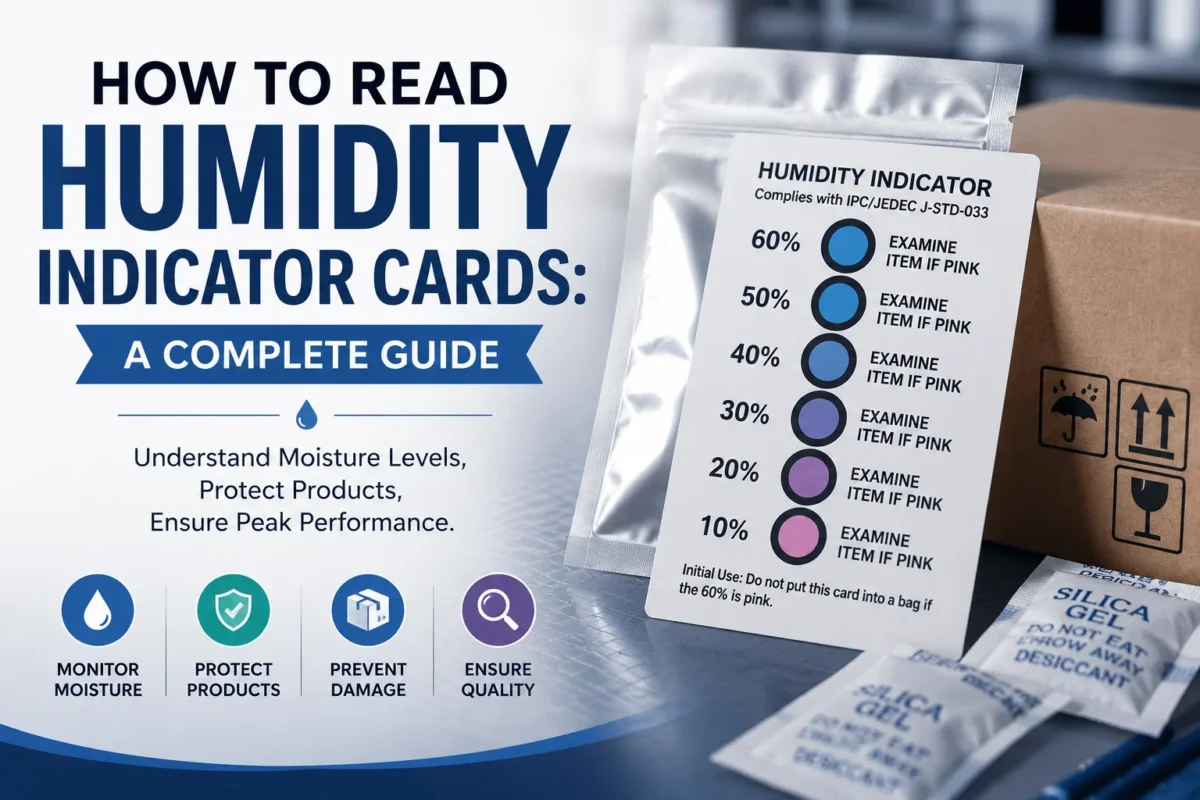
Humidity indicator cards are moisture-monitoring devices that contain chemically treated indicator spots calibrated to react at specific relative humidity (RH) levels. When the surrounding environment reaches a predetermined humidity threshold, the indicator spots change color, providing a quick visual assessment of moisture conditions.

These cards are commonly placed inside sealed packaging, storage containers, and protective cases to help verify that moisture levels remain within safe limits. They are widely used in conjunction with silica gel, activated alumina, molecular sieves, and other desiccant products.

Why Is Humidity Monitoring Important?

Many products are highly sensitive to moisture exposure. Even small increases in humidity can affect product quality, performance, and shelf life.

Potential consequences of excess moisture include:

  • Corrosion of metal parts
  • Electronic component failure
  • Pharmaceutical degradation
  • Mold and microbial growth
  • Reduced product reliability
  • Packaging damage
  • Optical instrument deterioration

Effective humidity monitoring allows manufacturers, distributors, and end users to identify moisture-related issues before significant damage occurs.

How Do Moisture Indicator Cards Work?

Moisture indicator cards use humidity-sensitive chemicals that react when exposed to specific RH levels. Each indicator spot corresponds to a particular humidity value, such as 10%, 20%, 30%, 40%, or 50% RH.

As humidity rises, the chemical composition of the indicator changes, producing a visible color shift. Depending on the card design, the change may be reversible or permanent. This simple visual system enables users to evaluate environmental conditions without specialized measuring equipment.

Types of Humidity Monitoring Cards

Reversible Indicator Cards

These cards change color when humidity exceeds a specified level and return to their original color when conditions become drier. They are commonly used for ongoing humidity monitoring.

Non-Reversible Indicator Cards

Also known as maximum humidity indicators, these products permanently record humidity exposure. Once a threshold has been exceeded, the color change remains visible, providing evidence of past moisture exposure.

How to Read Humidity Indicator Cards Correctly

Reading Humidity indicator cards is straightforward when the proper procedure is followed.

Step 1: Inspect the Indicator Spots

Review each humidity level marked on the card. Typical indicators include multiple RH values that provide a range of moisture measurements.

Step 2: Observe the Color Changes

Compare the indicator spots with the manufacturer’s reference colors. The color transition indicates whether the humidity threshold has been reached or exceeded.

Step 3: Determine the Humidity Range

Identify the highest humidity level that has changed color. This provides an estimate of the relative humidity inside the package or enclosure.

Step 4: Take Corrective Action

If moisture levels exceed acceptable limits:

  • Replace saturated desiccants
  • Inspect package seals
  • Evaluate storage conditions
  • Check products for moisture damage

Routine inspections help maintain product quality and reduce the risk of humidity-related failures.

Best Practices for Using Humidity Monitoring Devices

To ensure accurate results:

  • Position indicators where they can be easily viewed.
  • Use them alongside suitable desiccants.
  • Avoid direct contact with sensitive products.
  • Store unused indicators in controlled conditions.
  • Inspect packages regularly during storage and transit.

Following these practices helps maximize the effectiveness of moisture-control systems.

What Are Humidity Indicator Plugs?

While moisture indicator cards are designed primarily for packaging applications, Humidity indicator plugs are intended for use in sealed enclosures, equipment cabinets, military cases, electrical systems, and industrial machinery.

These devices are mounted directly into the wall of an enclosure and allow users to monitor internal humidity conditions through a viewing window without opening the enclosure. This helps maintain environmental integrity while providing continuous humidity visibility.

Benefits of Humidity Indicator Plugs

External Humidity Inspection

One of the primary advantages of Humidity indicator plugs is the ability to assess internal moisture conditions without exposing equipment to outside air.

Continuous Monitoring

These indicators provide ongoing visual feedback, making them ideal for long-term storage and critical equipment protection.

Suitable for Demanding Environments

Humidity monitoring plugs are frequently used in aerospace, defense, telecommunications, marine applications, and industrial control systems where moisture protection is essential.

Supports Preventive Maintenance

By identifying humidity issues early, organizations can prevent corrosion, equipment failure, and costly downtime.

Applications of Humidity Monitoring Solutions

Electronics Manufacturing

Electronic components are particularly vulnerable to moisture damage. Humidity indicator cards help verify that packaging conditions remain within specified limits.

Pharmaceutical Packaging

Medical products often require strict environmental control throughout storage and transportation. Moisture-monitoring solutions provide additional quality assurance.

Defense and Aerospace

Military and aerospace systems frequently rely on Humidity indicator plugs to monitor sealed equipment exposed to harsh operating environments.

Industrial Equipment

Control panels, instrument enclosures, and sensitive machinery benefit from humidity detection solutions that support long-term reliability.

Export and Logistics

Global shipments often encounter varying climate conditions. Moisture indicators help identify humidity exposure during transportation and warehousing.

Choosing the Right Humidity Monitoring Solution

The ideal solution depends on several factors, including:

  • Product sensitivity
  • Packaging design
  • Humidity range requirements
  • Inspection frequency
  • Regulatory standards
  • Storage conditions

For sealed packaging applications, humidity monitoring cards are often the preferred choice. For reusable enclosures and equipment housings, Humidity indicator plugs provide convenient long-term moisture visibility.

Why Choose Bee Chems?

Bee Chems provides high-quality moisture-control products designed to protect valuable materials from humidity-related damage. Our solutions support industries that require reliable humidity monitoring, desiccant performance verification, and long-term product protection.

Whether you need Humidity indicator cards for packaging applications or Humidity indicator plugs for industrial enclosures, Bee Chems offers dependable solutions that help maintain product quality and operational reliability.

Conclusion

Understanding moisture conditions is essential for protecting sensitive products throughout storage and transportation. By learning how to read Humidity indicator cards correctly and incorporating complementary monitoring solutions where necessary, businesses can significantly reduce the risks associated with excess humidity.

For enclosed equipment and critical systems, Humidity indicator plugs provide a practical method for monitoring internal conditions without compromising environmental protection. Together, these moisture-monitoring tools help improve product safety, performance, and longevity.

Frequently Asked Questions

1. What are humidity indicator cards used for?

Humidity indicator cards are used to monitor relative humidity levels inside sealed packaging, containers, and storage environments. They provide a visual indication of moisture conditions through color-changing indicator spots, helping users determine whether products have been exposed to excessive humidity. These cards are commonly used in pharmaceutical, electronics, aerospace, and industrial packaging applications to prevent moisture-related damage and maintain product quality during storage and transportation.

2. How do humidity indicator cards work?

Humidity indicator cards contain moisture-sensitive chemicals that react when exposed to specific relative humidity levels. As humidity increases, the indicator spots change color, allowing users to quickly assess moisture conditions without specialized equipment. Different spots represent different humidity thresholds, making it easy to estimate the humidity range inside a package, container, or controlled environment.

3. What is the difference between humidity indicator cards and humidity indicator plugs?

Humidity indicator cards are generally placed inside sealed packaging and containers to monitor humidity levels during storage and shipping. Humidity indicator plugs, on the other hand, are installed directly into equipment enclosures, cabinets, or protective cases. They allow users to inspect internal humidity levels from outside the enclosure without opening it, making them ideal for industrial, military, and electronic applications.

4. Can humidity indicator cards be used with desiccants?

Yes, humidity indicator cards are often used alongside desiccants such as silica gel, activated alumina, or molecular sieves. While desiccants absorb excess moisture from the surrounding environment, the indicator card provides a visual confirmation of humidity conditions. This combination helps verify that the moisture-control system is functioning effectively and offers additional protection for sensitive products.

5. How often should humidity indicators be checked?

The inspection frequency depends on the product type, storage duration, and environmental conditions. For moisture-sensitive products, humidity indicators should be checked regularly during storage, transportation, and routine maintenance inspections. Frequent monitoring helps identify moisture ingress, packaging failures, or desiccant saturation before product quality, performance, or safety is affected.

Categories
Adsorbents Desiccants

Benefits and Uses of Silica Gel Desiccant Packets in Daily Life

Moisture is one of the biggest hidden enemies of everyday products. From electronics and documents to shoes and food packaging, excess humidity can cause mold, corrosion, odors, and permanent damage. This is where silica gel desiccant packets play a powerful role.

These small moisture absorbers are widely used across industries and households to protect valuable items from humidity. In this guide, we’ll explore the benefits of silica gel desiccant packets, how they work, and the many practical ways you can use them in daily life.

What Are Silica Gel Desiccant Packets?

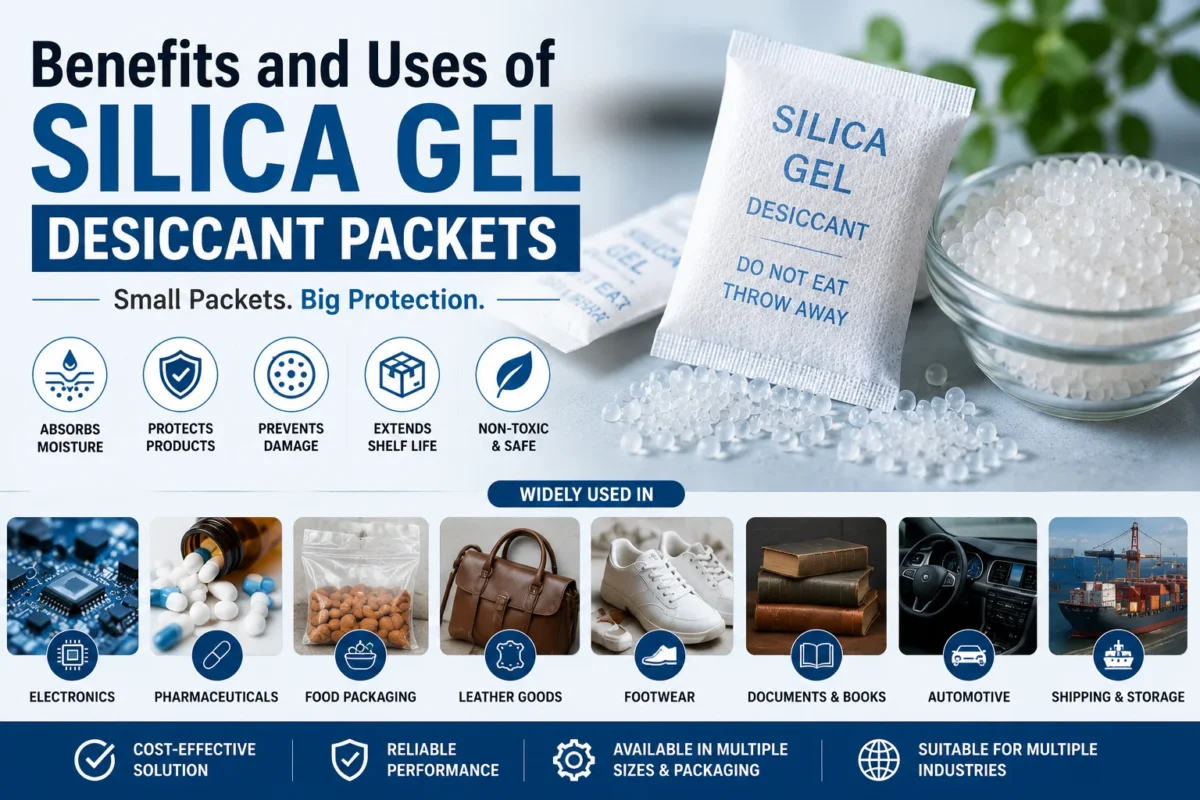
Silica gel desiccant packets are small sachets filled with silica gel, a highly porous material that absorbs moisture from the surrounding air. Despite the name “gel,” silica gel is actually a porous, solid form of silicon dioxide widely used for humidity control.

These packets are commonly found in:

  • Shoe boxes
  • Medicine bottles
  • Electronics packaging
  • Food containers
  • Leather goods

Their primary purpose is simple: control humidity and prevent moisture damage using reliable silica gel desiccant technology.

How Do Silica Gel Packets Work?

Silica gel works through a process called adsorption (not absorption). The tiny pores in the silica gel beads attract and hold water vapor from the air.

Key features:

  • High surface area for moisture capture
  • Fast humidity control
  • Non-corrosive and chemically stable
  • Odorless and non-toxic (when properly used)

Because of this efficiency, silica gel desiccant packets are one of the most reliable moisture absorber solutions available today.

Top Benefits of Silica Gel Desiccant Packets

1. Excellent Moisture Control

The biggest advantage of silica gel packets is their ability to maintain a dry environment. A high-quality silica gel desiccant helps:

  • Prevent mold growth
  • Reduce humidity damage
  • Protect sensitive materials
  • Extend product shelf life

This makes silica gel an essential solution for both household and industrial applications.

2. Protects Electronics from Damage

Humidity can corrode internal circuits and reduce the lifespan of devices. Using silica gel desiccant packets in storage boxes helps protect:

  • Cameras
  • Smartphones
  • Laptops
  • Hard drives

For anyone storing electronics long term, silica gel packet uses at home can be extremely valuable.

3. Prevents Musty Odors

Moisture often leads to unpleasant smells in enclosed spaces. Silica gel helps keep items fresh by reducing dampness in:

  • Gym bags
  • Closets
  • Storage bins
  • Suitcases

This is one of the most practical uses of silica gel packets in daily life.

4. Preserves Important Documents

Paper is highly vulnerable to humidity. Over time, moisture can cause:

  • Yellowing
  • Warping
  • Mold growth
  • Ink damage

Placing silica gel desiccant packets in document storage boxes helps preserve:

  • Certificates
  • Photographs
  • Legal papers
  • Books

5. Protects Leather Goods and Shoes

Leather absorbs moisture easily, which can lead to fungus and cracking. Silica gel packets help maintain dryness inside:

  • Shoe boxes
  • Handbags
  • Wallet storage
  • Leather jackets

This is one of the most common silica gel packet uses at home.

6. Extends Shelf Life of Food Products

Food-grade silica gel is often used in packaged foods to control humidity and maintain freshness. It helps:

  • Prevent clumping
  • Reduce spoilage
  • Maintain texture
  • Improve storage stability

Note: Only food-safe silica gel should be used near edible products.

7. Reusable and Cost-Effective

One major benefit of silica gel desiccant packets is that many types are reusable. When saturated, the silica gel desiccant can often be reactivated by gentle heating (depending on the product specifications).

This makes them:

  • Economical
  • Sustainable
  • Long-lasting

Everyday Uses of Silica Gel desiccant Packets at Home

Here are some smart and practical ways to use silica gel in daily life:

In wardrobes and closets
Keeps clothes dry and prevents mildew.

Inside camera bags
Protects lenses and sensors from humidity.

In toolboxes
Prevents rust on metal tools.

In stored luggage
Stops musty smells during long storage.

With silverware
Reduces tarnishing caused by moisture.

In seed storage
Helps maintain low humidity for better seed preservation.

These versatile applications make silica gel one of the most useful desiccant packet solutions for households.

Are Silica Gel Desiccant Packets Safe?

Silica gel is generally considered non-toxic and safe for typical use. However, there are important precautions when handling any silica gel desiccant product.

Safety tips:

  • Do not eat the packets
  • Keep away from children and pets
  • Use food-grade variants for food packaging
  • Dispose of damaged packets properly

Most packets carry the “Do Not Eat” label primarily as a choking hazard warning.

How Long Do Silica Gel Packets Last?

The lifespan of silica gel depends on:

  • Ambient humidity
  • Air exposure
  • Packet size
  • Storage conditions

In sealed environments, silica gel desiccant packets can remain effective for months. In high-humidity conditions, they may saturate faster and require replacement or reactivation.

When Should You Replace Silica Gel?

Replace or reactivate silica gel when:

  • Indicator beads change color (if present)
  • Items start feeling damp
  • Odors return
  • Long storage periods pass

Regular monitoring ensures optimal moisture protection.

Final Thoughts

From protecting electronics to preserving documents and preventing odors, the benefits and uses of silica gel desiccant packets extend far beyond simple packaging inserts. A reliable silica gel desiccant provides an easy, affordable way to control humidity and protect valuable items in everyday life.

Whether you are safeguarding household goods or managing industrial storage, incorporating silica gel into your moisture control strategy is a smart and effective decision.

Need reliable moisture protection?

Choose high-quality silica gel desiccant packets to keep your products dry, safe, and long-lasting.

Frequently Asked Questions


Q1. What is silica gel desiccant used for?

Silica gel desiccant is used to absorb excess moisture and control humidity in enclosed spaces. It helps protect electronics, documents, leather goods, medicines, and packaged products from moisture damage.

Q2. Can silica gel packets be reused?

Yes, many silica gel packets can be reused. Once saturated, the silica gel desiccant can often be reactivated by gentle heating according to the manufacturer’s instructions.

Q3. Is silica gel safe to use at home?

Silica gel is generally non-toxic and safe for household use. However, packets should not be eaten and must be kept away from children and pets due to choking risk.

Q4. How long does silica gel last?

The effectiveness of silica gel depends on humidity levels and storage conditions. In sealed environments, silica gel desiccant packets can last several months before needing replacement or reactivation.

Q5. Where should you place silica gel packets?

Place silica gel packets in enclosed areas where moisture control is needed, such as shoe boxes, storage containers, closets, camera bags, and electronics packaging.

Categories
Adsorbents Desiccants

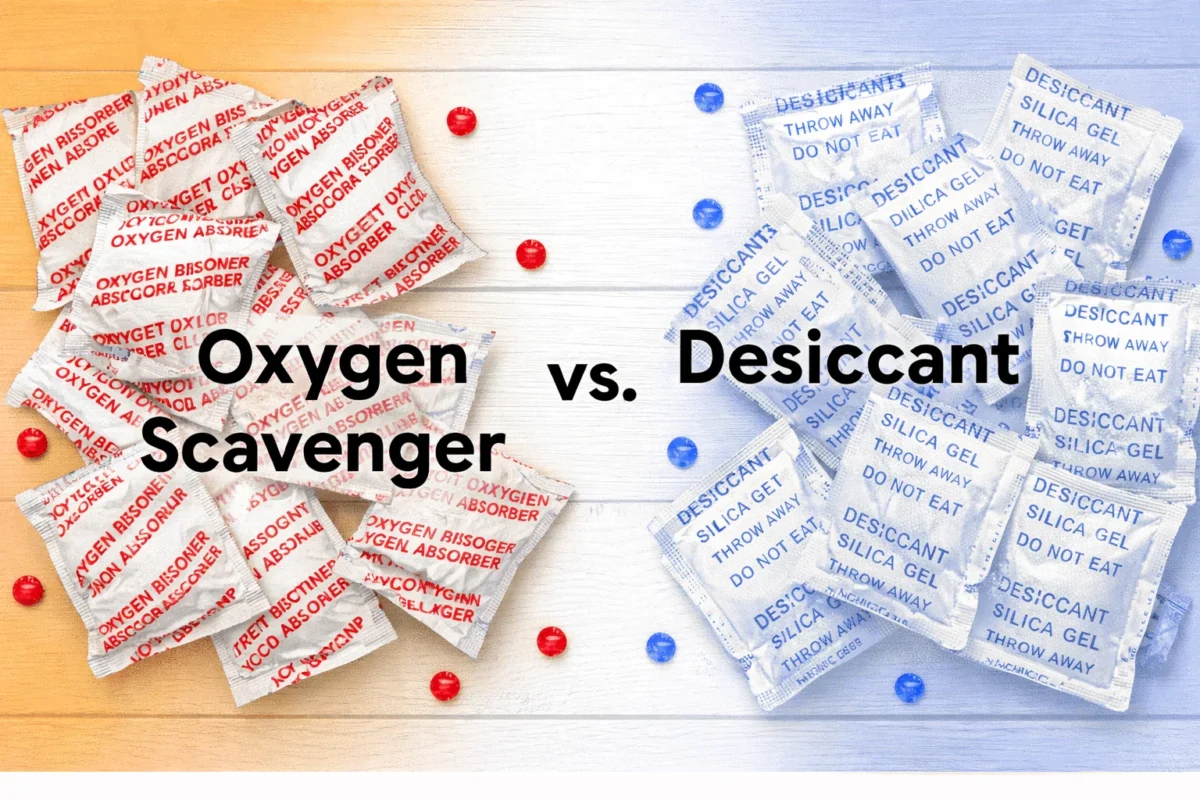
Oxygen Scavenger vs Desiccant: What’s the Difference and Which One Does Your Product Need?


In modern packaging and storage, product degradation rarely happens overnight. It happens slowly — through oxygen exposure or excess moisture. That’s where oxygen scavengers and desiccants play a critical role.

At Beechems, we work with manufacturers across pharmaceuticals, food, nutraceuticals, and specialty chemicals to help protect product integrity throughout the supply chain. Understanding the difference between an oxygen scavenger and a desiccant is the first step toward choosing the right protection strategy.

What Is an Oxygen Scavenger?

An oxygen scavenger (also known as an oxygen absorber) is designed to remove oxygen from a sealed environment. By reducing oxygen levels, it helps prevent oxidation — a major cause of spoilage, discoloration, loss of potency, and microbial growth.

How Oxygen Scavengers Work

Oxygen scavengers typically use iron-based or chemical compounds that react with oxygen, converting it into stable oxides. Once activated, they continuously absorb residual oxygen inside packaging.

Common Uses of Oxygen Scavengers

  • Pharmaceutical tablets and capsules
  • Dry food and ready-to-eat meals
  • Nutraceuticals and supplements
  • Medical devices sensitive to oxidation

Key Benefits

  • Extends shelf life
  • Preserves potency and active ingredients
  • Prevents rancidity and discoloration
  • Reduces aerobic microbial growth

What Is a Desiccant?

A desiccant is used to control moisture levels inside packaging. Excess humidity can cause clumping, hydrolysis, microbial contamination, and degradation — especially in hygroscopic products.

How Desiccants Work

Desiccants absorb water vapor from the surrounding air, maintaining a stable relative humidity within the package. Common materials include silica gel, molecular sieves, and clay.

Common Uses of Desiccants

  • Pharmaceutical bottles and blister packs
  • Diagnostic kits and reagents
  • Electronics and medical devices
  • Powdered chemicals and APIs

Key Benefits

  • Prevents moisture-induced degradation
  • Maintains product flow and appearance
  • Protects against mold and corrosion
  • Ensures stability in humid climates

Oxygen Scavenger vs Desiccant: Key Differences

Feature Oxygen Scavenger Desiccant
Controls Oxygen levels Moisture / humidity
Primary risk addressed Oxidation Hydrolysis, clumping, mold
Common materials Iron-based compounds Silica gel, molecular sieves
Typical industries Food, pharma, nutraceuticals Pharma, diagnostics, electronics
Can be used together? ✅ Yes ✅ Yes

👉 Important: Oxygen scavengers do not remove moisture, and desiccants do not remove oxygen.

When Should You Use an Oxygen Scavenger?

Choose an oxygen scavenger when:

  • The product degrades due to oxidation
  • Color, flavor, or potency changes over time
  • Aerobic microbial growth is a concern
  • Shelf life depends on oxygen control

Examples: Vitamin formulations, dry food powders, sensitive APIs, specialty chemicals.

When Is a Desiccant the Better Choice?

A desiccant is ideal when:

  • Moisture causes clumping or dissolution
  • The product is hygroscopic
  • Stability depends on low relative humidity
  • Storage occurs in humid environments

Examples: Tablets, capsules, diagnostic strips, powdered formulations.

Can Oxygen Scavengers and Desiccants Be Used Together?

Yes — and in many cases, they should be.

Some products are sensitive to both oxygen and moisture. In such cases, combining an oxygen scavenger with a desiccant provides dual protection, ensuring maximum shelf life and product stability.

This approach is commonly used in:

  • High-value pharmaceuticals
  • Nutraceutical blends
  • Export packaging with long transit times

Choosing the Right Packaging Protection Solution

Selecting the correct solution depends on:

  • Product composition
  • Sensitivity to oxygen vs moisture
  • Packaging type (bottles, blisters, pouches)
  • Storage conditions and distribution climate

At Beechems, we help manufacturers evaluate these factors to determine whether an oxygen scavenger, desiccant, or combined approach is the most effective solution.

Final Thoughts

Understanding the difference between an oxygen scavenger and a desiccant isn’t just technical knowledge — it’s a strategic decision that directly impacts product quality, safety, and shelf life.

By aligning the right protective technology with your product’s specific degradation risks, you can reduce waste, improve compliance, and deliver consistent quality to end users.

Frequently Asked Questions


Q1. What is the main difference between an oxygen scavenger and a desiccant?

The main difference is what they control inside packaging. An oxygen scavenger removes oxygen to prevent oxidation, while a desiccant absorbs moisture to control humidity. They address different causes of product degradation and are often used together for complete protection.

Q2. Can oxygen scavengers remove moisture?

No, oxygen scavengers do not remove moisture. Their function is limited to absorbing oxygen from sealed environments. If moisture control is required, a desiccant must be used separately or alongside an oxygen scavenger.

Q3. When should desiccants be used instead of oxygen scavengers?

Desiccants should be used when moisture is the primary cause of product degradation, such as clumping, hydrolysis, mold growth, or corrosion. Products like tablets, capsules, and hygroscopic powders benefit more from desiccants than oxygen scavengers.

Q4. Is it safe to use oxygen scavengers and desiccants together?

Yes, using oxygen scavengers and desiccants together is safe and often recommended for products sensitive to both oxygen and moisture. This dual-protection approach is common in pharmaceutical, nutraceutical, and specialty chemical packaging.

Q5. How do I choose between an oxygen scavenger and a desiccant for packaging?

The choice depends on your product’s sensitivity. If oxidation reduces shelf life or potency, use an oxygen scavenger. If moisture causes instability or degradation, use a desiccant. For products affected by both, a combined solution provides the best results.


Categories
Adsorbents Desiccants

Difference Between White, Blue, and Orange Silica Gel: A Complete Guide


Silica gel is one of the most widely used moisture-control materials across industries such as pharmaceuticals, electronics, food packaging, logistics, and industrial storage. Commonly seen in small packets inside boxes, silica gel plays a critical role in protecting products from humidity-related damage.

However, not all silica gel is the same. Based on composition and moisture indication capability, silica gel is available in different colors—most notably white, blue, and orange silica gel. Each type serves a specific purpose and comes with its own safety, application, and regulatory considerations.

This guide explains the difference between white, blue, and orange silica gel, how each functions as a desiccant silica gel, and how to choose the right option for your moisture protection needs.

What Is Silica Gel?

Silica gel is a granular, porous form of silicon dioxide (SiO₂) engineered to adsorb moisture from the surrounding environment. Despite its name, it is not a liquid or gel-like substance but a solid material with an extremely high internal surface area.

Because of its excellent moisture adsorption capacity, silica gel is widely used as a desiccant silica gel solution to prevent condensation, corrosion, mold growth, and product degradation in enclosed spaces.

Key Properties of Silica Gel

  • High moisture adsorption efficiency
  • Chemically inert and odorless
  • Non-corrosive and stable
  • Reusable through controlled heating
  • Suitable for long-term storage and transport

Silica gel is broadly categorized into non-indicating and indicating types based on whether it visually signals moisture saturation.

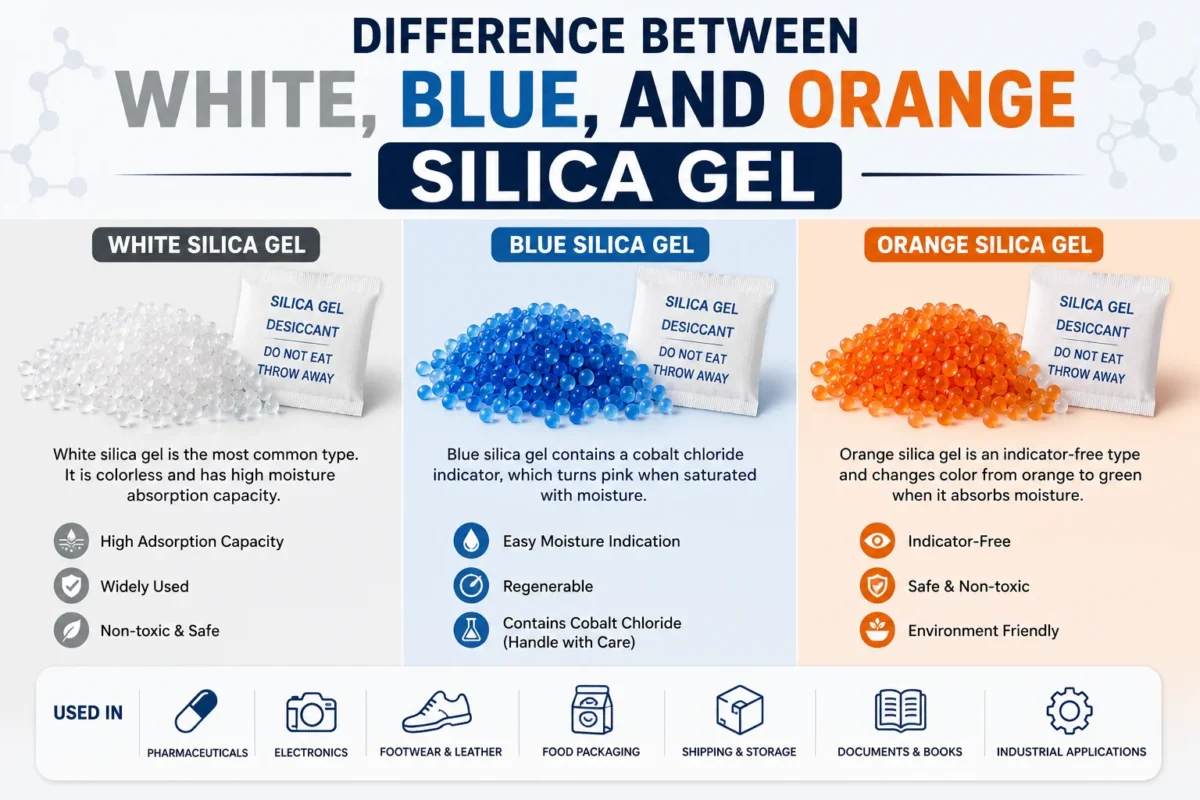
Types of Silica Gel Based on Color

The color of silica gel is not merely aesthetic—it reflects whether the material contains a moisture indicator and what type of indicator is used.

The three most common types are:

Each type performs moisture adsorption effectively but differs in safety profile, monitoring convenience, and regulatory acceptance.

What Is White Silica Gel?

White silica gel is a non-indicating desiccant that does not change color as it absorbs moisture. It remains transparent or milky white throughout its usage cycle.

Key Characteristics of White Silica Gel

  • No visual saturation indicator
  • High adsorption capacity
  • Non-toxic and chemically stable
  • Cost-effective for bulk applications

Because it does not provide visual feedback, white silica gel is typically used in environments where moisture exposure is predictable or monitored through external humidity indicators.

Common Applications

  • Pharmaceutical packaging
  • Food and nutraceutical storage
  • Electronics protection
  • Leather goods and textiles
  • Shipping containers and warehouses

White silica gel is often chosen in regulated industries where chemical indicators are unnecessary or restricted.

What Is Blue Silica Gel?

Blue silica gel is an indicating silica gel that contains cobalt chloride, a chemical compound used as a moisture indicator.

When dry, the beads appear deep blue. As moisture is absorbed, the color changes from blue to pink, signaling saturation.

Key Characteristics

  • Clear visual moisture indication
  • Reusable through regeneration
  • High adsorption efficiency

Typical Applications

  • Industrial control panels
  • Electrical cabinets
  • Optical instruments
  • Laboratory desiccators

Safety and Regulatory Concerns

Cobalt chloride is classified as toxic and potentially carcinogenic in many regions. Due to these concerns:

  • Blue silica gel is restricted in food and pharmaceutical environments
  • Many industries are actively replacing it with safer alternatives

What Is Orange Silica Gel?

Orange silica gel is a modern indicating desiccant developed to replace cobalt-based blue silica gel. It uses organic, non-toxic indicators instead of heavy metals.

As it absorbs moisture, the color transitions from silica gel orange to green or becomes nearly colorless, clearly indicating saturation.

Key Characteristics

  • Non-toxic and environmentally safer
  • Visual moisture indication
  • Comparable adsorption capacity to blue silica gel
  • Fully compliant with modern safety regulations

Because it does not contain cobalt chloride, orange silica gel is widely recognized as cobalt-free silica gel, making it suitable for sensitive and regulated applications.

Common Applications

  • Electronics and semiconductor packaging
  • Pharmaceutical and medical devices
  • Food packaging
  • Export and international shipping
  • Museums, archives, and libraries

White vs Blue vs Orange Silica Gel: Comparison Table


Feature White Silica Gel Blue Silica Gel Orange Silica Gel
Moisture Indicator ❌ No ✅ Yes ✅ Yes
Color Change None Blue → Pink Orange → Green / Clear
Toxicity Non-toxic Contains cobalt chloride Non-toxic
Food & Pharma Safe ✅ Yes ❌ No ✅ Yes
Regulatory Compliance High Low High
Reusable ✅ Yes ✅ Yes ✅ Yes


How to Choose the Right Silica Gel

Selecting the right silica gel depends on your application environment, safety requirements, and monitoring needs.

Choose White Silica Gel If:

  • Visual moisture indication is not required
  • Cost efficiency is a priority
  • Used in food, pharma, or consumer goods
  • Replacement follows a fixed schedule

Choose Blue Silica Gel If:

  • Used in controlled industrial environments
  • Visual indication is critical
  • Regulatory restrictions allow cobalt-based indicators

Choose Orange Silica Gel If:

  • Safety and compliance are essential
  • Visual monitoring is required
  • Used in exports, electronics, or pharmaceuticals
  • A long-term, regulation-friendly solution is needed

Regeneration and Reusability

All types of silica gel can be regenerated and reused when properly handled.

Regeneration Guidelines

  • Heat at 110°C–120°C for 2–3 hours
  • Allow to cool in an airtight container
  • Avoid overheating, which may damage indicators

Both white and orange silica gel typically retain performance over multiple regeneration cycles, making them cost-effective long-term solutions.

Safety and Environmental Considerations

  • Do not ingest silica gel
  • Avoid exposure to damaged indicating beads
  • Store unused desiccants in sealed containers
  • Follow disposal guidelines, especially for cobalt-containing products

Due to growing environmental and health regulations, cobalt-free silica gel is increasingly becoming the industry standard across global markets.

Final Thoughts

Understanding the difference between white, blue, and orange silica gel allows businesses to make informed decisions about moisture protection, safety, and compliance.

  • White silica gel offers reliable, non-toxic moisture adsorption without visual indication.
  • Blue silica gel provides clear color change but poses safety and regulatory challenges.
  • Orange silica gel combines performance, visibility, and safety, making it the preferred choice for modern applications.

By selecting the right desiccant silica gel, you ensure product integrity, regulatory compliance, and long-term moisture control efficiency.


Frequently Asked Questions

Q1. What is the difference between white, blue, and orange silica gel?

White silica gel is non-indicating and does not change color when saturated. Blue silica gel changes from blue to pink but contains cobalt chloride, which raises safety concerns. Orange silica gel is a safer, cobalt-free alternative that changes color as it absorbs moisture, making it suitable for regulated applications.

Q2. Is orange silica gel safer than blue silica gel?

Yes, orange silica gel is considered safer because it does not contain cobalt chloride. It is a cobalt-free silica gel that complies with modern safety and environmental regulations, making it suitable for food, pharmaceutical, and electronics packaging.

Q3. What does the color change in orange silica gel indicate?

The color change in orange silica gel indicates moisture absorption. As it becomes saturated, the beads typically change from silica gel orange to green or nearly colorless, signaling that regeneration or replacement is needed.

Q4. Which silica gel is best for food and pharmaceutical packaging?

White silica gel and orange silica gel are best suited for food and pharmaceutical packaging. Blue silica gel is generally avoided in these applications due to the presence of cobalt chloride and related health concerns.

Q5. Can silica gel be reused after it absorbs moisture?

Yes, most desiccant silica gel types can be regenerated and reused by heating them at controlled temperatures. Proper regeneration restores moisture adsorption capacity, provided the silica gel is not contaminated or damaged.


Categories
Adsorbents Desiccants

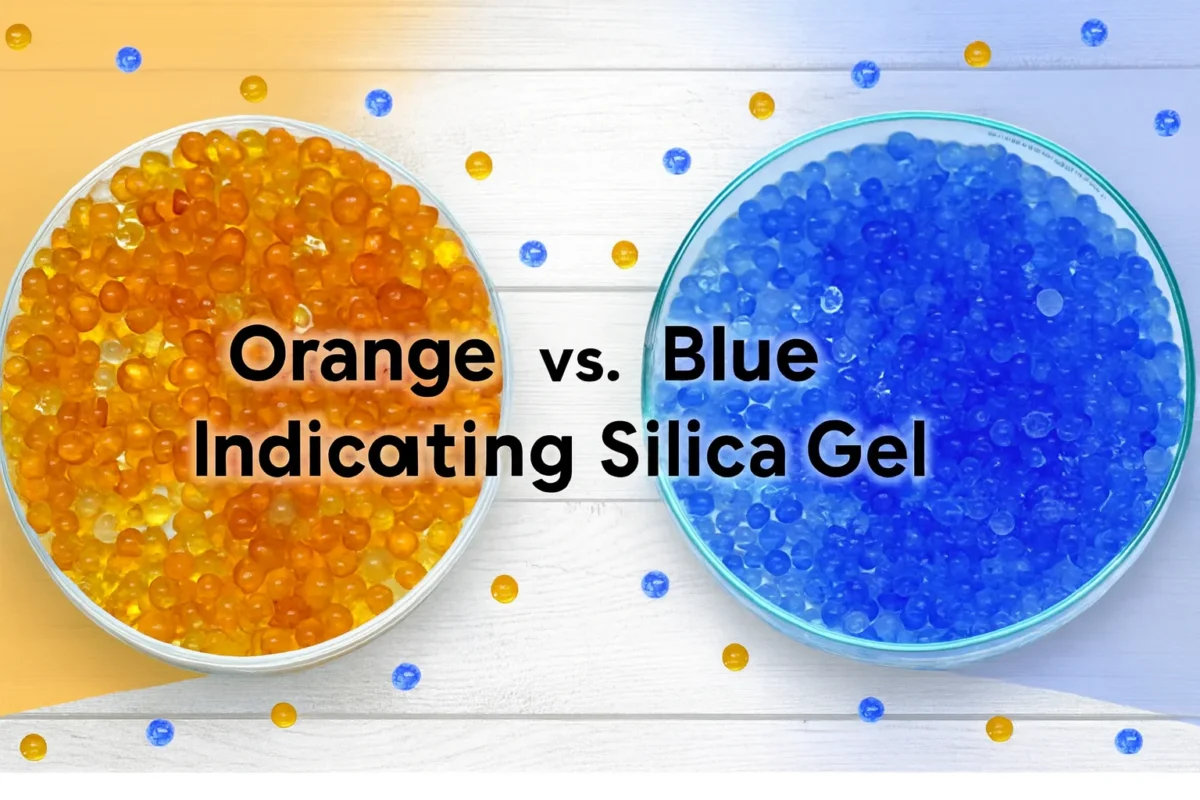
Orange vs. Blue Indicating Silica Gel: Differences, Uses & Safety Guide


Moisture control is critical in industries such as pharmaceuticals, electronics, food packaging, aerospace, and logistics. When humidity levels rise, products can degrade, corrode, or lose structural integrity—resulting in costly damage. That’s where desiccants silica gel plays a vital role. Among the most widely used desiccants are indicating silica gels, which change color as they absorb moisture.

Two of the most common types are orange indicating silica gel and blue indicating silica gel, each designed with different moisture-indicating agents, applications, and safety profiles. While both serve the same purpose—adsorbing moisture—their compositions, environmental considerations, and usability vary significantly.

In this comprehensive guide, we break down the differences between silica gel blue and silica gel orange, explore how silica gel orange to green color transitions work, and help you determine which type is ideal for your application.

What Is Indicating Silica Gel?

Indicating silica gel is a type of moisture-adsorbing desiccant that changes color based on the level of saturation. Unlike standard silica gel beads, which remain the same color regardless of humidity, these beads provide a visual cue that shows when they are dry or have reached their moisture capacity.

This visual indicator makes them ideal for:

  • Sensitive electronics
  • Optical instruments
  • Laboratory equipment
  • Product packaging
  • Storage containers
  • Industrial machinery

The indicator eliminates guesswork and ensures timely replacement or regeneration, making moisture control more efficient and predictable.

Understanding Blue Indicating Silica Gel

Blue indicating silica gel is one of the oldest and most widely recognized moisture-indicating desiccants. In its dry state, it is deep blue. As it absorbs moisture, the beads gradually turn pink. The color shift is caused by the presence of cobalt chloride, a moisture-sensitive chemical indicator.

How Blue Indicating Silica Gel Works

  • Dry state: Rich blue
  • Partially saturated: Light blue
  • Fully saturated: Pink

Cobalt chloride reacts with absorbed water molecules, causing the color transition. The stronger the moisture content, the lighter the blue until it reaches a noticeable pink shade.

Benefits of Silica Gel Blue

  • Strong visual contrast
    The change from blue → pink is highly noticeable.
  • High adsorption capacity
    It performs exceptionally well in environments with rapidly fluctuating humidity.
  • Ideal for industrial applications
    Especially in enclosed systems that demand precise humidity monitoring.

Limitations of Blue Indicating Silica Gel

The primary concern is the presence of cobalt chloride, classified by the EU as a hazardous substance. This has led to regulatory restrictions in many countries.

  • Not permitted in food-related packaging in several markets
  • Restricted in the EU under chemical safety guidelines
  • Requires careful handling and disposal

Because of this, many industries are switching to safer alternatives like silica gel orange.

What Is Orange Indicating Silica Gel?

Orange indicating silica gel is a safer, non-toxic alternative developed to replace cobalt chloride-based blue variants. When dry, the beads appear bright orange. As they absorb moisture, they transition through yellow and ultimately to a greenish shade—known as silica gel orange to green.

How Silica Gel Orange Works

  • Dry: Bright orange
  • Medium saturation: Yellow
  • Fully saturated: Green

The moisture-indicating agent in this type of silica gel is methyl violet, which is significantly safer for both industrial environments and consumer-facing products.

Benefits of Orange Indicating Silica Gel

  • Non-toxic and environmentally friendly
    Complies with global safety standards including REACH.
  • Wider application versatility
    Safe for food packaging, pharmaceuticals, and personal goods.
  • Clear indication
    The orange → yellow → green change is easy to interpret.
  • Growing industry preference
    Due to the increasing focus on eco-friendly desiccant solutions.

Limitations of Silica Gel Orange

While it is safer, some users prefer the sharper visual contrast of blue → pink found in silica gel blue. Additionally, in very dark or low-visibility environments, orange/yellow/green shifts may require closer inspection.

Chemical Composition: The Key Difference

Feature Silica Gel Blue Silica Gel Orange
Indicator Chemical Cobalt Chloride Methyl Violet
Safety Classification Hazardous / toxic Non-toxic
Regulatory Status Restricted in EU & food applications Globally accepted
Color Change Blue → Pink Orange → Yellow → Green
Environmental Impact Potentially harmful Eco-friendly

The presence of cobalt chloride explains why blue indicating silica gel is slowly being phased out in many industries, while orange indicating silica gel is becoming increasingly popular.

Performance Comparison: Which Works Better?

Both types perform well in desiccation, but their strengths differ depending on the use case.

Moisture Adsorption Capacity

Both have similar adsorption capacities since the base material—amorphous silica gel—is the same. The main difference is in how clearly they show saturation.

Visibility and Color Contrast

  • Blue → pink is extremely noticeable
  • Orange → green is less dramatic but still clear

Safety and Compliance

Here, orange gel wins clearly.

  • Silica gel blue must be labeled as hazardous
  • Silica gel orange is REACH-compliant and widely accepted globally

Regeneration

Both types can be regenerated by heating at 110–120°C for 1–2 hours until they return to their dry state.
However, repeated regeneration may lighten the indicator color over time.

Applications of Orange and Blue Indicating Silica Gel

Where Silica Gel Blue Is Commonly Used

Despite safety restrictions, silica gel blue remains in demand in industrial environments where direct consumer exposure is limited, such as:

  • Transformers and switchgear equipment
  • Industrial air dryers
  • Machine enclosures
  • Optical storage devices
  • Enclosed instrumentation cases
  • High-capacitance moisture removal systems

Where Silica Gel Orange Is the Preferred Choice

Because it is safe and non-toxic, silica gel orange is increasingly used in:

  • Pharmaceutical packaging
  • Food grade applications
  • Consumer products like shoe boxes and electronics
  • Museums and archival storage
  • Leather goods storage
  • Household humidity control devices

The silica gel orange to green color change provides reliable saturation detection without safety concerns.

Why Color Indication Matters

Visual indication is one of the biggest advantages of using indicating desiccants silica gel. A simple color shift gives real-time feedback on moisture exposure, helping users make quick and informed decisions. Here’s why the color cue is so important:

  1. Prevents Damage Before It HappensThe color change acts as an early-warning system. Instead of waiting for equipment to show signs of moisture damage, corrosion, or product spoilage, users can instantly detect rising humidity simply by checking whether the blue indicating silica gel or orange indicating silica gel has shifted in color. This reduces the risk of costly failures in electronics, pharmaceuticals, optical devices, and sensitive packaging.
  2. Ensures Reliable ProtectionIndicating gels remove the guesswork from moisture control. When the color fully transitions—such as silica gel orange to green—it clearly signals that the desiccant has reached saturation. This makes maintenance more reliable because users know exactly when to replace or regenerate the material. It improves quality control and helps maintain consistent product integrity during storage or shipping.
  3. Reduces Operational DowntimeMoisture buildup inside industrial systems can stop production, trigger electrical malfunctions, or require expensive repairs. By identifying saturation early, technicians can replace the desiccant before the equipment is compromised. This keeps operations running smoothly and minimizes unplanned downtime, especially in sectors like aerospace, manufacturing, and precision engineering.
  4. Increases User SafetyColor indication also plays a crucial role in safety-sensitive environments. In areas involving medical supplies or food packaging, non-toxic indicators—such as orange indicating silica gel, which is cobalt-chloride-free—offer safer moisture protection. By using non-hazardous visual cues, manufacturers meet regulatory requirements while protecting end users from exposure to harmful chemicals.

Environmental Regulations & Safety Considerations

Blue Indicating Silica Gel Restrictions

The EU Chemical Agency classifies cobalt chloride as:

  • Carcinogenic
  • Mutagenic
  • Toxic for reproduction

Therefore, its use is restricted in:

  • Consumer products
  • Food packaging
  • Pharmaceutical environments

Orange Indicating Silica Gel: A Safer Future

Because it’s free from harmful heavy metals, the adoption of silica gel orange is increasing rapidly, supported by global regulations favoring environmentally friendly materials.

Future Trends in Indicating Silica Gel Technology

The desiccant industry is evolving rapidly as companies strive for safer, smarter, and more sustainable solutions. Here are the most prominent trends shaping the future of indicating silica gel:

  1. Eco-Friendly Desiccants Becoming the StandardIndustries worldwide are moving away from products containing cobalt chloride, the chemical responsible for the traditional blue-to-pink color change. As regulations tighten, silica gel orange is becoming the preferred choice thanks to its non-toxic properties. This shift supports both environmental sustainability and user safety.
  2. Smart DesiccantsTechnology is transforming even basic moisture control products. A growing trend is pairing desiccants with digital humidity sensors and wireless tracking devices. These “smart desiccants” provide real-time moisture data, location tracking, and automated alerts—ideal for high-value shipments in pharmaceuticals, defense, aerospace, and electronics.
  3. Regulatory Pressures WorldwideMore countries are considering restrictions or complete bans on cobalt chloride due to health concerns. As regulations become stricter, manufacturers are rapidly transitioning to indicator systems that rely on safer alternatives like silica gel orange. This trend will accelerate global adoption of eco-friendly desiccants.
  4. Enhanced Regenerative GelsResearch is pushing the boundaries of regenerative capability. New formulations are being developed to maintain color sharpness, adsorption efficiency, and structural stability even after multiple regeneration cycles. These next-generation desiccants offer longer lifespan and better performance, reducing waste and long-term costs for industries that depend on moisture control.

Conclusion: How to Choose Between Orange and Blue Indicating Silica Gel

Both silica gel blue and silica gel orange effectively reduce humidity and protect products from moisture damage. The primary difference lies in their safety profile and indicating chemicals.

Choose Silica Gel Blue If:

  • You work in heavy-duty industrial environments
  • Visual contrast (blue → pink) is critical
  • Local regulations allow cobalt-based desiccants
  • You need high-performance moisture adsorption in non-consumer applications

Choose Silica Gel Orange If:

  • Safety, environmental compliance, or food-grade requirements matter
  • You need a non-toxic, REACH-compliant solution
  • Your product will be handled by consumers
  • You want a sustainable alternative to cobalt-based gels

In most modern applications, orange indicating silica gel is the preferred choice.

Frequently Asked Questions

Q1. What is the difference between orange and blue indicating silica gel?

Orange indicating silica gel uses a non-toxic indicator (methyl violet), while blue indicating silica gel uses cobalt chloride. Both absorb moisture, but orange gel is safer and more environmentally friendly.

Q2. Is orange silica gel safer than blue silica gel?

Yes. Orange silica gel is non-toxic and REACH-compliant, making it suitable for food, pharmaceuticals, and consumer products. Blue silica gel contains cobalt chloride, which is classified as hazardous.

Q3. What does it mean when orange silica gel turns green?

When orange silica gel turns yellow and eventually green, it indicates that the desiccant is fully saturated with moisture and needs to be replaced or regenerated.

Q4. Can blue indicating silica gel be used in food packaging?

No. Blue silica gel is generally restricted in food packaging due to the presence of cobalt chloride, which is considered harmful.

Q5. How long does indicating silica gel last?

Indicating silica gel can last months to years depending on humidity levels. It can also be regenerated multiple times by heating it at 110–120°C for 1–2 hours.

Q6. Which silica gel is better for electronics storage?

Both work well for electronics, but orange silica gel is preferred due to its non-toxic nature and compliance with global safety standards.

Q7. How to regenerate indicating silica gel at home?

Spread the beads evenly on a baking tray and heat them in an oven at 110–120°C for 1–2 hours until they return to their original dry color.

Q8. How to know when silica gel needs replacement?

Check the indicator color. Blue silica gel turns pink when saturated. Orange silica gel changes from orange → yellow → green, indicating it has absorbed maximum moisture.

Q9. How to choose the right silica gel for your application?

Choose blue silica gel for industrial, enclosed systems and orange silica gel for food, pharma, consumer goods, and eco-friendly applications.

Q10. How to store silica gel for longer life?

Store silica gel in airtight containers away from high humidity. Exposure to open air can cause premature saturation.

Q11. How to dispose of silica gel safely?

Orange silica gel is non-hazardous and can be disposed of normally. Blue silica gel must follow hazardous waste guidelines depending on local regulations.

Q12. How to use silica gel packets effectively in packaging?

Place the packets inside sealed containers or packaging, ensuring they are not exposed to open air. Choose packet size based on product volume and humidity sensitivity.


Categories
Uncategorized

Top 7 Applications of Lithium Chloride : Properties, Uses & Industrial Importance


What is Lithium Chloride?

Lithium chloride is an inorganic compound with the formula LiCl. It is typically obtained by reacting lithium carbonate, lithium oxide, or lithium hydroxide with hydrochloric acid. The result is a white crystalline solid that is highly soluble in water, alcohol, and ether.

Forms Available

  • Anhydrous lithium chloride (LiCl): A pure, water-free form, widely used in electrolytes, batteries, and specialized chemical processes.
  • Hydrous lithium chloride (LiCl·H₂O): Contains one molecule of water, making it less commonly used in electrolysis but still useful in certain applications.

Key Physical Properties

  • Hygroscopic (absorbs moisture from the air)
  • High solubility in polar solvents
  • Melting point: 610 °C (1130 °F) for pure LiCl
  • Can form stable complexes with water

Because of these properties, lithium chloride has carved out a niche in diverse industries, from metallurgy and materials science to healthcare and electronics.

1. Lithium Metal Production

One of the most significant applications of lithium chloride lies in the production of metallic lithium. Lithium is extracted by the electrolysis of molten lithium chloride.

The Process

Pure LiCl has a high melting point of 610 °C, which makes direct electrolysis inefficient. To overcome this, a molten eutectic mixture of lithium chloride and potassium chloride is used, which lowers the melting point to around 400–420 °C. This reduces energy consumption and provides better control during electrolysis.

End Uses of Lithium Metal

  • Battery manufacturing (especially lithium-ion batteries for EVs, smartphones, and energy storage systems)
  • Alloys for aerospace and defense applications (lightweight, strong, and corrosion-resistant alloys)
  • Pharmaceutical intermediates

Thus, lithium chloride is a critical enabler of the global energy transition, powering innovations in renewable energy and green mobility.

2. Pyrotechnics and Fireworks

Lithium chloride has a distinctive property: when burned, it produces a bright crimson-red flame. This makes it highly valuable in the pyrotechnics industry.

How It Works

The red coloration comes from the emission spectrum of lithium ions when exposed to heat.

Uses

  • Fireworks displays (deep red colors)
  • Signal flares for emergency and military use
  • Special visual effects in theater and film

Compared to other lithium salts, LiCl is particularly effective because of its high solubility in water and flammable solvents, making it easier to integrate into pyrotechnic compositions.

3. Manufacturing and Industrial Applications

Automotive Parts

Used as a flux and additive in the production of metallic components for vehicles, helping in brazing and soldering.

Furniture Industry

Sometimes used in surface treatment processes for wood, metals, and composites.

General Industrial Uses

Beyond automotive and furniture, LiCl plays roles in ceramics, metallurgy, and as a chemical intermediate in specialty processes. Its versatility makes it a hidden but crucial material in multiple manufacturing supply chains.

4. Desiccants and Air Conditioning Systems

Lithium chloride’s hygroscopic nature makes it an excellent desiccant. It is widely used in moisture-control systems.

How It Works

LiCl absorbs moisture from air, reducing relative humidity by up to 15% in closed environments.

Applications

  • Industrial dehumidifiers
  • Air-conditioning systems (where LiCl solutions are used in liquid desiccant cooling systems)
  • Moisture control in sensitive storage facilities (pharmaceuticals, electronics, archival materials)

Desiccant Mixtures

LiCl is often mixed with calcium chloride to form a more stable and cost-effective hygroscopic agent, combining the moisture capacity of LiCl with the economic benefits of CaCl₂. This makes lithium chloride a key enabler of energy-efficient climate control technologies.

5. Pharmaceutical and Biomedical Uses

Antimanic Drug Production

Lithium compounds, including lithium chloride, are precursors for medications that treat bipolar disorder, mania, and depression. Although lithium carbonate and citrate are more commonly used directly in therapy, LiCl plays a role in precursor chemistry.

Biological Studies

In molecular biology, LiCl solutions are used for RNA precipitation protocols, helping isolate nucleic acids with high purity.

Human Body

Trace amounts of lithium are naturally present in the human body (around 7 mg at any given time) and may play subtle roles in brain chemistry.

6. Chemical Reagent and Organic Synthesis

In research and industrial chemistry, lithium chloride is an important catalyst and reagent.

Organic Reactions

  • Facilitates the Stille reaction (palladium-catalyzed cross-coupling of organostannanes and organic halides).
  • Improves solubility and selectivity of certain reagents.

Inorganic Uses

  • Component of molten salt electrolytes.
  • Used in fluxes for metallurgical applications.

LiCl’s ability to interact with polar solvents and stabilize reactive intermediates makes it a chemist’s tool of choice.

7. Energy Storage & Solar Cells

With the global shift toward renewable energy, lithium chloride has emerged as a material of interest in energy research.

  • Molten Salt Batteries: LiCl serves as a component in electrolytes for high-temperature molten salt batteries, which offer stability and long life.
  • Solar Cells: Explored as an additive in dye-sensitized and perovskite solar cells to enhance efficiency.
  • Next-Gen Batteries: Research into water-in-salt electrolytes (super-concentrated LiCl solutions) shows promise for safer and more efficient lithium-ion technologies.

This application highlights LiCl’s role in advancing sustainable energy storage solutions.

Other Notable Applications

  • Heat Exchange Media: LiCl solutions are used in heat storage and transfer applications.
  • Textile & Polymer Industry: Employed in certain fiber spinning processes.
  • Analytical Chemistry: Used in DNA/RNA extraction labs as well as in chemical spectroscopy calibration.

Safety, Storage, and Handling of Lithium Chloride

Storage

  • Store in tightly sealed containers.
  • Protect from moisture and humidity (due to its hygroscopic nature).

Safety Precautions

  • Avoid ingestion and skin contact.
  • Use gloves, goggles, and protective clothing when handling.
  • Dispose of waste properly, as lithium salts can have environmental impacts.

Providing clear safety datasheets (SDS) is critical for industrial buyers, and Bee Chems ensures compliance with international standards.

Why Choose Bee Chems for Lithium Chloride?

Bee Chems is a trusted supplier of high-purity lithium chloride in India and beyond. With decades of expertise in specialty chemicals and material sciences, the company ensures:

  • Consistent Quality: High-purity grades suitable for industrial and research applications.
  • Custom Packaging: Flexible solutions tailored to client needs.
  • Broad Portfolio: Beyond lithium chloride, Bee Chems also supplies fumed silica, precipitated silica, lithium hydroxide, lithium bromide, smecton clay, hydrogenated castor oil flakes, and more.
  • Reliable Supply Chain: Strong logistics to meet both domestic and international demand.

When it comes to lithium chloride sourcing, Bee Chems combines quality, reliability, and technical expertise to serve industries worldwide.

Conclusion

Lithium chloride is far more than just a simple salt—it is a multi-purpose industrial enabler with applications in metallurgy, energy, pharmaceuticals, pyrotechnics, HVAC systems, and advanced materials research. Its versatility ensures it remains a critical material for both traditional industries and cutting-edge technologies.

Whether you are an engineer seeking reliable desiccants, a manufacturer sourcing electrolytes, or a researcher developing next-gen batteries, lithium chloride offers solutions tailored to your needs.

Looking to buy high-grade lithium chloride? Trust Bee Chems—your reliable partner for specialty chemicals.


Request a quote from Bee Chems


Categories
Adsorbents Desiccants

CO₂ Absorbents Evolution in 2025: Efficiency & Sustainability

the world of CO₂ absorbents is undergoing a significant transformation. From traditional soda lime formulations to innovative, sustainable systems, the focus is firmly on enhancing efficiency while reducing environmental impact. For decades, soda lime absorbents have been essential across medical, industrial, and safety applications—but now, evolutionary leaps are redefining their role.

1. The Legacy of Soda Lime Carbon Dioxide Removal

The classic soda lime carbon dioxide absorbent is a tried-and-true mixture of calcium hydroxide and sodium hydroxide. It chemically reacts with CO₂ to form calcium carbonate and water, making it indispensable in closed-circuit breathing systems such as anesthesia machines, rebreathers, and submarines.

This tried-and-true substance, often referred to as co2 absorbents soda lime, has served reliably for decades. However, early versions had drawbacks including uneven granule wear, dust issues, and limited lifespan—all prompting research into improved formulations.

2. Engineering Smarter Soda Lime Absorbents

By advancements in soda lime technology are making a real impact:

  • Engineered granule design—more uniform size and porosity enhance gas contact and reduce channeling, extending effective lifespan.
  • Catalytic additives—trace metals like copper or manganese accelerate reaction rates, especially under low-flow conditions, boosting performance.
  • Regenerative systems—new designs using ceramic or metal foam supports allow thermal or pressure-swing regeneration, making soda lime absorbents reusable and significantly reducing waste.

These innovations reflect the drive toward more efficient, eco-friendly CO₂ absorbents.

3. The Rise of Eco-Conscious Materials & Hybrid Technologies

Beyond soda lime evolution, the broader field of CO₂ absorbents has seen remarkable shifts toward sustainability:

  • Bio-inspired materials—research into natural sorbents like silk fibroin aerogels demonstrates competitive adsorption capacity (~3.65 mmol CO₂/g) with low regeneration temperatures (~60 °C). Their organic nature offers scalability and greener production.
  • Hybrid sorbents—composites combining activated carbon with MOFs or porous organic polymers (POPs) achieve improved efficiency and stability.
  • Innovative absorber-conversion systems—direct air electrowinning (DAE) integrates capture and electrochemical conversion of CO₂ into valuable products, lowering energy costs by avoiding purification steps.
  • Molten salt absorption—explored using CaCl₂–CaO systems, this method operates at high temperature without toxic chemicals and offers sustainable industry potential.

4. CO₂ Capture Landscape

The global push for net-zero emissions is driving investment and innovation in carbon capture. Direct Air Capture (DAC) systems have dropped in cost from $600/ton in 2020 to approximately $250–300/ton. Leading firms now deploy modular facilities, and sorbents with ~40% higher CO₂ capacity help to cut operating costs.

While amine scrubbing remains prevalent in industrial applications, it has become more energy-efficient, with improved capture rates (~95%) and lower regeneration energy demands than earlier models.

5. Bee Chems’ Role in the Future of CO₂ Absorbents

Amid this landscape, Bee Chems stands out with its advanced offerings in gas absorbents. Bee Chems supplies high-quality soda lime absorbents under its innovative proprietary branding. This material represents the company’s commitment to combining efficiency, reliability, and consistency.

Key highlights of Bee Chems’ premium CO₂ absorbent technology include:

  • Granular and pellet forms (1–3 mm or 2–5 mm), engineered for optimal flow and performance.
  • Robust absorption capacity—over 140 liters of CO₂ per kilogram, ensuring operational longevity.
  • Trusted across medical settings, diving systems, submarines, safety gear, and industrial air purification.
  • Strong backing by decades of industrial expertise in colloidal silica, activated alumina, and specially formulated absorbents.

6. Why Efficiency & Sustainability Matter More Than Ever

Modern industries seek CO₂ absorbents that deliver high performance while aligning with environmental goals. Here’s why these factors are critical:

  • Operational efficiency means longer service intervals, lower pressure drops, and reduced consumable use—critical in healthcare or life-support contexts.
  • Environmental responsibility is increasingly non-negotiable. Regenerative or biodegradable systems help cut waste and lifecycle emissions.
  • Regulatory compliance—materials must meet ISO, FDA, or other certifications depending on their end use.
  • Scalability—in fast-growing sectors like DAC or industrial gas purification, absorbents must support high-volume, modular deployment.

7. Looking Ahead: The Next Frontier in CO₂ Absorbents

As we move forward, several trends will likely shape the future:

  • Nanotechnology & AI integration—smart absorbents that monitor and adjust performance in real time, extending lifespan and optimizing regeneration cycles :contentReference[oaicite:10]{index=10}.
  • Bio-based composites—merging organic aerogels with inorganic supports to capture CO₂ more sustainably.
  • Modular, regenerative cartridges—suitable for DAC, industrial scrubbing, and medical devices, reducing both footprint and environmental impact.
  • Market-wide transparency—as ESG reporting grows, brands providing lifecycle impact data, recyclability, and safety certifications will gain trust and adoption.

Conclusion

From the classic soda lime carbon dioxide absorbent to cutting-edge regenerative systems and bio-inspired materials, the evolution of CO₂ absorbents is unfolding rapidly.the key themes—efficiency, sustainability, and smart engineering—are redefining what’s possible.

Bee Chems, with its advanced absorbent offerings, caters directly to these evolving needs: delivering reliability, capacity, and sustainability in a single solution. Whether for healthcare, industrial settings, or environmental applications, businesses that adopt efficient and responsible CO₂ absorbents are choosing better outcomes for performance and the planet.

Frequently Asked Questions (FAQs)

Q1. What are CO₂ absorbents?

CO₂ absorbents are materials designed to chemically react with and remove carbon dioxide from a gas stream. They are used in medical anesthesia machines, submarines, diving systems, and industrial processes to maintain safe and breathable air.

Q2. How do soda lime absorbents work?

Soda lime absorbents contain calcium hydroxide and small amounts of sodium hydroxide or potassium hydroxide. When CO₂ passes through, it reacts to form calcium carbonate and water, effectively removing CO₂ from the air or gas mixture.

Q3. What is the difference between soda lime carbon dioxide removal and other absorbents?

Soda lime carbon dioxide removal relies on a well-established chemical reaction and is highly reliable for life-support systems. Other absorbents, like amine-based or hybrid materials, may offer different capacities, regeneration potential, or environmental profiles.

Q4. Are modern CO₂ absorbents more sustainable?

Yes, many CO₂ absorbents are designed for improved efficiency, lower waste production, and in some cases, regeneration for multiple uses. Bee Chems’ advanced solutions align with these sustainability goals.

Q5. Where can I buy high-quality CO₂ absorbents?

You can purchase premium-grade CO₂ absorbents, including soda lime absorbents, directly from Bee Chems. Their products are trusted worldwide for reliability, performance, and safety.

Categories
Adsorbents Desiccants

Why Bee Chems is a Trusted Activated Alumina Manufacturer in India

When industries seek top-tier moisture control and purification solutions, they often turn to activated alumina—a versatile, high-performance adsorbent. Among the many Activated Alumina Manufacturers and Activated Alumina Suppliers in India, Bee Chems stands out as a name synonymous with reliability, innovation, and quality.

Over Five Decades of Expertise

Founded in 1972 by chemical engineer Mr. Somendra Bhalla in Kanpur, Bee Chems began with the ambition to replace imported specialty chemicals with high-quality Indian-made products. Over the years, it became the first Indian company to manufacture colloidal silica, activated desiccants, and eco-friendly silica gel—demonstrating its pioneering spirit in silica and alumina chemistry.

Today, Bee Chems offers a broad portfolio of adsorbents—from colloidal silica to molecular sieves—and continues to strengthen its presence as one of the foremost Activated Alumina Suppliers and Activated Alumina Manufacturers in India

Activated Alumina: Engineered for Excellence

While the product line uses the registered name Actas®, for clarity and readability we’ll refer to it simply as activated alumina hereafter. Bee Chems’ activated alumina is produced in Kanpur under rigorous quality control standards, earning its reputation among top-tier activated alumina powder offerings.

Key Attributes at a Glance

  • High Adsorption Efficiency: Excellent moisture removal and purification capabilities, whether used as powder or in bulk
  • Durable Cycle Stability: Retains performance through multiple regeneration cycles—ideal for demanding industrial environments.
  • Versatile Application: Effective in both static and dynamic conditions—used across chemical, petrochemical, pharma, food processing, HVAC, oil & gas, and environmental sectors.
  • Safe & Non-Toxic: Engineered to meet international safety standards, ensuring safe handling and use.
  • Cost-Efficient: Protects equipment from moisture-induced failure—lowering maintenance costs, with competitive pricing as a key advantage.

Comprehensive Industry Applications

Bee Chems’ activated alumina finds use in a multitude of critical applications:

  • Drying compressed air, low-pressure air, and gases with high relative humidity
  • Catalyst adsorption in polyethylene and hydrogen peroxide production
  • Selective adsorption (e.g., arsenic, fluoride), sulfur removal in Claus process
  • Deep drying of cracked gases (butadiene, methane, ethylene, etc.)
  • Drying organic and inorganic gases and liquids to moisture levels ≤ 10 ppm
  • Contaminant removal (H₂S, SO₂, HF), moisture removal in HVAC, transformer oil re-conditioning, and food/pharma dehumidification.

Why Partner with Bee Chems?

Here’s what makes Bee Chems a preferred choice when you buy activated alumina:

1. Strict Quality Control & Modern Facilities

Crafted in state-of-the-art facilities with an in-process R&D lab, each batch of activated alumina powder meets exacting global quality benchmarks.

2. Innovation & Tailored Solutions

With decades of R&D, Bee Chems offers customization—adjusting phase composition, particle size, pore structure, and form (beads, granules, powder)—meeting precise industrial requirements.

3. Competitive Pricing

Efficient production enables Bee Chems to offer premium activated alumina powder and bulk solutions at cost-effective rates—making it easier for industries to buy activated alumina in budget-conscious environments.

4. Dedicated Customer Support

Bee Chems supports customers beyond the point of sale—with technical assistance, specification guidance, and integration support to ensure success across industrial operations.

5. Sustainability & Safety Ethos

Their activated alumina is designed for longevity—minimizing waste and resource usage—and manufactured under eco-conscious protocols aligned with global safety standards.

Legacy, Reach & Reliability

Some standout hallmarks of Bee Chems include:

  • Legacy of Trust: Nearly 50+ years in silica and alumina chemistry—trusted by over 200 regular customers domestically and globally.
  • Local Roots, Global Reach: Based in Kanpur, they serve pan-India and export to markets including the USA and the Gulf countries.
  • Integrated Offering: As one of the few companies globally producing diverse adsorbents—silica gel, molecular sieves, activated alumina—under one roof, they ensure consistent quality and streamlined delivery.

When You Buy Activated Alumina—You Choose Bee Chems

Selecting an Activated Alumina Manufacturer and Activated Alumina Supplier can mean the difference between effective moisture management and process downtime. Bee Chems offers:

  • Reliable, high-performance activated alumina powder tailored to your needs
  • Robust support and expertise from a long-standing specialist in alumina chemistry
  • Competitive, sustainable solutions crafted in India—with global standards

If your operations demand reliable moisture control, purification, or adsorption—it’s time to buy activated alumina from a company you can trust.

Ready to source premium-grade activated alumina? Contact to Bee Chems, headquartered in Kanpur, India, for inquiries and specifications. Our team is eager to help you choose the right grade, form, and application support to drive your operational success.

Categories
Adsorbents Desiccants

Choosing the Right Desiccant: When to Use Silica Gel Sachets vs. Loose Silica Gel Powder

In the world of moisture control and preservation, selecting the right desiccant is crucial. Whether you’re safeguarding pharmaceuticals, electronics, packaged goods, or industrial machinery, knowing when to use silica gel sachets and when loose silica gel powder is more effective can mean the difference between maintaining quality and facing costly damage. As a long-standing silica gel manufacturer and silica gel supplier in India since 1972, Bee Chems brings decades of research and innovation to desiccant technology—especially through our trusted silica gel product line, Sorbogel®.

Understanding Desiccants: The Role of Silica Gel

Silica gel is one of the most reliable desiccants silica gel available today. It removes moisture via adsorption onto its high-surface-area pores—capturing up to 37% of its weight in water under high humidity conditions. Its non-toxic, chemically stable nature makes it ideal for industries ranging from electronics to food processing. Bee Chems’ Sorbogel®, available as both silica gel powder and silica gel sachets, exemplifies this versatility—offering high moisture absorption, uniform particle size, and long-term chemical stability.

Silica Sachets: Convenient, Clean, and Ready-to-Use

Buy silica sachets when you need a mess-free, pre-measured solution that’s easy to insert into packaging. Sachets are especially useful when shipping small or sensitive items—like electronics, pharmaceuticals, and retail products—since they don’t spill and are simple to handle.

  • Ease of Use: Just drop the sachet into the package; no handling mess.
  • Pre-measured: Sachets ensure consistent absorption without the need to measure or weigh (especially convenient for supply chain logistics).
  • Indicator Types: Many sachets include color indicators (e.g., orange‑to‑green, cobalt‑free varieties) to easily monitor saturation levels.
  • Versatile Packaging: Available in sizes anywhere from 0.5 g to 2,000 g to match the exact needs of your product line.

For users who want a reliable, tidy, and straightforward drying solution, sachets offer unbeatable convenience.

Loose Silica Gel Powder: Customizable and High-Performance

On the other hand, loose silica gel powder shines when customization, extensive coverage, or integration into process systems is needed:

  • Flexible Quantity: Purchase in bulk and dispense only what’s necessary for larger operations.
  • Enhanced Contact: Powder often has smaller particle sizes, offering faster moisture capture in tight or intricate spaces.
  • Operational Integration: Ideal for laboratory use (e.g., chromatography), compressed air dryers, or industrial gas drying systems.
  • Cost-effective: For high-volume needs, powder often offers better economics than sachets.

When your operation requires precision, adaptability, or volume, loose silica gel powder is the go-to option.


When to Choose Which: A Quick Comparison

Need/Scenario Best Choice Why
Packaging small electronics, optics, or pharmaceuticals Silica sachets Clean, easy, and pre‑metered—ideal for sensitive products
Large-scale packaging (e.g., pallets, containers) Loose silica gel powder Flexible dosing and efficient coverage; better cost per kg
Custom process systems like air dryers or chromatography Silica gel powder Customizable and can be packed around intricate equipment
Real-time moisture monitoring needed in transit Silica sachets (indicating type) Visual indicators like color change simplify monitoring


Why Bee Chems Perfectly Fits Both

As a prominent silica gel manufacturer and silica gel supplier, Bee Chems ensures Sorbogel® delivers peak performance regardless of the form you choose:

  • High Moisture Absorption: Designed to effectively capture moisture, enhancing product protection.
  • Uniform Particle Size: Consistent behavior whether used as powder or sachet, ensuring reliability across production runs.
  • Chemical Stability: Maintains integrity under diverse environmental conditions—ideal for long-term storage or transit.
  • Multiple Grades & Forms: From indicating to non-indicating types, water-resistant variants, and color-free options—Sorbogel® caters to specific needs across industries like food, pharma, electronics, textiles, and automotive.
  • Global-Standard Quality & Custom Packaging: Bee Chems adheres to strict quality control processes and offers customizable packaging—from tins and drums to jumbo bags and sachet designs.
  • Trusted Legacy: Serving industries worldwide since 1972 with innovation and customer-focused service, Bee Chems is a legacy-rich partner for moisture-control solutions.


Application Insight: Real-World Use Cases


1. Electronics & Optics Packaging

Use silica sachets to prevent condensation and corrosion. Indicator sachets (e.g., orange-to-green) provide visual confirmation of their status—ideal for sensitive shipments.

2. Industrial Desiccation Systems

For air dryers or gas purification units, loose silica gel powder allows precise layering and flow design, often yielding faster adsorption in operational setups.

3. Food & Pharmaceutical Storage and Transport

Sachets fit neatly into packaging and are safe for indirect food contact. Non-indicating, food-grade silica sachets (available from Bee Chems) offer passive, effective moisture control.

4. Lab & Analytical Processes

Silica gel powder is essential for chromatographic columns, HPLC, or TLC. Custom particle sizes and surface area characteristics ensure high performance.


Ordering and Custom Solutions

Whether you’re building a batch of silica sachets or need bulk silica gel powder for industrial use, Bee Chems has you covered:

  • Choose your form—be it sachet or powder—based on project needs.
  • Select from a variety of grades (indicating, non-indicating, water-resistant, color-free, cobalt‑free).
  • Opt for custom packaging: 10 kg tins, 25 kg poly‑lined HDPE bags, jumbo bags, drums, or tailor-made sachets for static dehumidification from 0.5 g to 2 kg.
  • Expect reliable supply backed by decades of expertise, R&D, and ISO‑level quality systems.


Final Thoughts

Choosing between silica sachets and loose silica gel powder depends on your application’s scale, handling preferences, and moisture-control precision needs. For easy-to-use, mess-free, and indicator-compatible solutions—go for silica sachets. For customizable, high-volume, or system-integrated needs, loose silica gel powder wins.

With Bee Chems’ Sorbogel® line, you’re backed by a heritage of innovation and quality. Wherever you buy silica sachets or silica gel powder, you can rely on performance, consistency, and customization from a leading silica gel manufacturer and silica gel supplier.

Ready to protect your products with confidence? Contact Bee Chems today to explore your ideal moisture‑control solution.


Frequently Asked Questions


Q1. What is the difference between silica sachets and loose silica gel powder?

Silica sachets are pre-packed, sealed pouches containing silica gel, typically used in packaging for moisture-sensitive products like electronics, pharmaceuticals, and food. They are clean, easy to handle, and often available with moisture indicators.

Loose silica gel powder, on the other hand, is bulk silica gel in granulated or powdered form. It is ideal for industrial applications, lab use, and customizable systems where high moisture absorption and flexibility are required.

Q2. When should I choose silica sachets over silica gel powder?

Choose silica sachets when you need a quick, clean, and pre-measured desiccant for small or individual packaging applications. They are especially effective for retail, pharmaceutical, and electronics packaging.

Use silica gel powder when your operation requires bulk moisture absorption, integration into industrial equipment, or you need precise control over quantity and placement.

Q3. Are Bee Chems’ silica gel sachets and powder food and pharma safe?

Yes. Bee Chems offers both silica sachets and silica gel powder in food-grade and pharmaceutical-safe variants. The materials comply with industry standards for indirect contact, ensuring safe usage in packaging sensitive to moisture—such as nutraceuticals, tablets, and dried foods.

Q4. Where can I buy silica sachets or silica gel powder in bulk?

You can buy silica sachets and silica gel powder directly from Bee Chems, a leading silica gel manufacturer and supplier. Bee Chems provides custom packaging solutions and bulk quantities to suit various industries, including pharma, electronics, textiles, and logistics.

Q5. What are indicating silica gels and do they come in sachets too?

Indicating silica gels change color when saturated with moisture, making it easy to monitor desiccant effectiveness. For example, orange silica gel turns green when saturated. Bee Chems offers indicating variants in both loose powder and sachet form, including cobalt-free options, ensuring visual tracking without compromising safety or environmental standards.

ENQUIRE NOW

Request Call Back

    Input this code: captcha