Categories
Adsorbents Desiccants

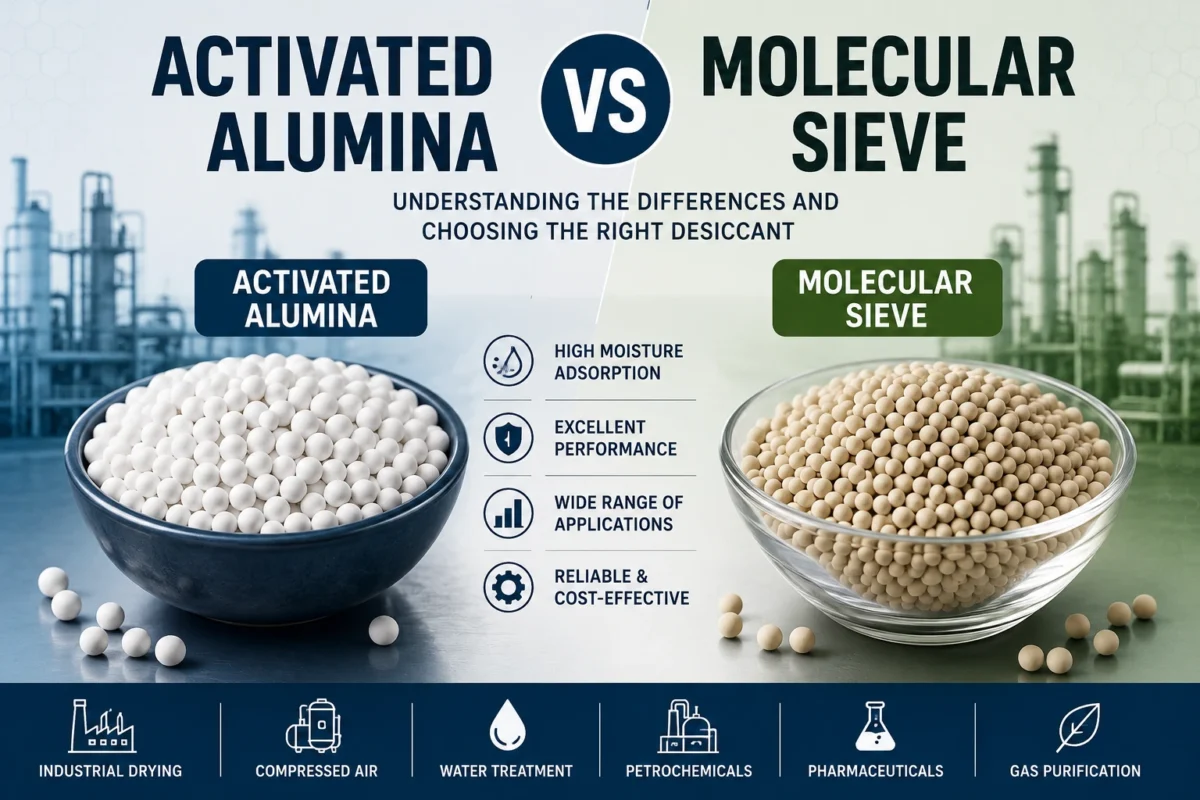
Activated Alumina vs Molecular Sieve: Key Differences Explained

Industrial operations depend on clean, dry air and gas streams to maintain efficiency, protect equipment, and ensure product quality. Excess moisture can lead to corrosion, catalyst poisoning, product spoilage, freezing in pipelines, and expensive maintenance. This is why desiccants play such a critical role in industries ranging from petrochemicals and pharmaceuticals to electronics, compressed air systems, and food processing.

Among the most widely used adsorbents are activated alumina and molecular sieve. Although both are designed to remove moisture and impurities, they differ significantly in their structure, adsorption mechanism, performance, and ideal applications.

If you’re deciding between these two desiccants, understanding their strengths and limitations will help you select the most efficient and cost-effective solution for your process.

What Is Activated Alumina?

Activated Alumina is a highly porous form of aluminum oxide (Al₂O₃) manufactured through a controlled activation process. It appears as small, hard spherical beads with an extensive internal surface area that enables it to adsorb water vapor and various contaminants.

Unlike absorbent materials that soak up liquids, activated alumina works by adsorbing moisture onto its porous surface. This allows it to remove significant amounts of water while maintaining its physical structure.

Its excellent mechanical strength, thermal stability, and regeneration capability make it one of the most trusted desiccants for industrial drying applications.

Key Features of Activated Alumina

  • High moisture adsorption capacity
  • Excellent crush strength
  • Uniform bead size
  • Low dust generation
  • High thermal stability
  • Easy regeneration
  • Long operational lifespan
  • Cost-effective industrial drying solution

Because of these properties, activated alumina is widely used in continuous industrial processes where reliability and durability are essential.

What Is a Molecular Sieve?

A molecular sieve is a synthetic crystalline aluminosilicate, commonly known as a zeolite. Unlike activated alumina, molecular sieves have highly uniform microscopic pores of specific sizes.

These precisely engineered pores allow molecular sieves to separate molecules according to their size. Smaller molecules enter the pores and become trapped, while larger molecules pass through.

This unique characteristic enables molecular sieves to remove moisture even at extremely low humidity levels and selectively separate gases in specialized industrial applications.

Depending on the application, molecular sieves are available in different pore sizes such as 3A, 4A, 5A, and 13X.

How Do These Desiccants Remove Moisture?

Although both products remove water vapor, they do so differently.

Activated Alumina

Activated alumina uses physical adsorption. Moisture molecules adhere to the enormous internal surface area of the porous beads. As humid air or gas flows through the desiccant bed, water molecules accumulate until the material reaches its adsorption capacity.

The desiccant can then be regenerated by heating, restoring its drying performance.

Molecular Sieve

Molecular sieves use highly uniform pore openings combined with strong electrostatic attraction. Water molecules are strongly attracted into the crystal structure, allowing molecular sieves to continue removing moisture even when humidity levels become extremely low.

This makes molecular sieves ideal for applications requiring exceptionally dry gases.

Activated Alumina vs. Molecular Sieve: Quick Comparison

Feature

Activated Alumina

Molecular Sieve

Material

Activated Aluminum Oxide

Synthetic Zeolite

Structure

Highly porous

Uniform crystalline pores

Moisture Removal

Excellent

Superior at very low humidity

Selective Adsorption

No

Yes

Mechanical Strength

Excellent

Very Good

Regeneration

Easy

Requires higher temperatures

Initial Cost

Lower

Higher

Operating Cost

Lower

Moderate to High

Best Application

General industrial drying

Ultra-low dew point and gas separation


Moisture Adsorption Performance

One of the most important factors when selecting a desiccant is how effectively it removes moisture under different operating conditions.

Activated Alumina

Activated alumina performs exceptionally well when removing moderate to high levels of humidity. It quickly adsorbs water vapor and maintains stable performance over long operating cycles.

It is an excellent choice for applications where standard industrial drying is sufficient.

Molecular Sieve

Molecular sieves excel when extremely low moisture levels are required. They continue adsorbing water molecules even after activated alumina has reached its practical drying limit.

Industries requiring ultra-low dew points typically prefer molecular sieves because of their superior drying capability.

Adsorption Capacity Under Different Conditions

Environmental conditions greatly influence desiccant performance.

Activated alumina performs efficiently across a wide range of temperatures and humidity levels, making it ideal for general-purpose drying systems.

Molecular sieves are particularly effective when:

  • Humidity is extremely low
  • Product purity is critical
  • Trace moisture must be eliminated
  • High-performance gas drying is required

If your application only requires routine moisture removal, activated alumina often provides a more economical solution.

Mechanical Strength and Durability

Industrial desiccants operate under demanding conditions, including pressure fluctuations, airflow cycling, and repeated regeneration.

Activated alumina offers excellent mechanical durability, including:

  • High crush resistance
  • Low abrasion loss
  • Minimal dust formation
  • Stable bead structure

These characteristics help reduce maintenance costs and maintain consistent airflow through drying systems.

Molecular sieves are also durable but require careful handling to minimize attrition in certain applications.

Regeneration and Reusability

One major advantage of both materials is that they can be regenerated and reused.

Activated Alumina Regeneration

Activated alumina is regenerated by heating the saturated material, releasing the trapped moisture and restoring adsorption capacity.

Benefits include:

  • Lower regeneration temperatures
  • Reduced energy consumption
  • Multiple regeneration cycles
  • Long service life

Molecular Sieve Regeneration

Molecular sieves also require thermal regeneration but typically need higher temperatures and longer heating cycles.

While regeneration costs may be higher, they are justified in applications demanding extremely dry conditions.

Contaminant Removal Capabilities

Both materials remove moisture, but activated alumina also performs well in several purification applications.

Activated alumina is commonly used to remove:

  • Fluoride from drinking water
  • Arsenic
  • Selenium
  • Sulfur compounds
  • Trace contaminants

Molecular sieves, on the other hand, are better suited for separating molecules based on size and selectively removing gases such as carbon dioxide, ammonia, and hydrocarbons.

Common Industrial Applications of Activated Alumina

Activated alumina is widely used because of its versatility and affordability.

Compressed Air Dryers

Removes moisture from compressed air systems to protect pneumatic equipment and improve operational efficiency.

Natural Gas Drying

Prevents corrosion and hydrate formation in natural gas pipelines.

Water Treatment

Specialized grades help remove fluoride, arsenic, and other contaminants from drinking water.

Petrochemical Plants

Maintains dry process streams for improved production efficiency.

Refrigeration Systems

Protects refrigeration components by removing moisture that could freeze or damage equipment.

Chemical Manufacturing

Supports moisture-sensitive manufacturing processes where product consistency is essential.

Common Applications of Molecular Sieves

Molecular sieves are commonly selected for highly specialized applications.

These include:

  • Oxygen generation plants
  • Nitrogen generation systems
  • LNG processing
  • Ethanol dehydration
  • Pharmaceutical manufacturing
  • Electronics production
  • Solvent drying
  • Air separation units
  • High-purity gas processing

Which Desiccant Is More Cost-Effective?

Cost should always be evaluated alongside process requirements.

Activated Alumina

Advantages include:

  • Lower purchase cost
  • Lower regeneration expense
  • Longer operational life
  • Reduced maintenance
  • Excellent value for standard drying systems

Molecular Sieve

Although more expensive, molecular sieves deliver outstanding performance where moisture specifications are extremely strict.

For many industrial users, the additional investment is worthwhile because it ensures product quality and process reliability.

Can Activated Alumina and Molecular Sieve Be Used Together?

Yes. In fact, many industrial drying systems combine both materials.

A typical configuration uses:

Stage 1: Activated Alumina removes the majority of moisture.

Stage 2: Molecular Sieve removes the remaining trace moisture to achieve an ultra-low dew point.

This combination improves efficiency, extends molecular sieve life, and reduces operating costs.

Factors to Consider Before Choosing a Desiccant

Selecting the right desiccant requires evaluating several operating conditions.

Moisture Level

How much water needs to be removed from the process?

Required Dew Point

Does your application require standard drying or extremely dry conditions?

Operating Temperature

Will the desiccant operate in high-temperature environments?

Gas Composition

Are there contaminants besides water that need to be removed?

Regeneration Capability

Can your system support thermal regeneration?

Budget

Consider both the initial investment and long-term operating costs rather than purchase price alone.

Why Choose Bee Chems Activated Alumina?

At Bee Chems, we manufacture high-quality activated alumina designed for reliable moisture removal across demanding industrial environments.

Our activated alumina products are engineered to deliver:

  • High adsorption efficiency
  • Excellent mechanical strength
  • Uniform bead size
  • Low attrition loss
  • Superior regeneration performance
  • Consistent product quality
  • Long service life

Our products support industries including:

  • Oil & Gas
  • Petrochemicals
  • Chemical Processing
  • Air Separation
  • Water Treatment
  • Pharmaceutical Manufacturing
  • Electronics
  • Industrial Compressed Air Systems

With decades of manufacturing expertise and stringent quality control, Bee Chems provides dependable adsorption solutions that help improve process efficiency while reducing maintenance and operating costs.

Conclusion

Choosing between activated alumina and molecular sieve depends entirely on your process requirements. While both are highly effective desiccants, they are designed for different operating conditions and performance expectations.

Activated alumina offers an excellent balance of adsorption capacity, durability, regeneration efficiency, and cost-effectiveness, making it the preferred choice for general industrial drying, compressed air systems, natural gas dehydration, and water treatment. Molecular sieves, on the other hand, excel in specialized applications that require ultra-low moisture levels, selective adsorption, and high-purity gas processing.

For industries seeking a dependable and economical moisture control solution, Bee Chems Activated Alumina delivers consistent performance, long service life, and reliable quality. Whether your application involves drying air, purifying gases, or treating water, our activated alumina products are designed to support efficient, uninterrupted industrial operations.

Frequently Asked Questions


Q1. What is the main difference between activated alumina and molecular sieve?

Activated alumina is a porous aluminum oxide desiccant used for general moisture removal, while molecular sieve is a synthetic zeolite with uniform pores that removes moisture at much lower humidity levels and can selectively adsorb molecules based on their size.

Q2. Which is better for compressed air drying: activated alumina or molecular sieve?

Activated alumina is widely preferred for compressed air dryers because it offers excellent moisture adsorption, high mechanical strength, easy regeneration, and lower operating costs. A molecular sieve is generally chosen only when ultra-low dew points are required.

Q3. Can activated alumina and molecular sieve be used together?

Yes. Many industrial drying systems use activated alumina as the first layer to remove bulk moisture, followed by molecular sieves to eliminate residual moisture. This combination improves drying efficiency, extends desiccant life, and reduces overall operating costs.

Q4. Is activated alumina reusable after saturation?

Yes. Activated Alumina can be regenerated by heating to release the adsorbed moisture. When regenerated correctly and operated under recommended conditions, it can withstand multiple adsorption cycles while maintaining reliable drying performance.

Q5. What industries commonly use activated alumina?

Activated alumina is widely used in compressed air systems, petrochemical plants, natural gas processing, water treatment, chemical manufacturing, pharmaceuticals, refrigeration, and electronics industries where efficient moisture removal is essential for reliable operations.

Q6. Does a molecular sieve remove more moisture than activated alumina?

Yes. Molecular sieves can achieve much lower moisture levels than activated alumina because of its uniform pore structure and stronger attraction to water molecules. It is preferred for high-purity gas processing and applications requiring extremely low dew points.

Q7. How do I choose between activated alumina and molecular sieve?

Your choice depends on the required dew point, operating conditions, gas composition, regeneration method, and budget. Activated alumina is ideal for general industrial drying, while molecular sieves are recommended for critical applications requiring ultra-low moisture.

Categories
Adsorbents Desiccants

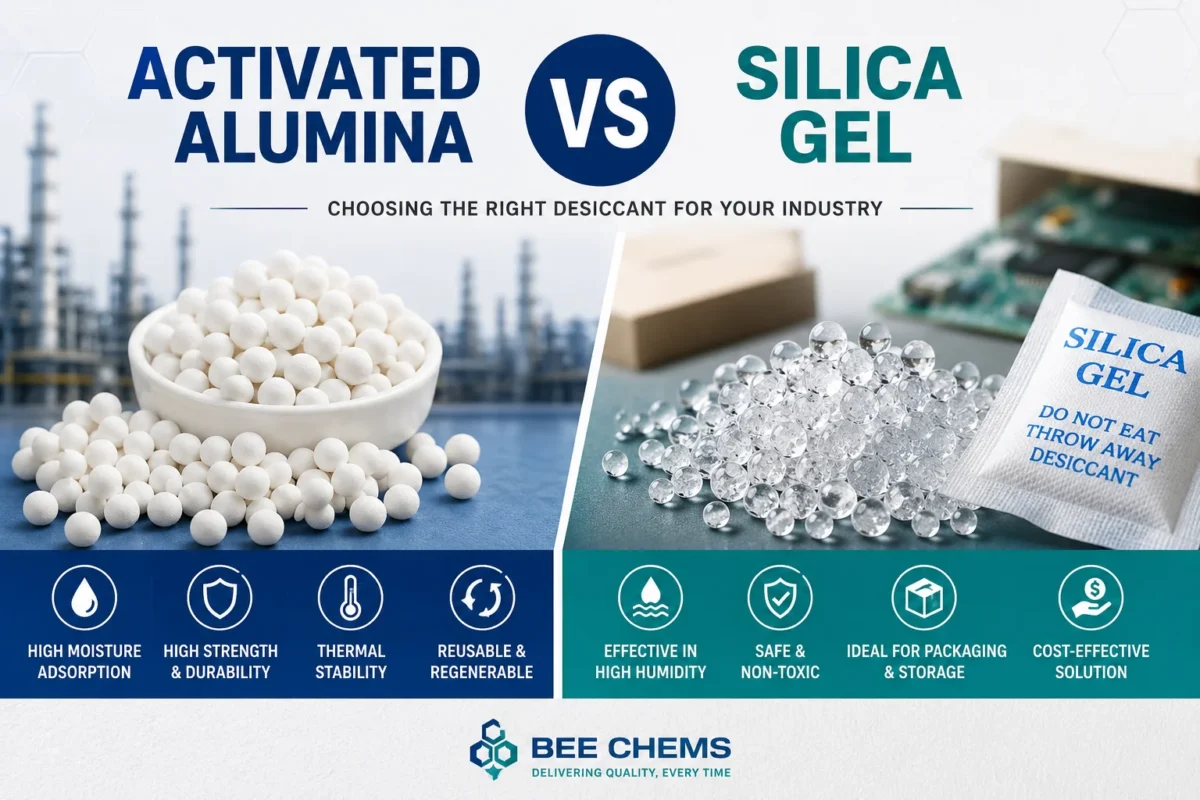
Activated Alumina vs. Silica Gel

Moisture is one of the most common causes of product degradation, equipment corrosion, and process inefficiencies across industries. Whether it is pharmaceuticals, food processing, electronics, petrochemicals, or compressed air systems, uncontrolled humidity can lead to higher operational costs, reduced product quality, and shorter equipment life.

To overcome these challenges, industries rely on desiccants—materials specifically designed to adsorb moisture from air and gases. Among the many desiccants available today, activated alumina and silica gel are two of the most widely used due to their excellent moisture adsorption capabilities and versatility.

Although both materials perform the same fundamental function, they are engineered differently and deliver the best results under different operating conditions. Factors such as humidity levels, temperature, airflow, regeneration requirements, and application environment all influence which desiccant is the better choice.

This guide explains the key differences between activated alumina and silica gel, how each material works, and which one is best suited for your industrial application.

Why Selecting the Right Desiccant Matters

Choosing a desiccant is not simply about removing moisture—it is about ensuring process reliability, product quality, and long-term operational efficiency.

An unsuitable desiccant can result in:

  • Reduced drying efficiency
  • Increased maintenance costs
  • Frequent desiccant replacement
  • Equipment corrosion
  • Product spoilage
  • Higher energy consumption
  • Production downtime

On the other hand, selecting the right moisture adsorbent can significantly improve process stability, extend equipment life, and reduce operating costs.

For industries where even small amounts of moisture can affect performance, investing in the appropriate desiccant is an essential part of maintaining consistent operations.

Understanding Industrial Desiccants

Desiccants are highly porous materials capable of attracting and retaining water molecules from surrounding air or gases through a process known as adsorption.

Unlike absorption, where moisture penetrates into the material itself, adsorption occurs on the surface of millions of microscopic pores. This large internal surface area enables desiccants to capture significant amounts of moisture without changing their physical shape.

Industrial desiccants are commonly used in:

  • Compressed air drying systems
  • Natural gas processing
  • Pharmaceutical manufacturing
  • Chemical production
  • Food packaging
  • Electronics storage
  • Shipping and logistics
  • Water treatment
  • Laboratory equipment
  • Industrial automation

The efficiency of a desiccant depends on factors such as pore size, surface area, mechanical strength, operating temperature, and humidity conditions.

What is Activated Alumina?

Activated Alumina is a highly porous form of aluminum oxide (Al₂O₃) produced by carefully dehydrating aluminum hydroxide under controlled conditions. This process creates a network of microscopic pores that provide an exceptionally large surface area for moisture adsorption.

Unlike many conventional drying materials, activated alumina combines high adsorption efficiency with excellent mechanical strength, making it suitable for demanding industrial environments where continuous operation is required.

Its spherical beads are designed to withstand repeated regeneration cycles while maintaining structural integrity, allowing industries to reuse the material over extended periods.

Key Characteristics of Activated Alumina

  • High moisture adsorption efficiency
  • Excellent crush strength
  • Low dust generation
  • High resistance to abrasion
  • Stable performance at elevated temperatures
  • Long operational lifespan
  • Suitable for regeneration and repeated use
  • Chemically stable in many industrial environments

These properties make activated alumina a preferred choice for applications requiring reliable moisture removal under challenging operating conditions.

How Activated Alumina Works

Activated alumina contains an interconnected network of microscopic pores. As humid air or gas passes through a bed of activated alumina, water molecules are attracted to the surface of these pores and become trapped through adsorption.

This process continues until the material reaches its adsorption capacity. Once saturated, the desiccant can often be regenerated by applying heat, which releases the retained moisture and restores its drying capability.

Its ability to withstand multiple regeneration cycles makes activated alumina an economical option for continuous industrial processes.

Common Applications of Activated Alumina

Because of its durability and adsorption performance, activated alumina is used across a wide range of industries, including:

Compressed Air Drying

Activated Alumina is widely used in heatless, heated, and blower purge air dryers to achieve low dew points and protect pneumatic systems from moisture-related damage.

Petrochemical and Oil & Gas Industries

Moisture can interfere with gas processing, refining, and pipeline operations. Activated Alumina helps remove water vapor before gases enter downstream equipment, improving process reliability.

Water Treatment

Specialized grades of activated alumina are used in water purification systems to reduce contaminants such as fluoride and arsenic while improving overall water quality.

Chemical Processing

Many chemical manufacturing processes require dry feed gases and controlled humidity. Activated Alumina provides consistent moisture control that helps maintain process efficiency.

Catalyst Support

Thanks to its high surface area and thermal stability, activated alumina also serves as an effective support material for various industrial catalysts.

What is Silica Gel?

Silica gel is a synthetic, porous form of silicon dioxide (SiO₂) known for its exceptional ability to adsorb water vapor. Despite its name, Silica Gel is a hard, granular material rather than a liquid or gel.

Its highly porous structure contains millions of microscopic cavities that efficiently capture moisture from surrounding air. Because of this, Silica Gel is one of the most commonly used desiccants for protecting products during storage, transportation, and packaging.

Silica Gel is available in several forms, including:

  • White silica gel
  • Blue indicating silica gel
  • Orange indicating silica gel
  • Fine granules
  • Beads
  • Sachets and packets

Each type is designed to meet specific moisture control requirements.

Key Characteristics of Silica Gel

Silica gel is valued for several reasons:

  • High moisture adsorption capacity
  • Chemically inert
  • Non-toxic (food-grade variants available)
  • Lightweight
  • Easy to handle
  • Available in indicating and non-indicating grades
  • Reusable after regeneration
  • Suitable for enclosed storage environments

These qualities make silica gel one of the most widely used desiccants across commercial and industrial applications.

How Silica Gel Removes Moisture

Like activated alumina, silica gel removes moisture through adsorption rather than absorption.

Its extensive network of microscopic pores provides an enormous internal surface area where water molecules adhere. As humidity increases, Silica Gel continues to adsorb moisture until it reaches equilibrium with the surrounding environment.

Once saturated, the material can be regenerated through controlled heating, allowing it to be reused in many applications.

Common Applications of Silica Gel

Silica gel is widely used wherever products require protection against humidity during storage or transport.

Pharmaceutical Packaging

Medicines and healthcare products are highly sensitive to moisture. Silica gel sachets help maintain product stability throughout their shelf life.

Electronics

Moisture can damage electronic components by causing corrosion and reducing performance. Silica gel is commonly included in packaging for electronic devices and spare parts.

Food Packaging

Many packaged foods require moisture control to maintain freshness, texture, and shelf life. Silica gel helps reduce humidity inside sealed packaging.

Leather and Textile Storage

Silica gel protects leather goods, footwear, garments, and fabrics from mildew and moisture damage during storage and transportation.

Shipping and Warehousing

Container shipments often experience condensation due to changing temperatures. Silica gel helps reduce excess moisture and protects goods while in transit.

Activated Alumina or Silica Gel: Is One Better Than the Other?

Rather than asking which desiccant is “better,” the more important question is:

Which desiccant is better for your operating conditions?

Both materials are highly effective, but they are designed for different environments and performance requirements.

Activated Alumina is often preferred for demanding industrial systems that require continuous operation, high mechanical strength, and reliable performance under varying temperatures.

Silica gel, on the other hand, excels in packaging, storage, transportation, and enclosed environments where humidity control is the primary objective.

Understanding these differences is the key to selecting the right desiccant—and that’s exactly what we’ll explore in the next section.

Activated Alumina vs. Silica Gel: A Detailed Comparison

Now that we’ve explored the fundamentals of both desiccants, it’s time to compare their performance across the factors that matter most in industrial applications.

Although activated alumina and silica gel are both designed to adsorb moisture, they differ significantly in terms of adsorption behavior, durability, regeneration, operating conditions, and overall suitability for specific industries.

The following comparison will help engineers, procurement teams, and plant managers choose the most appropriate desiccant based on real operational requirements.

1. Moisture Adsorption Performance

The primary purpose of any desiccant is to remove moisture effectively. However, adsorption performance varies depending on environmental conditions, particularly relative humidity and temperature.

Activated Alumina

Activated Alumina is highly effective in applications where air or gases must be dried to very low moisture levels. It continues to perform reliably even when moisture concentrations are already low, making it suitable for industrial drying systems that require low dew points.

Its controlled pore structure enables gradual and consistent moisture adsorption over extended operating cycles, which is particularly valuable in continuous-process industries.

Best suited for:

  • Compressed air dryers
  • Gas dehydration
  • Process air drying
  • Industrial gas purification
  • Chemical processing plants

Silica Gel

Silica gel adsorbs moisture rapidly, especially when relative humidity is moderate to high. This makes it an excellent option for protecting products during storage, packaging, and transportation where humidity fluctuates throughout the day.

Its high adsorption capacity allows it to absorb a significant amount of moisture relative to its own weight before regeneration becomes necessary.

Best suited for:

  • Packaging
  • Shipping containers
  • Storage cabinets
  • Electronics protection
  • Pharmaceutical packaging

2. Relative Humidity Performance

Humidity conditions have a direct impact on desiccant efficiency.

Activated Alumina

Activated Alumina delivers stable performance across a wide range of humidity conditions and is particularly effective when maintaining very dry operating environments.

Industries that require precise moisture control often choose activated alumina because it maintains consistent drying performance over longer operating periods.

Silica Gel

Silica gel performs exceptionally well as humidity levels increase. In enclosed spaces where moisture gradually accumulates, it quickly adsorbs water vapor and helps maintain product quality.

For applications such as warehouse storage, export packaging, and sealed containers, silica gel often provides an efficient moisture-control solution.

3. Surface Area and Pore Structure

The adsorption capability of a desiccant depends largely on its internal pore network.

Activated Alumina

Activated alumina consists of interconnected pores that provide a large surface area while maintaining excellent structural strength. Its pore distribution is optimized for industrial gas and air drying applications.

Benefits include:

  • Consistent adsorption
  • Low pressure drop in drying systems
  • High mechanical stability
  • Reliable long-term performance

Silica Gel

Silica gel possesses an extensive network of microscopic pores with an exceptionally high internal surface area. This enables rapid adsorption of water vapor under favorable humidity conditions.

Its pore structure makes it especially effective for static moisture control inside sealed packages and storage environments.

4. Mechanical Strength and Durability

Industrial drying systems subject desiccants to continuous airflow, pressure changes, vibration, and repeated regeneration cycles.

Activated Alumina

One of the biggest advantages of activated alumina is its outstanding mechanical strength.

Its spherical beads are engineered to resist:

  • Crushing
  • Abrasion
  • Dust formation
  • Mechanical wear

This durability reduces desiccant replacement frequency and minimizes pressure drop caused by broken particles.

For industrial plants operating around the clock, this translates into lower maintenance costs and improved equipment reliability.

Silica Gel

Silica gel is sufficiently durable for packaging and storage applications but is generally less resistant to mechanical stress than activated alumina.

When exposed to continuous airflow or repeated handling, it may gradually generate fine particles, making it less suitable for certain high-pressure industrial systems.

5. Thermal Stability

Temperature can significantly influence desiccant performance, especially in regeneration systems.

Activated Alumina

Activated Alumina maintains excellent stability at elevated operating temperatures.

Its thermal resistance allows it to perform effectively in regenerative dryers where repeated heating and cooling cycles are common.

This characteristic contributes to its long operational life.

Silica Gel

Silica gel also performs well across normal industrial temperatures but may gradually lose efficiency if repeatedly exposed to excessively high regeneration temperatures.

Proper regeneration practices help maximize its service life.

6. Water Resistance

Unexpected exposure to liquid water can affect desiccant performance.

Activated Alumina

Activated alumina exhibits excellent resistance to liquid water and maintains its structural integrity even in challenging industrial environments.

This makes it suitable for applications where occasional moisture surges or condensation may occur.

Silica Gel

Silica gel is designed primarily for water vapor adsorption rather than direct contact with liquid water.

Continuous exposure to liquid water may reduce its effectiveness and require more frequent regeneration or replacement.

7. Regeneration Capability

One of the major advantages of industrial desiccants is their ability to be regenerated and reused.

Activated Alumina

Activated Alumina can be regenerated through controlled heating, allowing adsorbed moisture to be removed from its pore structure.

Advantages include:

  • Multiple regeneration cycles
  • Long operational lifespan
  • Lower replacement costs
  • Consistent drying efficiency after regeneration

This makes it a cost-effective option for continuous industrial drying systems.

Silica Gel

Silica gel can also be regenerated using controlled heat.

Its regeneration process is relatively simple, making it suitable for applications where desiccant replacement or periodic maintenance is easy to manage.

For packaging applications, however, many users replace silica gel sachets rather than regenerating them due to convenience.

8. Service Life

The expected lifespan of a desiccant depends on operating conditions, contamination levels, regeneration practices, and airflow.

Activated Alumina

Activated alumina generally offers a longer service life because of its:

  • High mechanical strength
  • Excellent abrasion resistance
  • Stable adsorption performance
  • Superior regeneration capability

Properly maintained activated alumina can continue performing efficiently through numerous operating cycles.

Silica Gel

Silica gel also provides reliable performance but may require more frequent replacement in demanding industrial environments, particularly where continuous airflow or repeated handling is involved.

For static storage applications, however, its service life can be excellent.

9. Maintenance Requirements

Maintenance costs often influence the overall economics of a drying system.

Activated Alumina

Because it generates minimal dust and withstands repeated regeneration, activated alumina generally requires the following:

  • Less frequent replacement
  • Reduced system cleaning
  • Lower maintenance downtime
  • Longer intervals between servicing

Silica Gel

Silica gel is easy to replace and maintain in packaging applications.

However, industrial systems operating continuously may require more regular inspection and replacement depending on operating conditions.

10. Cost Considerations

Price is important, but the total cost of ownership is often more significant than the initial purchase price.

Activated Alumina

The initial investment may be higher than some desiccants, but its durability, long service life, and regeneration capability often reduce lifetime operating costs.

Industries operating continuously frequently recover the higher initial cost through lower maintenance expenses and longer replacement intervals.

Silica Gel

Silica gel is generally economical for packaging and storage applications.

Its affordability and ease of use make it a practical choice where desiccants are replaced periodically rather than regenerated.

When evaluating costs, businesses should consider:

  • Purchase price
  • Expected service life
  • Regeneration costs
  • Maintenance frequency
  • Replacement intervals
  • Downtime costs

Side-by-Side Comparison

Parameter

Activated Alumina

Silica Gel

Primary Function

Industrial drying and gas dehydration

Packaging and humidity control

Moisture Adsorption

Excellent for deep drying and low moisture environments

Excellent in moderate to high humidity

Mechanical Strength

Excellent

Moderate

Abrasion Resistance

High

Moderate

Thermal Stability

Excellent

Good

Water Resistance

High

Moderate

Regeneration

Multiple cycles with consistent performance

Easily regenerated under controlled conditions

Service Life

Long

Moderate to Long (application dependent)

Continuous Industrial Use

Excellent

Limited for heavy-duty systems

Packaging Applications

Suitable for specialized needs

Excellent

Maintenance

Low

Moderate

Typical Industries

Oil & Gas, Petrochemical, Air Drying, Water Treatment, Chemical Processing

Food, Pharma, Electronics, Logistics, Warehousing


Quick Selection Guide

If Your Requirement Is…

Recommended Desiccant

Achieving low dew points in compressed air systems

Activated Alumina

Continuous industrial gas drying

Activated Alumina

Drying process air in manufacturing

Activated Alumina

Protecting electronic components during shipping

Silica Gel

Preventing moisture damage in pharmaceutical packaging

Silica Gel

Moisture control in food packaging

Silica Gel

Water treatment applications

Activated Alumina

Long-term industrial regeneration

Activated Alumina

Storage and warehouse humidity control

Silica Gel


Industry Applications and How to Choose the Right Desiccant

Selecting between activated alumina and silica gel goes beyond comparing technical specifications. The right choice depends on your operating environment, humidity levels, equipment design, product sensitivity, maintenance practices, and long-term operational goals.

This section explores how different industries use these desiccants and provides practical guidance to help you select the most suitable solution.

Choosing the Right Desiccant: Key Factors to Consider

Before purchasing any desiccant, evaluate the following factors:

1. Operating Environment

Start by understanding where the desiccant will be used.

Ask yourself:

  • Is the application indoors or outdoors?
  • Is the environment exposed to varying temperatures?
  • Is humidity constant or seasonal?
  • Will the desiccant operate continuously or intermittently?

Industrial processing plants often require a desiccant capable of delivering consistent performance under demanding operating conditions, while packaging applications may only require moisture protection inside a sealed environment.

2. Moisture Removal Requirement

Not every application requires the same level of dryness.

For example:

  • A compressed air system may need extremely dry air to protect pneumatic equipment.
  • Pharmaceutical packaging may only require enough moisture control to maintain product stability.
  • Electronics shipping focuses on preventing condensation during transportation.

Understanding your target moisture level helps determine which desiccant is more appropriate.

3. Operating Temperature

Temperature influences both adsorption performance and regeneration efficiency.

Applications involving:

  • High-temperature drying
  • Regenerative dryers
  • Continuous industrial processing

often benefit from desiccants with excellent thermal stability.

Conversely, storage and packaging applications typically operate under ambient conditions where thermal resistance is less critical.

4. Airflow and System Pressure

Some desiccants perform better in high-flow industrial systems than others.

Consider:

  • Air velocity
  • Operating pressure
  • Pressure drop
  • Mechanical vibration

A desiccant used inside an industrial air dryer experiences significantly different conditions than one placed inside a medicine bottle or shipping container.

5. Maintenance Requirements

Maintenance costs extend beyond simply replacing the desiccant.

Evaluate:

  • Regeneration frequency
  • Ease of replacement
  • Downtime during servicing
  • Labour requirements
  • Expected service life

A desiccant with a higher initial investment may prove more economical if it reduces maintenance frequency and extends equipment uptime.

Industry Applications of Activated Alumina

Activated alumina is widely trusted in industries where reliable moisture removal is essential for maintaining process efficiency and equipment performance.

Compressed Air Systems

Compressed air often contains water vapour that can condense inside pipelines, valves, cylinders, and pneumatic equipment.

Activated alumina is commonly used in adsorption air dryers because it helps:

  • Reduce moisture content
  • Prevent corrosion
  • Protect pneumatic components
  • Improve equipment reliability
  • Maintain consistent production quality

Its high mechanical strength also allows it to withstand continuous airflow without significant degradation.

Petrochemical and Refining Industries

Petrochemical operations require strict moisture control to ensure efficient processing and protect downstream equipment.

Activated alumina is commonly used for the following:

  • Process gas drying
  • Hydrocarbon processing
  • Feed gas conditioning
  • Refinery applications

Its durability and regeneration capability make it suitable for continuous industrial operations.

Natural Gas Processing

Water vapor in natural gas can contribute to operational challenges during transportation and processing.

Activated Alumina helps condition gas streams before they enter downstream systems, supporting efficient plant operation.

Chemical Manufacturing

Many chemical reactions require carefully controlled humidity levels.

Activated alumina assists in the following:

  • Drying process gases
  • Protecting catalysts
  • Maintaining product consistency
  • Improving production efficiency

Water Treatment

Specialized grades of activated alumina are widely used in water treatment systems.

Applications include:

  • Fluoride removal
  • Arsenic reduction
  • Drinking water purification
  • Industrial water treatment

Its high adsorption capacity makes it an effective solution for improving water quality in appropriate treatment systems.

Catalyst Support

Beyond moisture adsorption, activated alumina serves as a catalyst carrier in numerous industrial chemical processes because of its:

  • High surface area
  • Mechanical strength
  • Thermal stability
  • Chemical compatibility

Industry Applications of Silica Gel

Silica gel is widely used where products need protection against humidity during storage, transportation, or shelf life.

Pharmaceutical Industry

Many medicines and healthcare products are moisture-sensitive.

Silica gel helps maintain appropriate humidity levels inside:

  • Tablet containers
  • Capsule bottles
  • Medical packaging
  • Diagnostic kits
  • Nutraceutical products

This helps preserve product quality throughout storage and distribution.

Food Processing and Packaging

Moisture can affect food quality by altering texture, flavor, and shelf life.

Silica gel is commonly used in packaging for products such as:

  • Nutritional supplements
  • Dry foods
  • Spices
  • Snacks
  • Specialty food products

Its role is to help control humidity within sealed packaging.

Electronics Manufacturing

Electronic components are vulnerable to excess moisture during storage and transportation.

Silica gel is widely used for the following:

  • Printed circuit boards
  • Semiconductor packaging
  • Communication equipment
  • Consumer electronics
  • Industrial electronic components

Moisture control helps reduce the risk of corrosion and condensation during shipping.

Leather and Textile Industry

Manufacturers and exporters often include silica gel with products to protect against moisture-related damage.

Common applications include:

  • Leather footwear
  • Handbags
  • Garments
  • Textile rolls
  • Fashion accessories

Warehousing and Logistics

Long-distance transportation often exposes goods to changing temperatures and humidity levels.

Silica gel helps protect products during:

  • Ocean freight
  • Air cargo
  • Export shipments
  • Warehouse storage
  • Long-term inventory management

Activated Alumina or Silica Gel: Which One Should You Choose?

The answer depends on your application rather than the product itself.

Choose activated alumina if you need the following:

✅ Continuous industrial drying

✅ Low dew point performance

✅ Compressed air treatment

✅ Gas dehydration

✅ Water treatment applications

✅ High mechanical strength

✅ Long service life

✅ Multiple regeneration cycles

Choose silica gel if you need the following:

✅ Packaging protection

✅ Storage humidity control

✅ Export shipment protection

✅ Pharmaceutical packaging

✅ Food packaging

✅ Electronics storage

✅ Consumer product moisture control

Common Mistakes to Avoid When Selecting a Desiccant

Choosing the wrong desiccant can increase operating costs and reduce process efficiency. Here are some common mistakes businesses should avoid.

Selecting Based Only on Price

The lowest-priced desiccant may not provide the lowest operating cost.

A product with longer service life and better regeneration performance can often reduce maintenance expenses over time.

Always consider the total cost of ownership rather than only the initial purchase price.

Ignoring Operating Conditions

Temperature, humidity, airflow, and process design all affect desiccant performance.

A desiccant that performs well in packaging may not be suitable for an industrial air dryer.

Evaluate actual operating conditions before making a selection.

Overlooking Regeneration Requirements

Reusable desiccants offer long-term cost savings only if they are regenerated correctly.

Improper regeneration can reduce adsorption capacity and shorten service life.

Follow the manufacturer’s recommended regeneration procedures to maintain consistent performance.

Choosing the Wrong Particle Size

Particle size influences:

  • Airflow
  • Pressure drop
  • Adsorption efficiency
  • Dust generation

Selecting the appropriate bead size for your equipment helps optimize system performance.

Failing to Replace Saturated Desiccant

Every desiccant has a finite adsorption capacity.

Once saturated, it must either be regenerated or replaced to maintain effective moisture control.

Regular inspection and preventive maintenance help ensure consistent performance.

Sustainability and Reusability

Many industries are focusing on reducing waste and improving resource efficiency.

Both activated alumina and silica gel can contribute to sustainable operations when used correctly.

Activated Alumina

  • Long operational life
  • Multiple regeneration cycles
  • Reduced replacement frequency
  • Lower maintenance waste

Silica Gel

  • Reusable in many applications
  • Easy regeneration
  • Reduced packaging waste when regenerated appropriately

Selecting a durable, regenerable desiccant can help reduce operating costs while supporting sustainability initiatives.

Why Quality Matters When Choosing a Desiccant Supplier

The performance of any desiccant depends not only on the material itself but also on its manufacturing quality and consistency.

A reliable supplier should offer:

  • Consistent bead size and quality
  • High adsorption efficiency
  • Stringent quality control
  • Technical support for product selection
  • Reliable supply for industrial requirements
  • Products manufactured to applicable quality standards

Working with an experienced manufacturer helps ensure that the desiccant performs as expected across its intended service life.

Decision Matrix: Which Desiccant Fits Your Application?

Application

Recommended Desiccant

Compressed Air Dryers

Activated Alumina

Industrial Gas Drying

Activated Alumina

Petrochemical Plants

Activated Alumina

Chemical Processing

Activated Alumina

Water Treatment

Activated Alumina

Pharmaceutical Packaging

Silica Gel

Food Packaging

Silica Gel

Electronics Packaging

Silica Gel

Shipping Containers

Silica Gel

Warehouse Storage

Silica Gel

Export Logistics

Silica Gel

Consumer Product Packaging

Silica Gel


Why Choose Bee Chems for Industrial Desiccant Solutions?

Selecting the right desiccant is only part of the equation. Working with a reliable manufacturer is equally important to ensure consistent product quality, dependable performance, and long-term value.

At Bee Chems, we manufacture high-performance desiccants and adsorption products that help industries control moisture, improve process efficiency, and protect valuable equipment and products. With years of expertise in adsorption technologies, we serve customers across India and international markets with solutions designed for a wide range of industrial applications.

Whether your requirement is for compressed air drying, packaging, gas purification, or moisture control during storage and transportation, our technical team can help you select the most suitable desiccant for your application.

Our Product Portfolio

Bee Chems offers a comprehensive range of industrial adsorption and moisture-control products, including:

Each product is manufactured with strict quality control to deliver reliable and consistent performance across industrial applications.

Why Industries Trust Bee Chems

Customers choose Bee Chems because we focus on quality, consistency, and customer support.

High-Quality Manufacturing

Our desiccants are produced using carefully controlled manufacturing processes to ensure consistent adsorption performance and reliable quality.

Industry Expertise

Our team understands the moisture-control challenges faced by different industries and helps customers identify the right solution for their specific application.

Consistent Product Quality

Uniform particle size, excellent mechanical strength, and dependable adsorption characteristics help ensure reliable performance in demanding environments.

Wide Industrial Applications

Our products are trusted across sectors such as:

  • Pharmaceutical manufacturing
  • Food processing
  • Petrochemicals
  • Chemical industries
  • Electronics
  • Water treatment
  • Packaging
  • Logistics
  • Automotive
  • Industrial manufacturing

Customer-Centric Support

From product selection to technical guidance, we work closely with customers to help them achieve optimal performance and long-term value.

Quick Comparison Summary

Feature

Activated Alumina

Silica Gel

Best For

Industrial drying and gas dehydration

Packaging and storage humidity control

Moisture Removal

Excellent for achieving low moisture levels

Excellent in moderate to high humidity environments

Mechanical Strength

Excellent

Good

Regeneration

Suitable for repeated regeneration cycles

Can be regenerated under controlled conditions

Thermal Stability

Excellent

Good

Continuous Industrial Use

Highly suitable

Best for static or enclosed environments

Common Applications

Compressed air, gas processing, water treatment, chemical plants

Pharmaceuticals, electronics, food packaging, logistics

Service Life

Long

Moderate to long, depending on use


At a Glance: Which Desiccant Should You Choose?

Choose activated alumina if your application involves the following:

  • Industrial air dryers
  • Compressed air systems
  • Gas dehydration
  • Water treatment
  • Chemical processing
  • High-temperature operations
  • Continuous industrial use

Choose silica gel if your application involves the following:

  • Pharmaceutical packaging
  • Food packaging
  • Electronics
  • Shipping and export
  • Warehouse storage
  • Consumer goods
  • Moisture protection in enclosed spaces

The right choice depends on your process requirements, environmental conditions, and maintenance strategy.

Conclusion

Effective moisture control is critical for maintaining product quality, protecting equipment, and ensuring efficient industrial operations. While both activated alumina and silica gel are trusted desiccants, they are designed to perform under different conditions.

If your application requires continuous industrial drying, gas dehydration, compressed air treatment, or water purification, activated alumina is often the preferred solution because of its durability, regeneration capability, and long service life.

If your priority is protecting products from humidity during packaging, storage, or transportation, silica gel offers an efficient and economical solution for enclosed environments.

Understanding your operating conditions, maintenance requirements, and moisture-control objectives is the key to selecting the right desiccant.

At Bee Chems, we are committed to delivering high-quality desiccant solutions backed by technical expertise and reliable customer support. Whether you need activated alumina, silica gel, or other industrial adsorption products, our team can help you identify the most suitable solution for your application.

Contact Bee Chems today to discuss your moisture-control requirements and discover desiccant solutions designed to improve efficiency, protect valuable assets, and support your industrial processes.

Frequently Asked Questions

Q1. What is the main difference between activated alumina and silica gel?

Activated alumina is designed for industrial drying, gas dehydration, and compressed air systems where low moisture levels are essential. Silica gel is more suitable for packaging, storage, and transportation, where it effectively controls humidity in enclosed environments.

Q2. Which desiccant is better for compressed air drying systems?

Activated alumina is generally the preferred desiccant for compressed air dryers because it delivers reliable low dew point performance, offers excellent mechanical strength, withstands repeated regeneration, and performs consistently in continuous industrial operations.

Q3. Can activated alumina and silica gel be regenerated and reused?

Yes. Both activated alumina and silica gel can be regenerated using controlled heating. Activated alumina is ideal for repeated industrial regeneration cycles, while silica gel is commonly reused in suitable applications or replaced when convenient for packaging needs.

Q4. Which industries commonly use activated alumina?

Activated alumina is widely used in compressed air drying, petrochemical processing, natural gas treatment, chemical manufacturing, water treatment, and catalyst support applications where dependable moisture removal and long service life are important.

Q5. Where is silica gel most commonly used?

Silica gel is commonly used in pharmaceutical packaging, food packaging, electronics, leather goods, warehousing, and export shipments. It helps reduce humidity inside sealed packages and protects moisture-sensitive products during storage and transportation.

Q6. How do I choose between activated alumina and silica gel?

The right choice depends on your application, humidity level, operating temperature, airflow, maintenance requirements, and regeneration needs. Industrial drying systems usually benefit from activated alumina, while packaging and storage applications often use silica gel.

Q7. Why is selecting the right desiccant important?

Choosing the appropriate desiccant improves moisture control, protects equipment and products, reduces maintenance costs, extends equipment life, and supports efficient industrial operations. The right solution also helps minimize downtime and operating expenses.

Q8. Why choose Bee Chems for industrial desiccant solutions?

Bee Chems supplies high-quality industrial desiccants, including activated alumina, silica gel, colloidal silica, humidity indicator products, and absorbents. The company focuses on consistent quality, technical support, and reliable solutions for diverse industries.
Categories
Adsorbents Desiccants

Top 10 Clay Desiccant Suppliers in the World (2026)

Moisture is one of the biggest threats to product quality during storage and transportation. From pharmaceuticals and electronics to food products, automotive components, leather goods, and industrial machinery, excess humidity can lead to corrosion, mold growth, packaging damage, and reduced shelf life. That’s why businesses across industries rely on high-quality desiccants to maintain product integrity throughout the supply chain.

Among the various moisture-absorbing materials available today, clay desiccant remains one of the most trusted and environmentally friendly solutions. Made from naturally occurring bentonite clay, these desiccants offer reliable moisture absorption without requiring chemical activation. They are widely used in packaging applications where cost-effectiveness, sustainability, and dependable performance are essential.

With so many manufacturers in the global market, choosing the right clay desiccant supplier can be challenging. Product quality, manufacturing standards, certifications, packaging options, and global distribution capabilities all play a significant role in determining the best supplier for your business.

This guide highlights some of the leading clay desiccant manufacturers worldwide based on their industry presence, product quality, innovation, and ability to serve global customers. Whether you’re looking for standard clay desiccant beads, specialized container desiccant solutions for shipping, or alternatives such as calcium chloride desiccant products, this list will help you identify reliable suppliers.

Why Clay Desiccants Continue to Be a Preferred Choice

Clay desiccants have been used for decades because they provide dependable moisture control while being economical and naturally sourced. Unlike synthetic moisture absorbers, clay desiccants require minimal processing and perform effectively under a wide range of storage conditions.

Some of the key advantages include:

  • Made from naturally occurring bentonite clay
  • Environmentally friendly and non-toxic
  • Cost-effective moisture protection
  • Suitable for industrial and consumer packaging
  • Available in multiple packaging sizes
  • Easy to dispose of after use
  • Compliant with various packaging standards

Many manufacturers also offer clay desiccant beads/balls in different pouch sizes to accommodate packaging requirements across multiple industries.

How We Selected These Clay Desiccant Suppliers

The companies featured in this list were selected based on several important factors, including:

  • Years of industry experience
  • Product quality and consistency
  • Manufacturing capabilities
  • Global distribution network
  • Industry certifications
  • Product portfolio
  • Custom packaging options
  • Customer support
  • Export experience
  • Innovation in moisture control solutions

This list is intended to provide an informative overview rather than a ranking based on a single criterion.

Top 10 Clay Desiccant Suppliers in 2026

1. Clariant

Headquartered in Switzerland, Clariant is one of the world’s best-known specialty chemical companies and a recognized manufacturer of desiccant products. The company offers a comprehensive portfolio of moisture control solutions serving pharmaceutical, electronics, automotive, packaging, and industrial markets.

Its desiccant product range includes clay desiccants, silica gel, molecular sieves, oxygen absorbers, and customized packaging solutions designed for regulated industries.

Why Clariant Stands Out

  • Global manufacturing facilities
  • Strong R&D capabilities
  • High-quality packaging solutions
  • International certifications
  • Reliable global supply chain

Clariant has built a reputation for producing consistent moisture-control products for companies requiring dependable packaging performance across international markets.

2. Multisorb Technologies

Multisorb Technologies is a well-established manufacturer specializing in active packaging solutions. The company serves pharmaceutical, healthcare, food, diagnostics, nutraceutical, and industrial sectors with advanced moisture-control products.

Beyond traditional desiccants, Multisorb develops integrated packaging technologies that help protect sensitive products from humidity and oxygen exposure.

Key Products

  • Desiccant packets
  • Moisture absorbers
  • Oxygen absorbers
  • Pharmaceutical packaging solutions
  • Customized moisture protection systems

Its extensive experience in regulated industries makes Multisorb a preferred supplier for companies requiring high-performance moisture management solutions.

3. Sorbead India

Sorbead India has become one of the leading exporters of moisture control products, supplying customers in numerous countries worldwide. The company manufactures a wide range of desiccants, including activated alumina, silica gel, molecular sieves, and clay-based moisture absorbers.

Its products are widely used in chemical processing, compressed air systems, industrial packaging, petrochemical operations, and export packaging.

Product Highlights

  • Bentonite clay desiccants
  • Silica gel desiccants
  • Molecular sieves
  • Activated alumina
  • Industrial drying solutions

Sorbead India’s broad product portfolio enables customers to source multiple moisture-control products from a single supplier.

4. Bee Chems

Among the trusted names in India’s moisture-control industry, Bee Chems has established itself as a reliable manufacturer and exporter of high-quality desiccant products for domestic and international markets. With decades of manufacturing expertise and a strong focus on quality, the company serves industries ranging from pharmaceuticals and electronics to automotive, chemicals, food processing, logistics, and export packaging.

As a leading clay desiccant supplier, Bee Chems manufactures premium-quality moisture absorbers designed to protect products from humidity during storage and transportation. Its solutions are developed to meet industrial packaging requirements while delivering consistent performance across varying environmental conditions.

The company offers clay desiccant beads, desiccant pouches, humidity indicator products, silica gel solutions, activated alumina, and several other moisture-control products tailored for different applications.

Why Businesses Choose Bee Chems

  • Decades of manufacturing expertise
  • High-quality raw materials
  • Strict quality control processes
  • Export-ready packaging
  • Custom packaging options
  • Competitive pricing
  • Timely delivery
  • Responsive technical support
  • Strong presence in domestic and international markets

Bee Chems also provides moisture-control solutions for shipping and export packaging, including specialized container desiccant products that help reduce the risk of condensation during long-distance transportation.

Whether businesses require standard desiccant pouches or customized moisture-protection solutions, Bee Chems focuses on delivering reliable products backed by consistent manufacturing standards.

5. AGM Container Controls

AGM Container Controls is a globally recognized manufacturer specializing in moisture-control products for shipping and logistics. The company is best known for developing solutions that protect cargo from moisture damage during ocean freight, long-term storage, and international transportation.

With decades of experience in the industry, AGM offers a comprehensive portfolio of humidity-control products designed to reduce condensation inside shipping containers. Its products are widely used by exporters of furniture, textiles, electronics, machinery, food ingredients, and consumer goods.

Key Product Offerings

  • Shipping container moisture absorbers
  • Desiccant bags
  • Humidity indicators
  • Moisture monitoring solutions
  • Cargo protection systems

One of AGM’s strengths is its focus on shipping applications. Businesses moving products across regions with changing climates often require specialized container desiccant solutions that can continue absorbing moisture throughout the journey.

The company also provides technical guidance to help customers calculate the appropriate desiccant quantity based on container size, cargo type, shipping duration, and expected environmental conditions.

6. Desiccare, Inc.

Desiccare is a U.S.-based manufacturer known for producing moisture-control and active packaging solutions for a wide range of industries. The company serves customers in pharmaceuticals, medical devices, electronics, food packaging, industrial manufacturing, and consumer products.

Its product portfolio includes desiccant packets, canisters, humidity indicators, oxygen absorbers, and specialty packaging products designed to extend product shelf life.

Why Customers Choose Desiccare

  • Broad range of packaging formats
  • Customized desiccant solutions
  • Strong quality assurance processes
  • Industry-specific packaging expertise
  • Global distribution network

Desiccare places significant emphasis on customized packaging, allowing businesses to select desiccant sizes, pouch materials, and packaging configurations based on their product requirements.

“`html

7. Drytech Inc.

Drytech has built a solid reputation by providing innovative moisture-management solutions for industrial and commercial applications. Its products are widely used in export packaging, electronics, machinery, pharmaceuticals, and military applications.

The company’s focus extends beyond manufacturing by helping customers design complete moisture-protection strategies for transportation and storage.

Product Portfolio

  • Desiccant bags
  • Cargo protection systems
  • Humidity indicators
  • Moisture barrier packaging
  • Industrial drying solutions

Drytech’s ability to offer both products and technical consulting makes it a valuable partner for businesses shipping moisture-sensitive goods worldwide.

8. Interra Global

Interra Global specializes in cargo protection products for international logistics. Its moisture-control solutions help businesses minimize losses caused by container rain, condensation, mold growth, corrosion, and damaged packaging.

Serving industries such as agriculture, chemicals, consumer goods, automotive, and industrial manufacturing, the company supplies moisture-control products to customers in numerous countries.

Highlights

  • Global logistics expertise
  • Export packaging solutions
  • Cargo moisture management
  • Technical consultation
  • Worldwide distribution

For businesses shipping goods over long distances, selecting the appropriate container desiccant is essential to maintaining product quality. Interra Global provides various solutions designed specifically for these demanding environments.

9. IMPAK Corporation

IMPAK Corporation is a U.S.-based supplier of protective packaging products and moisture-control solutions. The company serves research laboratories, electronics manufacturers, medical companies, aerospace organizations, and industrial businesses.

Its extensive catalog includes desiccants, moisture barrier bags, oxygen absorbers, vacuum packaging products, and environmental monitoring devices.

Product Advantages

  • Extensive product catalog
  • Flexible packaging options
  • Engineering support
  • Laboratory-grade solutions
  • Fast order fulfillment

IMPAK is especially popular among organizations requiring specialized packaging for sensitive equipment and high-value products.

10. Brownell Ltd.

Brownell Ltd. has decades of experience supplying corrosion prevention and moisture-control products for industrial, aerospace, defense, marine, and manufacturing sectors.

Its portfolio includes desiccants, humidity indicators, corrosion inhibitors, protective packaging materials, and storage preservation products.

Why Brownell Is Recognized Globally

  • Long industry history
  • High-quality manufacturing
  • International customer base
  • Technical expertise
  • Wide range of preservation products

Brownell’s comprehensive approach to environmental protection has made it a trusted supplier for customers seeking reliable moisture-control systems in demanding operating conditions.

Choosing Between Clay Desiccant and Calcium Chloride Desiccant

Selecting the right desiccant depends on your application, shipping conditions, and moisture exposure. While both products are designed to control humidity, they differ in composition, absorption capacity, and ideal use cases.

Feature Clay Desiccant Calcium Chloride Desiccant
Material Natural bentonite clay Calcium chloride compound
Moisture absorption Moderate Very high
Best suited for General packaging Long-duration shipping
Environmental profile Naturally sourced Chemical-based
Cost Economical Higher
Common applications Electronics, pharmaceuticals, leather goods Ocean freight, export containers, heavy cargo


A calcium chloride desiccant is capable of absorbing significantly more moisture than natural clay, making it a preferred choice for challenging shipping environments with prolonged exposure to high humidity. However, for many standard packaging applications, natural clay remains an efficient and cost-effective option.

Businesses often choose between these products based on transportation duration, climate conditions, product sensitivity, and budget.

Where Clay Desiccants Are Commonly Used

Thanks to their versatility, clay-based desiccants are used across a broad range of industries. Manufacturers offer them in different pouch sizes and packaging formats to suit varying moisture-control requirements.

Common applications include:

  • Pharmaceutical packaging
  • Electronic devices
  • Automotive components
  • Leather products
  • Textile and garment packaging
  • Food ingredients
  • Chemicals
  • Precision instruments
  • Machinery spare parts
  • Export packaging

Many companies also use clay desiccant beads/balls in specialized packaging systems where controlled moisture absorption is required. Their simple handling, dependable performance, and natural composition make them a practical solution for both domestic and international shipments.

“`html

How to Choose the Best Clay Desiccant Supplier

Choosing the right desiccant supplier is about more than finding the lowest price. The quality of moisture-control products directly impacts the safety, shelf life, and condition of your products during storage and transportation. A dependable supplier should deliver consistent product performance, reliable service, and technical expertise that aligns with your business requirements.

Here are the key factors to consider before selecting a supplier:

1. Product Quality and Consistency

A reputable clay desiccant supplier should manufacture products using high-quality raw materials and maintain strict quality control throughout the production process. Consistent moisture absorption performance ensures every shipment receives the same level of protection.

Ask suppliers about their testing procedures, manufacturing standards, and quality assurance practices before placing bulk orders.

2. Product Range

Different industries require different moisture-control solutions. A supplier with a diverse product portfolio allows you to source multiple products from one trusted manufacturer.

Look for suppliers that offer:

Working with a supplier that offers multiple solutions can simplify procurement and ensure compatibility across different applications.

3. Manufacturing Experience

Experience often reflects product reliability. Manufacturers with years of expertise are typically better equipped to understand industry requirements, maintain quality standards, and recommend suitable moisture-control solutions for different environments.

Established companies also tend to have stronger supply chains, making them more dependable for long-term partnerships.

4. Certifications and Compliance

For industries such as pharmaceuticals, food, and electronics, compliance with international quality standards is essential.

When evaluating suppliers, look for certifications such as:

  • ISO certifications
  • RoHS compliance (where applicable)
  • REACH compliance
  • Industry-specific quality standards

These certifications demonstrate a commitment to quality, safety, and regulatory compliance.

5. Customization Capabilities

Every business has unique packaging requirements. Some products require small desiccant sachets for retail packaging, while others need bulk moisture-control solutions for industrial shipments.

Choose a supplier that offers:

  • Multiple pouch sizes
  • Custom packaging
  • Private labeling
  • Bulk packaging options
  • Flexible order quantities

Customization helps improve operational efficiency while meeting specific product protection needs.

6. Export and Logistics Support

If your business serves international markets, your supplier should have experience handling export documentation, international shipping requirements, and large-volume orders.

A supplier with global distribution capabilities can help ensure timely deliveries and uninterrupted supply for overseas customers.

Why Bee Chems Is a Trusted Choice for Moisture-Control Solutions

Among the companies featured in this list, Bee Chems has earned a strong reputation by delivering reliable and high-quality desiccant products to customers across diverse industries. With decades of manufacturing expertise and a customer-focused approach, the company has become a preferred partner for businesses seeking dependable moisture-control solutions.

Bee Chems offers an extensive portfolio that includes:

  • Clay desiccants
  • Silica gel products
  • Activated alumina
  • Humidity indicator cards
  • Humidity indicator plugs
  • Ethylene absorbers
  • Specialty moisture-control products

Its clay desiccant beads are manufactured using carefully selected raw materials and stringent quality-control processes, ensuring consistent performance in industrial and commercial applications. Whether the requirement is for pharmaceuticals, electronics, automotive components, chemicals, textiles, or export packaging, Bee Chems provides solutions designed to help protect products from excess moisture.

For exporters and logistics companies, Bee Chems also supplies container desiccant solutions that help reduce condensation during transit, contributing to safer shipments and improved product protection.

In addition to product quality, Bee Chems emphasizes:

  • Consistent manufacturing standards
  • Timely delivery schedules
  • Responsive customer support
  • Competitive pricing
  • Custom packaging options
  • Reliable supply for domestic and international markets

This combination of quality, experience, and customer service makes Bee Chems a dependable choice for businesses looking for long-term moisture-control solutions.

Conclusion

Selecting the right desiccant supplier plays an important role in protecting products from moisture-related damage during storage and transportation. Factors such as product quality, manufacturing expertise, certifications, customization options, and reliable delivery should all be considered before making a purchasing decision.

The companies featured in this list have established strong reputations for delivering dependable moisture-control products across a variety of industries. From multinational manufacturers with global operations to specialized producers serving niche markets, each supplier brings unique strengths to the table.

If you’re looking for a trusted manufacturer with decades of experience, a broad product portfolio, and a commitment to quality, Bee Chems stands out as a reliable choice. Its comprehensive range of desiccant solutions—from natural clay products to advanced moisture-control systems—helps businesses safeguard products throughout the supply chain.

By partnering with the right supplier and selecting the most suitable desiccant for your application, you can reduce the risk of moisture damage, improve product quality, and enhance customer satisfaction.

“`html

Frequently Asked Questions

Q1. What is a clay desiccant?

A clay desiccant is a natural moisture-absorbing material made from bentonite clay. It helps control humidity inside packages, preventing moisture damage to products during storage and transportation. It is widely used because it is cost-effective, non-toxic, and environmentally friendly.

Q2. When should I use a clay desiccant instead of a calcium chloride desiccant?

Clay desiccants are ideal for general packaging, electronics, pharmaceuticals, leather goods, and consumer products where moderate moisture control is sufficient. A calcium chloride desiccant is typically preferred for long ocean shipments or high-humidity environments because of its higher moisture absorption capacity.

Q3. What industries commonly use clay desiccants?

Clay desiccants are used across industries including pharmaceuticals, electronics, automotive, chemicals, food processing, textiles, leather goods, machinery, and export packaging. They help protect products from humidity during storage and transportation.

Q4. How do I choose the right clay desiccant supplier?

Choose a supplier based on product quality, manufacturing experience, certifications, customization capabilities, delivery reliability, technical support, and export experience. A supplier with a broad product range can also simplify procurement for different moisture-control requirements.

Q5. Does Bee Chems offer customized moisture-control solutions?

Yes. Bee Chems provides a variety of desiccant products along with customized packaging options to meet different industrial and commercial requirements. The company also supplies solutions for export packaging and shipping applications, helping businesses protect products from moisture during transit.


“`

Categories
General Uncategorized

Top 11 Lithium Nitrate Manufacturers in 2026

Lithium nitrate (LiNO₃) is a highly versatile inorganic compound widely used across industries such as specialty chemicals, ceramics, glass manufacturing, electronics, thermal energy storage, metallurgy, and advanced research. As global industries continue to adopt lithium-based materials for high-performance applications, the demand for reliable lithium nitrate manufacturers and lithium nitrate suppliers has increased significantly.

Whether you are sourcing lithium nitrate for industrial production, laboratory applications, or specialty formulations, choosing the right supplier is essential to ensure product quality, consistency, and timely delivery.

This guide explores the properties, applications, market trends, and the top lithium nitrate manufacturers and suppliers serving global industries today.

What Is Lithium Nitrate?

Lithium nitrate is an inorganic salt with the chemical formula LiNO₃. It appears as a white crystalline powder that is highly soluble in water and possesses strong oxidizing properties. Due to its excellent thermal behavior and chemical stability, lithium nitrate is used in a variety of industrial and scientific applications.

Key Characteristics of Lithium Nitrate

  • Chemical Formula: LiNO₃
  • Appearance: White crystalline powder
  • High water solubility
  • Strong oxidizing agent
  • Excellent thermal properties
  • Suitable for industrial and laboratory applications

Because of these characteristics, lithium nitrate is widely utilized in advanced manufacturing processes and specialty chemical formulations.

Major Applications of Lithium Nitrate

1. Ceramics and Glass Manufacturing

Lithium nitrate plays an important role in ceramic and glass production. Manufacturers use lithium compounds to improve durability, thermal resistance, and overall product performance.

Benefits include:

  • Enhanced thermal shock resistance
  • Improved strength and durability
  • Better surface quality
  • Increased production efficiency

The growing demand for advanced ceramics continues to support the market for lithium nitrate worldwide.

2. Thermal Energy Storage Systems

Renewable energy projects increasingly rely on thermal storage technologies. Lithium nitrate is often incorporated into molten salt formulations used for heat transfer and energy storage applications.

Advantages include:

  • Efficient heat storage
  • Improved thermal conductivity
  • Enhanced energy efficiency
  • Stable performance at elevated temperatures

As renewable energy infrastructure expands globally, thermal energy storage applications continue to create new opportunities for lithium nitrate suppliers.

3. Specialty Chemical Manufacturing

Lithium nitrate serves as a valuable raw material in the production of specialty chemicals and advanced materials.

Applications include:

  • Chemical synthesis
  • Catalysts
  • Industrial intermediates
  • Specialty formulations

Manufacturers prefer lithium nitrate because of its consistency and compatibility with a wide range of chemical processes.

4. Electronics and Advanced Materials

Lithium compounds are increasingly used in electronics manufacturing and advanced material development. Lithium nitrate supports research and production processes where precise chemical composition is critical.

Applications include:

  • Electronic components
  • Advanced material research
  • High-performance industrial products
  • Specialty coatings

5. Laboratory and Research Applications

Research institutions and industrial laboratories frequently use lithium nitrate in analytical studies, testing procedures, and experimental development.

Benefits include:

  • High purity availability
  • Reliable performance
  • Consistent chemical composition
  • Compatibility with advanced testing methods

Factors to Consider When Choosing Lithium Nitrate Suppliers

Selecting the right supplier is critical for maintaining product quality and operational efficiency.

Product Purity

Different industries require different purity levels. High-purity grades are often necessary for electronics, research, and specialty chemical applications.

Manufacturing Capabilities

Evaluate suppliers based on:

  • Production capacity
  • Manufacturing technology
  • Quality control systems
  • Technical expertise

Supply Reliability

Reliable suppliers should provide:

  • Consistent inventory
  • Timely deliveries
  • Global shipping capabilities
  • Long-term supply support

Technical Support

Leading lithium nitrate manufacturers often provide the following:

  • Product guidance
  • Technical documentation
  • Application assistance
  • Regulatory information

Top 11 Lithium Nitrate Manufacturers and Suppliers

1. Westman Chemicals Pvt. Ltd.

Westman Chemicals is recognized as a leading supplier of industrial and specialty chemicals. The company serves various industries and maintains a strong presence in domestic and international markets.

Key Highlights

  • Specialty chemical expertise
  • Broad product portfolio
  • Industrial-grade materials
  • Global customer base

2. Axiom Chemicals Pvt. Ltd.

Axiom Chemicals supplies a wide range of specialty and industrial chemicals to customers worldwide. The company is known for quality-focused manufacturing and customer support.

Key Highlights

  • Diverse chemical portfolio
  • Strong distribution network
  • Industrial chemical expertise
  • Export capabilities

3. Bee Chems

Bee Chems is one of the trusted lithium nitrate manufacturers and lithium nitrate suppliers in India, serving customers across multiple industrial sectors. The company specializes in manufacturing high-quality lithium compounds for applications in specialty chemicals, ceramics, electronics, advanced materials, and industrial processing.

With decades of experience in the chemical industry, Bee Chems has established a reputation for delivering consistent quality, reliable supply, and customer-focused solutions.

Why Bee Chems Stands Out

High-Quality Manufacturing

Bee Chems follows strict quality control procedures to ensure product consistency and performance across every batch.

Diverse Lithium Product Portfolio

In addition to lithium nitrate, Bee Chems offers:

  • Lithium Fluoride
  • Lithium Hydroxide
  • Lithium Sulphate
  • Lithium Oxide
  • Lithium Carbonate
  • Lithium Cobalt Oxide

Technical Expertise

The company works closely with customers to provide product recommendations and application-specific guidance.

Reliable Supply Chain

Bee Chems serves domestic and international markets with dependable logistics and timely deliveries.

Customer-Centric Approach

The company focuses on long-term partnerships and customized solutions based on customer requirements.

For organizations seeking dependable lithium nitrate suppliers, Bee Chems remains a preferred choice due to its manufacturing capabilities, quality standards, and industry experience.

4. Fluidyne Control Systems (P) Ltd.

Fluidyne Control Systems is known for providing specialty chemical products and industrial process solutions. The company serves customers across various industrial sectors.

Key Highlights

  • Industrial chemical expertise
  • Engineering capabilities
  • Quality-focused operations
  • Customized solutions

5. Kishida Chemical Co., Ltd.

Based in Japan, Kishida Chemical specializes in high-purity chemicals used in research, life sciences, and industrial applications.

Key Highlights

  • High-purity products
  • Research-grade chemicals
  • Strong quality systems
  • Long industry history

6. KANTO CHEMICAL CO., INC.

KANTO CHEMICAL is a globally recognized manufacturer of laboratory reagents and specialty chemicals.

Key Highlights

  • Extensive chemical portfolio
  • International presence
  • Research and development focus
  • High-quality manufacturing

7. Vizag Chemical International

Vizag Chemical International is a manufacturer and exporter of specialty chemicals serving customers in domestic and international markets.

Key Highlights

  • Export-oriented operations
  • Industrial chemical solutions
  • Quality assurance systems
  • Global customer network

8. Sontara Organo Industries

Sontara Organo Industries supplies specialty chemical products and industrial raw materials to multiple sectors.

Key Highlights

  • Specialty chemical manufacturing
  • Customer-focused solutions
  • Consistent quality standards
  • Industrial expertise

9. Otto Chemie Pvt. Ltd.

Otto Chemie is a leading supplier of laboratory chemicals, research chemicals, and industrial-grade materials.

Key Highlights

  • Research-grade products
  • Extensive chemical catalog
  • Laboratory expertise
  • International distribution

10. Merck

Merck is one of the world’s most recognized science and technology companies, providing high-purity chemicals and laboratory materials.

Key Highlights

  • Global operations
  • Premium quality products
  • Research and development leadership
  • Advanced manufacturing standards

11. Absco Limited

Absco Limited is a UK-based chemical supplier serving customers across Europe and international markets.

Key Highlights

  • International supply network
  • Specialty chemical expertise
  • Industrial-grade materials
  • Strong customer support

Industry Trends Driving Demand for Lithium Nitrate

Growth of Advanced Manufacturing

Industries increasingly require high-performance materials with enhanced durability, thermal stability, and efficiency. This trend continues to support demand for lithium nitrate.

Expansion of Renewable Energy Projects

Thermal energy storage systems and renewable energy infrastructure are creating new opportunities for lithium nitrate applications.

Increased Investment in Research and Development

Research institutions and industrial laboratories continue to explore innovative uses for lithium compounds in advanced technologies.

Rising Demand for Specialty Chemicals

The specialty chemicals sector is expanding rapidly, requiring high-quality raw materials and dependable supplier partnerships.

Benefits of Working with Established Lithium Nitrate Manufacturers

Choosing experienced lithium nitrate manufacturers provides several advantages:

Consistent Product Quality

Established manufacturers implement rigorous testing and quality assurance processes.

Reliable Supply

Strong manufacturing infrastructure helps ensure uninterrupted product availability.

Technical Expertise

Experienced suppliers understand industry requirements and application-specific challenges.

Regulatory Compliance

Leading manufacturers maintain strict compliance with industry standards and documentation requirements.

Long-Term Partnership Opportunities

Reliable suppliers help customers optimize procurement strategies and reduce supply chain risks.

Future Outlook for the Lithium Nitrate Market

The future of the lithium nitrate market remains positive as industries continue to seek advanced materials that improve performance, efficiency, and sustainability.

Several factors are expected to drive growth:

  • Expansion of specialty chemical manufacturing
  • Growth in thermal energy storage applications
  • Increased demand for advanced materials
  • Continued industrial modernization
  • Rising investments in research and development

As these trends continue, demand for dependable lithium nitrate suppliers and lithium nitrate manufacturers is expected to increase worldwide.

Conclusion

Lithium nitrate is an important chemical compound used in ceramics, glass manufacturing, specialty chemicals, electronics, thermal energy storage, and research applications. As industries continue to evolve, businesses increasingly rely on trusted lithium nitrate manufacturers and lithium nitrate suppliers to provide high-quality products and dependable supply chains.

Among the leading companies in the market, Bee Chems stands out as a reliable manufacturer and supplier with extensive experience in lithium compounds, strong quality control systems, technical expertise, and customer-focused service. Its commitment to product quality and operational excellence makes it a preferred partner for organizations seeking high-performance lithium nitrate solutions.

By partnering with established suppliers and manufacturers, businesses can ensure product consistency, improve operational efficiency, and support long-term growth in an increasingly competitive marketplace.

Frequently Asked Questions

Q1. What is lithium nitrate used for?

Lithium nitrate is used in ceramics, glass manufacturing, specialty chemicals, thermal energy storage systems, electronics, and research laboratories. Its thermal stability and chemical properties make it suitable for a wide range of industrial applications.

Q2. Who are the leading lithium nitrate manufacturers and suppliers?

Some of the leading lithium nitrate manufacturers and suppliers include Westman Chemicals Pvt. Ltd., Axiom Chemicals Pvt. Ltd., Bee Chems, Fluidyne Control Systems, KANTO CHEMICAL CO., INC., Kishida Chemical Co., Ltd., and other specialty chemical companies serving global markets.

Q3. How do I choose the right lithium nitrate supplier?

When selecting a lithium nitrate supplier, consider factors such as product purity, manufacturing capabilities, quality control processes, technical support, regulatory compliance, and supply chain reliability. Choosing an experienced supplier helps ensure consistent product quality and timely delivery.

Q4. Is lithium nitrate used in batteries?

Yes, lithium nitrate is used in certain battery research and energy storage applications. It is often studied for its role in electrolyte formulations and advanced lithium-based technologies that support battery performance and efficiency.

Q5. Why is product purity important when purchasing lithium nitrate?

Product purity directly impacts the performance, safety, and consistency of industrial processes. High-purity lithium nitrate is especially important for applications in specialty chemicals, electronics, laboratories, and advanced manufacturing where precise chemical specifications are required.

Categories
Adsorbents Desiccants

Best 5 Lithium Bromide Suppliers

Lithium bromide is an essential chemical compound widely used in absorption chillers, industrial refrigeration systems, HVAC applications, chemical manufacturing, and various specialty industrial processes. Due to its exceptional hygroscopic properties and thermal stability, lithium bromide has become a critical component in energy-efficient cooling technologies and modern industrial operations.

As industries continue to prioritize sustainability, energy efficiency, and operational reliability, the demand for high-quality lithium bromide products has grown significantly. However, finding the right supplier can be challenging. Product purity, manufacturing standards, technical expertise, and supply reliability all play a crucial role in determining the performance of lithium bromide in industrial applications.

Whether you’re looking for a trusted lithium bromide supplier for large-scale industrial operations or searching for a reliable company to buy lithium bromide for HVAC and absorption cooling systems, choosing the right partner is essential for long-term success.

To help buyers make informed decisions, we’ve compiled a list of the best lithium bromide suppliers based on product quality, market reputation, manufacturing expertise, customer support, and industry experience.

How We Selected the Best Lithium Bromide Suppliers

The companies featured in this list were evaluated based on the following criteria:

  • Product quality and purity
  • Manufacturing capabilities
  • Industry reputation
  • Supply reliability
  • Technical expertise
  • Customer support
  • Product availability
  • Experience serving industrial applications

1. Albemarle Corporation

Albemarle Corporation is one of the world’s leading specialty chemical companies and a recognized producer of lithium-based products. The company has extensive expertise in lithium technologies and serves a wide range of industries requiring high-performance chemical materials.

Its lithium bromide products are known for exceptional purity, consistency, and reliability. Albemarle’s advanced manufacturing infrastructure and commitment to research and development have helped it maintain a strong position in the specialty chemicals market.

The company works closely with industrial customers to provide solutions that meet stringent operational requirements and quality standards.

Key Strengths

  • Global leader in lithium chemicals
  • Advanced manufacturing capabilities
  • Consistent product quality
  • Strong technical expertise
  • Extensive industry experience

2. Axiom Chemicals Private Limited

Axiom Chemicals Private Limited has built a strong reputation as a trusted supplier of specialty chemicals and industrial raw materials. The company offers a wide portfolio of products serving industries such as refrigeration, chemical processing, pharmaceuticals, water treatment, and manufacturing.

Its lithium bromide products are widely used in absorption chillers and industrial cooling applications where product consistency and reliability are critical. Axiom Chemicals focuses on maintaining high-quality standards while ensuring dependable supply capabilities for its customers.

Organizations seeking a reliable lithium bromide supplier often consider Axiom Chemicals because of its commitment to quality, customer service, and industry expertise.

The company continues to expand its presence by offering customized solutions and responsive technical support to industrial clients.

Key Strengths

  • Strong specialty chemical portfolio
  • Reliable sourcing capabilities
  • Customer-focused approach
  • Quality-driven operations
  • Extensive industrial experience

3. Bee Chems

Bee Chems has established itself as a trusted manufacturer and supplier of specialty chemicals, desiccants, adsorbents, lithium compounds, and moisture control solutions. With decades of experience in the chemical industry, the company has earned a reputation for delivering high-quality products backed by technical expertise and customer-focused service.

As an experienced lithium bromide manufacturer, Bee Chems supplies high-purity lithium bromide products designed to meet the demanding requirements of industrial cooling systems, absorption chillers, HVAC applications, and specialized chemical processes.

The company’s commitment to quality, consistency, and innovation has made it a preferred partner for customers seeking reliable lithium bromide solutions.

Why Bee Chems Stands Out

High-Purity Lithium Bromide Products

Bee Chems focuses on producing lithium bromide products that meet strict quality requirements. High purity levels help improve operational efficiency and system performance in demanding industrial applications.

Extensive Manufacturing Expertise

As a trusted lithium bromide manufacturer, Bee Chems follows stringent quality control procedures throughout the production process. This ensures consistency, reliability, and product performance.

Reliable Supply Capabilities

Businesses looking to buy lithium bromide require dependable suppliers capable of ensuring uninterrupted product availability. Bee Chems has developed robust manufacturing and supply chain systems to support customer requirements efficiently.

Technical Support

The company provides technical assistance and application guidance to help customers choose the most suitable products for their specific operational needs.

Customer-Centric Approach

Bee Chems works closely with customers to understand their requirements and deliver customized solutions that help optimize performance and efficiency.

Key Strengths

  • Decades of industry experience
  • High-purity lithium bromide products
  • Strong manufacturing capabilities
  • Reliable supply network
  • Technical consultation support
  • Customer-focused solutions

4. A.B. Enterprises

A.B. Enterprises is a well-known supplier and distributor of industrial chemicals, specialty chemicals, solvents, and raw materials. The company serves customers across multiple sectors, including pharmaceuticals, chemicals, food processing, refrigeration, and manufacturing.

Its lithium bromide offerings support applications requiring dependable chemical performance and quality assurance. A.B. Enterprises has developed a strong market presence by focusing on customer satisfaction, product availability, and efficient logistics.

Companies looking to buy lithium bromide often choose A.B. Enterprises because of its wide product range and responsive customer support.

The company’s extensive distribution network allows it to meet customer requirements across various industrial sectors efficiently.

Key Strengths

  • Broad chemical product portfolio
  • Strong distribution capabilities
  • Reliable delivery network
  • Experienced industry team
  • Customer-focused service

5. American Elements

American Elements is a leading producer of advanced materials and specialty chemicals. The company offers a wide range of high-purity chemical compounds used in industrial, scientific, and research applications.

Its lithium bromide products are widely utilized by organizations requiring premium-quality materials for specialized processes. American Elements is known for maintaining high manufacturing standards and supporting customers with technical expertise.

The company’s extensive experience in advanced materials has helped establish a strong reputation across global markets.

Key Strengths

  • High-purity specialty chemicals
  • Advanced manufacturing expertise
  • Research-focused solutions
  • Technical support capabilities
  • Diverse product portfolio

What Is Lithium Bromide?

Lithium bromide (LiBr) is an inorganic compound known for its strong hygroscopic properties, meaning it readily absorbs moisture from the surrounding environment. This unique characteristic makes it highly effective for use in absorption cooling systems and various industrial applications.

The compound is typically available as a solid or concentrated solution and plays a vital role in energy-efficient refrigeration technologies.

Major Applications of Lithium Bromide

Absorption Chillers

The most common use of lithium bromide is in absorption chillers. These systems use heat instead of electricity as the primary energy source for cooling, helping organizations improve energy efficiency.

HVAC Systems

Modern HVAC systems often incorporate lithium bromide-based technologies to optimize cooling performance and reduce operating costs.

Industrial Refrigeration

Industrial facilities use lithium bromide in refrigeration systems that require stable and efficient temperature control.

Chemical Manufacturing

Lithium bromide serves as a catalyst and chemical intermediate in various manufacturing processes.

Pharmaceutical Applications

Certain pharmaceutical production processes utilize lithium bromide due to its unique chemical properties.

Research Laboratories

High-purity lithium bromide is commonly used in research institutions and laboratories conducting scientific studies and material development.

How to Choose the Right Lithium Bromide Supplier

Selecting the right supplier can significantly impact product performance and operational efficiency.

Product Purity

High-purity lithium bromide reduces contamination risks and helps ensure consistent system performance.

Manufacturing Standards

Working with an experienced lithium bromide manufacturer provides greater confidence in product consistency and quality control.

Technical Expertise

Suppliers with strong technical knowledge can assist customers in selecting the most appropriate products for their applications.

Supply Reliability

Consistent availability is essential for businesses that depend on regular chemical supplies.

Customer Support

Responsive support teams can help address technical questions and operational challenges quickly.

Quality Assurance

Manufacturers that implement comprehensive quality control systems generally deliver more reliable products.

Why Demand for Lithium Bromide Is Growing

Several factors are contributing to increased demand for lithium bromide worldwide.

Growing Focus on Energy Efficiency

Organizations are investing in technologies that reduce energy consumption and improve sustainability.

Expansion of Commercial Infrastructure

The continued growth of commercial buildings, hospitals, hotels, and industrial facilities has increased demand for advanced cooling systems.

Sustainability Goals

Absorption cooling technologies help support environmental initiatives by reducing dependence on traditional refrigeration systems.

Industrial Development

Modern manufacturing operations require efficient temperature management systems to maintain productivity and product quality.

Why Bee Chems Is a Preferred Choice

Among the companies featured in this list, Bee Chems has built a strong reputation for delivering reliable products, technical expertise, and exceptional customer support.

As a trusted lithium bromide supplier, the company focuses on maintaining high quality standards while ensuring dependable supply capabilities for customers across multiple industries.

Organizations seeking a reliable lithium bromide manufacturer often value Bee Chems’ commitment to product consistency, manufacturing excellence, and customer satisfaction.

Whether businesses need industrial-grade lithium bromide for cooling systems, HVAC applications, or specialty chemical processes, Bee Chems provides dependable solutions backed by years of industry expertise.

Conclusion

Lithium bromide continues to play a critical role in modern industrial cooling systems, absorption chillers, and specialized chemical applications. Choosing the right supplier is essential for ensuring product quality, operational efficiency, and long-term reliability.

The companies featured in this list have established strong reputations within the industry through their commitment to quality and customer service. Among them, Bee Chems stands out for its manufacturing expertise, technical capabilities, and customer-focused approach.

For organizations seeking high-quality lithium bromide products backed by reliable support and industry experience, Bee Chems remains a trusted choice in the market.


Frequently Asked Questions

Q1. What is lithium bromide used for in industrial applications?

Lithium bromide is primarily used in absorption chillers, industrial refrigeration systems, HVAC equipment, and specialty chemical manufacturing. Its hygroscopic nature allows it to absorb moisture efficiently, making it an essential component in absorption cooling technology. Unlike traditional cooling systems that rely heavily on electricity, lithium bromide-based chillers use heat energy, improving overall energy efficiency. Industries such as healthcare, hospitality, manufacturing, and commercial real estate frequently utilize lithium bromide solutions to maintain reliable cooling performance.

Q2. How do I choose a reliable lithium bromide supplier?

Selecting a reliable lithium bromide supplier requires evaluating several important factors beyond price alone. Buyers should assess product purity, manufacturing standards, quality certifications, technical support capabilities, and supply reliability. A trusted supplier should provide consistent product quality and maintain strict quality control procedures throughout manufacturing and packaging. It is also beneficial to choose a company with experience serving industrial cooling, HVAC, and chemical processing sectors.

Q3. Why is high-purity lithium bromide important?

High-purity lithium bromide plays a critical role in maintaining the efficiency and reliability of absorption cooling systems and industrial processes. Impurities present in lower-grade products can contribute to corrosion, scaling, contamination, and reduced system performance. These issues may increase maintenance requirements, shorten equipment lifespan, and lead to higher operational costs. High-purity lithium bromide helps ensure stable performance, improved heat transfer efficiency, and reduced risk of operational disruptions.

Q4. Can lithium bromide be used in energy-efficient cooling systems?

Yes, lithium bromide is one of the key components used in energy-efficient absorption cooling systems. Unlike conventional refrigeration systems that primarily rely on electrical compressors, absorption chillers use heat sources such as steam, hot water, or waste heat to generate cooling. This approach significantly reduces electricity consumption and helps organizations improve energy efficiency. Lithium bromide serves as the absorbent material within the system, enabling the cooling cycle to operate effectively.

Q5. What factors affect the price of lithium bromide?

The price of lithium bromide is influenced by several factors, including raw material costs, product purity, manufacturing processes, market demand, packaging requirements, and transportation expenses. Lithium availability and fluctuations in global commodity markets can also impact pricing. Higher-purity grades typically cost more because they require advanced processing and stringent quality control measures. Order quantity may also affect pricing, as bulk purchases often benefit from volume discounts.

Categories
Adsorbents Desiccants

Best 7 Silica Gel Manufacturers

Silica gel is one of the most widely used desiccants in the world, valued for its exceptional moisture adsorption capabilities, cost-effectiveness, and versatility. From protecting pharmaceuticals and electronics to preserving food products and industrial equipment, silica gel plays a critical role in preventing moisture-related damage and extending product shelf life.

As industries continue to prioritize product protection, packaging integrity, and supply chain reliability, the demand for high-quality silica gel products has increased significantly. However, with numerous suppliers operating in the market, identifying the right manufacturer can be challenging.

The ideal silica gel manufacturer should offer consistent product quality, advanced manufacturing capabilities, reliable supply chains, technical expertise, and customized solutions tailored to industry-specific requirements.

To help buyers, procurement professionals, exporters, and manufacturers make informed decisions, we have compiled a list of some of the best silica gel manufacturers based on product quality, industry reputation, innovation, manufacturing capabilities, and customer satisfaction.

How We Selected the Best Silica Gel Manufacturers

The companies featured in this list were evaluated using several important criteria:

  • Product quality and consistency
  • Manufacturing infrastructure
  • Industry experience
  • Product range and customization options
  • Technical support capabilities
  • Global supply capabilities
  • Certifications and quality standards
  • Customer satisfaction and market reputation


1. Clariant

Clariant is one of the most recognized names in specialty chemicals and moisture control solutions. The company offers a wide range of silica gel products designed for packaging protection, industrial drying, pharmaceutical applications, and logistics.

Its silica gel solutions are known for high adsorption performance, consistent quality, and compliance with international industry standards. Clariant serves customers across multiple sectors and continues to invest in innovative moisture-control technologies.

Key Strengths

  • Extensive global presence
  • Advanced silica gel technologies
  • Strong research and development capabilities
  • High-performance moisture control solutions
  • Diverse industrial applications


2. Multisorb Technologies

Multisorb Technologies has established itself as a leading provider of moisture management and active packaging solutions. The company’s silica gel products are widely used across pharmaceutical, healthcare, food, and industrial sectors.

Known for its focus on quality and innovation, Multisorb offers customized solutions designed to protect products throughout storage and transportation.

Key Strengths

  • Expertise in active packaging solutions
  • Strong focus on pharmaceutical applications
  • Customized moisture control systems
  • Global distribution network
  • Technical consultation services


3. Bee Chems

Bee Chems has earned a strong reputation as a trusted manufacturer of silica gel and moisture control solutions. With decades of experience in desiccants, adsorbents, specialty chemicals, and packaging protection products, the company serves customers across diverse industries.

Bee Chems offers a comprehensive range of silica gel products designed to meet varying moisture control requirements. Its portfolio includes white silica gel, orange silica gel, blue silica gel, desiccant sachets, container desiccants, humidity indicator products, and customized packaging solutions.

The company’s commitment to quality, innovation, and customer-centric service has helped it become a preferred supplier for businesses seeking reliable moisture protection solutions.

Why Bee Chems Stands Out

Comprehensive Product Portfolio

Bee Chems provides multiple silica gel variants to support different industrial and commercial applications:

Consistent Product Quality

The company follows stringent quality control measures throughout manufacturing to ensure consistent adsorption performance and reliability.

Custom Packaging Solutions

Bee Chems offers customized packaging options to meet specific customer requirements for product protection, transportation, and storage.

Industry Expertise

With extensive experience in moisture control technologies, Bee Chems helps customers identify the most suitable silica gel solutions for their unique applications.

Customer-Focused Approach

The company’s technical support and responsive customer service contribute significantly to its growing industry reputation.

Key Strengths

  • Decades of industry experience
  • Wide range of silica gel products
  • Customized moisture control solutions
  • Strong quality standards
  • Technical expertise
  • Reliable supply capabilities


4. Sorbead India

Sorbead is a well-known manufacturer specializing in silica gel, activated alumina, molecular sieves, and other adsorption products. The company supplies silica gel products for industrial drying, packaging, and environmental applications.

Its emphasis on quality control and technological advancement has helped establish a strong position in the moisture control industry.

Key Strengths

  • Broad adsorbent product portfolio
  • Industrial drying expertise
  • Consistent product performance
  • Strong manufacturing capabilities


5. Desicca Chemicals

Desicca Chemicals offers a wide range of desiccants and moisture control products, including silica gel solutions for industrial and commercial applications.

The company serves sectors such as pharmaceuticals, electronics, logistics, food processing, and manufacturing.

Key Strengths

  • Specialized moisture-control expertise
  • Diverse desiccant product offerings
  • Reliable product quality
  • Industrial packaging solutions


6. AGM Container Controls

AGM Container Controls is known for developing moisture management and cargo protection products. The company’s silica gel solutions are widely used in shipping, transportation, and storage applications.

Key Strengths

  • Cargo protection expertise
  • Container moisture management solutions
  • Supply chain protection products
  • Strong industry experience


7. Drytech Inc.

Drytech manufactures silica gel and moisture-control products used in packaging, logistics, healthcare, and industrial applications.

Its products are designed to safeguard moisture-sensitive products throughout their lifecycle.

Key Strengths

  • Innovative moisture control technologies
  • Packaging protection expertise
  • Diverse industry applications
  • Quality-focused manufacturing


Common Applications of Silica Gel

Silica gel is utilized across numerous industries because of its superior moisture adsorption capabilities.

Pharmaceutical Packaging

Silica gel helps protect medicines and healthcare products from humidity exposure, ensuring product stability and effectiveness.

Electronics Protection

Electronic devices and components are highly sensitive to moisture. Silica gel helps prevent corrosion, oxidation, and performance degradation.

Food Packaging

Many food manufacturers use silica gel to extend shelf life and maintain product quality.

Industrial Equipment Storage

Industrial machinery and equipment often require moisture protection during storage and transportation.

Shipping and Logistics

Silica gel products help minimize condensation-related damage during transit and long-term storage.

Leather and Textile Protection

Moisture-sensitive materials such as leather goods, textiles, and garments benefit significantly from silica gel packaging solutions.


What Makes a Great Silica Gel Manufacturer?

When selecting a supplier, buyers should evaluate several important factors:

Product Quality

Consistent adsorption performance is essential for effective moisture protection.

Manufacturing Capabilities

Strong production infrastructure ensures reliable product availability and quality consistency.

Technical Support

Manufacturers with industry expertise can recommend the most suitable silica gel solutions for specific applications.

Customization Options

Different industries require different packaging formats, particle sizes, and moisture adsorption capacities.

Quality Certifications

Compliance with recognized quality standards demonstrates a commitment to excellence.

Supply Reliability

Consistent supply chains help prevent operational disruptions.


Future Trends in the Silica Gel Industry

Several trends are shaping the future of silica gel manufacturing:

  • Growing demand for moisture-sensitive product protection
  • Expansion of pharmaceutical and healthcare packaging
  • Increased focus on supply chain resilience
  • Rising adoption of smart packaging technologies
  • Greater emphasis on product preservation and shelf-life extension
  • Continued innovation in adsorption materials

As industries become increasingly dependent on moisture control solutions, manufacturers capable of delivering quality, consistency, and innovation will continue to lead the market.

Conclusion

Silica gel remains one of the most effective and widely used moisture control solutions available today. Choosing the right manufacturer can significantly impact product quality, storage reliability, and operational efficiency.

While several companies offer high-quality silica gel products, Bee Chems stands out for its extensive industry experience, diverse product portfolio, technical expertise, and commitment to customer satisfaction. Its comprehensive range of moisture control solutions makes it a trusted partner for businesses seeking dependable silica gel products across multiple industries.

By evaluating factors such as quality standards, manufacturing capabilities, technical support, and product range, buyers can confidently select the silica gel manufacturer that best meets their specific requirements.

Frequently Asked Questions

1. What is silica gel used for?

Silica gel is a highly effective desiccant used to absorb moisture and protect products from humidity-related damage. It is commonly used in pharmaceutical packaging, electronics, food storage, shipping containers, leather goods, textiles, and industrial equipment.

2. How do I choose the best silica gel manufacturer?

When selecting a silica gel manufacturer, consider factors such as product quality, adsorption efficiency, manufacturing capabilities, customization options, technical support, certifications, and supply reliability. A reputable manufacturer should also offer solutions tailored to your industry requirements.

3. What are the different types of silica gel available?

The most common types include white silica gel, blue silica gel, and orange silica gel. White silica gel is a standard moisture adsorbent, while blue and orange silica gels are indicating desiccants that change color when saturated with moisture.

4. Which industries commonly use silica gel products?

Silica gel is widely used in pharmaceuticals, electronics, food processing, packaging, logistics, automotive, aerospace, textile, leather, and chemical industries to prevent moisture-related damage and maintain product quality.

5. Why is silica gel important for packaging and storage?

Silica gel helps control humidity levels inside packaging and storage environments. By absorbing excess moisture, it prevents mold growth, corrosion, spoilage, and product degradation, ultimately extending shelf life and preserving product integrity.

Categories
Adsorbents Desiccants

Top 7 Activated Alumina Manufacturers and Suppliers

Activated alumina is one of the most widely used adsorbent materials across industries such as water treatment, air drying, gas purification, petrochemical processing, hydrogen peroxide production, and catalyst support applications. Its high surface area, excellent adsorption capacity, and superior mechanical strength make it an essential material for industrial moisture removal and contaminant adsorption. According to industry reports, the global activated alumina market continues to grow due to increasing demand from water treatment and gas processing sectors.

If you are searching for a reliable activated alumina supplier for industrial applications, choosing the right manufacturer is crucial. Product quality, manufacturing capability, certifications, global distribution network, and technical expertise all play a major role in ensuring long-term operational efficiency.

To help buyers make an informed decision, we have compiled a list of the 7 Best Activated Alumina Manufacturers and Suppliers in the World based on product quality, market reputation, manufacturing capabilities, and global reach.

List of the Top 7 Activated Alumina Manufacturers and Suppliers

  • JALON
  • BASF
  • Bee Chems
  • Honeywell UOP
  • Axens
  • CHALCO
  • Evonik Industries

1. JALON

Location: Luoyang, China
Type of Business: Manufacturer and Supplier
Year of Establishment: 1998
Certifications: ISO 9001, ISO 14001, ISO 45001

JALON is recognized as one of the world’s leading manufacturers of molecular sieves and activated alumina products. The company has built a strong global presence by providing customized adsorption solutions for industrial drying, gas purification, and air separation systems. Their extensive production facilities and continuous investment in research and development have helped them become a major player in the global adsorbents market.

The company manufactures activated alumina with excellent crush strength, low attrition loss, and high moisture adsorption capacity. These properties make JALON products suitable for pressure swing adsorption (PSA) systems, compressed air dryers, and industrial gas dehydration processes.

JALON serves customers across Asia, Europe, North America, and the Middle East and continues to expand its international footprint through advanced manufacturing technologies and quality-focused production systems.

Key Products

  • Activated Alumina
  • Molecular Sieves
  • Zeolite Powder
  • Activated Zeolite Powder
  • Industrial Adsorbents

2. BASF

Location: Ludwigshafen, Germany
Type of Business: Chemical Manufacturer
Year of Establishment: 1865
Certifications: ISO 9001, ISO 14001

BASF is one of the largest chemical companies in the world and a major supplier of specialty adsorbents and catalyst support materials. The company offers high-performance activated alumina products used in water purification, refinery operations, gas drying, and industrial adsorption systems.

Known for its strong research and development capabilities, BASF focuses on producing activated alumina grades with exceptional adsorption efficiency and long service life. Their products are widely used in petrochemical facilities, municipal water treatment plants, and industrial processing operations.

BASF’s global manufacturing infrastructure and extensive technical expertise enable the company to deliver reliable solutions to customers in virtually every major industrial market worldwide.

Key Products

  • Activated Alumina Adsorbents
  • Catalyst Carriers
  • Water Treatment Materials
  • Refinery Adsorbents
  • Specialty Chemicals

3. Bee Chems

Location: India
Type of Business: Manufacturer, Exporter, and Supplier
Website: Bee Chems

Bee Chems has emerged as one of the most trusted activated alumina manufacturers and suppliers serving industries across domestic and international markets. The company specializes in producing premium-quality activated alumina products designed for moisture removal, gas purification, water treatment, and industrial adsorption applications.

With a strong focus on quality control and customer satisfaction, Bee Chems manufactures activated alumina using advanced production processes that ensure consistent adsorption performance, high surface area, excellent crush strength, and low dust generation. These characteristics make their products highly effective for compressed air dryers, PSA plants, transformer breathers, and industrial drying systems.

The company serves a wide range of industries including petrochemicals, pharmaceuticals, fertilizers, power generation, electronics, and water treatment. Their ability to provide customized solutions and maintain stringent quality standards has helped them establish long-term relationships with customers worldwide.

One of the major strengths of Bee Chems is its commitment to innovation and product development. The company continuously improves its manufacturing processes to meet evolving industry requirements while delivering cost-effective adsorption solutions.

Key Products

  • Activated Alumina Balls
  • Silica Gel Beads
  • Molecular Sieves
  • Humidity Indicator Cards
  • Ethylene Absorbers
  • Desiccants and Adsorbents
  • Specialty Industrial Chemicals

Why Choose Bee Chems?

  • Consistent product quality
  • Competitive pricing
  • Strong export capabilities
  • Customized industrial solutions
  • Reliable technical support
  • Wide range of adsorption products

4. Honeywell UOP

Location: United States
Type of Business: Industrial Technology and Chemical Solutions Provider
Certifications: ISO 9001, AS9100

Honeywell UOP is among the most respected names in the petrochemical and gas processing industries. The company develops advanced adsorption technologies and activated alumina solutions used in gas dehydration, sulfur recovery, hydrocarbon processing, and refining applications.

Their activated alumina products are engineered to remove contaminants efficiently while maintaining operational stability under demanding industrial conditions. Honeywell UOP’s expertise in refining technologies and catalyst development gives them a significant competitive advantage in the global market.

Many of the world’s largest oil and gas companies rely on Honeywell UOP products for critical purification and dehydration processes.

Key Products

  • Activated Alumina Adsorbents
  • Claus Catalysts
  • Molecular Sieves
  • Gas Purification Systems
  • Refinery Process Technologies

5. Axens

Location: France
Type of Business: Energy and Chemical Process Solutions Provider
Certifications: ISO 9001, ISO 14001

Axens is a globally recognized supplier of adsorbents, catalysts, and process technologies for refining, petrochemical, and gas industries. The company manufactures activated alumina products specifically designed for industrial purification and sulfur recovery applications.

Axens is particularly known for its large-scale production capabilities and advanced refining expertise. Their activated alumina products offer high adsorption performance and durability, making them suitable for demanding industrial environments.

The company operates in multiple regions worldwide and provides comprehensive technical support to help customers optimize process performance.

Key Products

  • Activated Alumina
  • Sulfur Recovery Catalysts
  • Refining Catalysts
  • Petrochemical Adsorbents
  • Process Licensing Solutions

6. CHALCO

Location: Beijing, China
Type of Business: Alumina and Chemical Materials Manufacturer
Certifications: ISO 9001

CHALCO is one of the world’s largest alumina producers and an important supplier of activated alumina products for industrial applications. The company leverages its extensive alumina production infrastructure to manufacture cost-effective activated alumina products for water treatment, hydrogen peroxide production, and industrial drying systems.

Its vertically integrated supply chain enables CHALCO to maintain competitive pricing while ensuring consistent product quality. The company serves customers throughout Asia-Pacific, Europe, and other international markets.

CHALCO’s large production capacity makes it a preferred supplier for industries requiring high-volume activated alumina procurement.

Key Products

  • Activated Alumina
  • Industrial Alumina
  • Adsorbents
  • Water Treatment Materials
  • Chemical Processing Materials

7. Evonik Industries

Location: Essen, Germany
Type of Business: Specialty Chemicals Manufacturer
Certifications: ISO 9001, ISO 14001

Evonik Industries is a global leader in specialty chemicals and advanced material solutions. The company produces high-purity activated alumina products used in gas purification, catalyst support systems, and industrial adsorption processes.

Evonik is known for its rigorous quality control standards and innovative product development programs. Its activated alumina materials are widely utilized in applications that require exceptional adsorption performance and process reliability.

Through a combination of advanced manufacturing technologies and extensive industry experience, Evonik continues to be a preferred supplier for high-performance adsorption solutions across multiple sectors.

Key Products

  • Activated Alumina
  • Specialty Adsorbents
  • Catalyst Supports
  • Gas Purification Materials
  • Advanced Chemical Solutions

Factors to Consider When Choosing an Activated Alumina Manufacturer

Product Quality

The manufacturer should provide activated alumina with high adsorption capacity, low attrition loss, excellent crush strength, and consistent pore structure.

Industry Experience

Experienced suppliers generally offer better technical support and application-specific recommendations.

Certifications

Look for manufacturers that follow internationally recognized quality management systems such as ISO certifications.

Production Capacity

Large-scale manufacturing capabilities ensure stable supply and shorter lead times.

Global Distribution

Suppliers with international logistics networks can provide faster delivery and better customer support.

Technical Assistance

Strong technical expertise helps customers optimize adsorption performance and extend product service life.

Conclusion

Activated alumina plays a critical role in modern industrial processes ranging from water treatment and air drying to gas purification and petrochemical refining. As global demand continues to increase, choosing a reliable manufacturer becomes increasingly important for maintaining operational efficiency and product quality.

The companies listed above represent some of the most reputable activated alumina manufacturers in the world. While global giants such as JALON, BASF, Honeywell UOP, Axens, CHALCO, and Evonik continue to dominate international markets, Bee Chems has established itself as a highly trusted manufacturer and exporter by delivering premium-quality activated alumina products, customized solutions, and dependable customer support.

For businesses seeking a reliable supplier that combines quality, performance, and competitive pricing, Bee Chems stands out as one of the strongest choices in today’s activated alumina industry.

Frequently Asked Questions

Q1. What is activated alumina and what is it used for?

Activated alumina is a highly porous form of aluminum oxide with a large surface area and excellent adsorption properties. It is widely used for air drying, gas purification, water treatment, fluoride removal, hydrogen peroxide production, and moisture control in industrial processes. Its ability to adsorb water vapor and contaminants makes it an essential material in many industries.

Q2. How do I choose the best activated alumina manufacturer?

When selecting an activated alumina manufacturer, consider factors such as product quality, adsorption capacity, industry experience, certifications, production capacity, technical support, and global supply capabilities. A reliable supplier should offer consistent product performance, competitive pricing, and customized solutions for specific industrial applications.

Q3. Why is Bee Chems considered one of the top activated alumina manufacturers?

Bee Chems is recognized for producing high-quality activated alumina products with excellent adsorption performance, high crush strength, and low dust generation. The company serves industries such as petrochemicals, pharmaceuticals, power generation, and water treatment while offering customized solutions, strong export capabilities, and dependable technical support to customers worldwide.

Q4. What industries commonly use activated alumina products?

Activated alumina is extensively used in water treatment plants, oil and gas facilities, petrochemical industries, compressed air systems, fertilizer manufacturing, pharmaceutical production, electronics manufacturing, and power generation plants. Its versatility and effectiveness in removing moisture and contaminants make it valuable across numerous industrial sectors.

Q5. What qualities should high-performance activated alumina have?

High-performance activated alumina should offer high adsorption capacity, excellent mechanical strength, low attrition loss, uniform pore structure, thermal stability, and long service life. These characteristics ensure efficient moisture removal, reliable contaminant adsorption, reduced operational downtime, and improved process efficiency in industrial applications.

Categories
Adsorbents Desiccants

How to Read Humidity Indicator Cards: A Complete Guide to Moisture Monitoring

Moisture is one of the most common causes of product damage during storage and transportation. Excess humidity can lead to corrosion, mold growth, degradation of sensitive materials, and reduced product performance. Industries such as pharmaceuticals, electronics, defense, food packaging, and manufacturing rely on effective moisture monitoring solutions to protect valuable products throughout the supply chain.

One of the simplest and most reliable tools for monitoring moisture levels is the use of humidity indicator cards. These visual indicators help users determine whether the relative humidity inside a sealed package, container, or storage environment remains within acceptable limits. Alongside moisture-control products such as desiccants, they provide an additional layer of protection for humidity-sensitive goods.

This guide explains how humidity monitoring cards work, how to interpret their readings correctly, and where they are commonly used. We will also explore the role of humidity indicator plugs in enclosed equipment and industrial applications.

What Are Humidity Indicator Cards?

Humidity indicator cards are moisture-monitoring devices that contain chemically treated indicator spots calibrated to react at specific relative humidity (RH) levels. When the surrounding environment reaches a predetermined humidity threshold, the indicator spots change color, providing a quick visual assessment of moisture conditions.

These cards are commonly placed inside sealed packaging, storage containers, and protective cases to help verify that moisture levels remain within safe limits. They are widely used in conjunction with silica gel, activated alumina, molecular sieves, and other desiccant products.

Why Is Humidity Monitoring Important?

Many products are highly sensitive to moisture exposure. Even small increases in humidity can affect product quality, performance, and shelf life.

Potential consequences of excess moisture include:

  • Corrosion of metal parts
  • Electronic component failure
  • Pharmaceutical degradation
  • Mold and microbial growth
  • Reduced product reliability
  • Packaging damage
  • Optical instrument deterioration

Effective humidity monitoring allows manufacturers, distributors, and end users to identify moisture-related issues before significant damage occurs.

How Do Moisture Indicator Cards Work?

Moisture indicator cards use humidity-sensitive chemicals that react when exposed to specific RH levels. Each indicator spot corresponds to a particular humidity value, such as 10%, 20%, 30%, 40%, or 50% RH.

As humidity rises, the chemical composition of the indicator changes, producing a visible color shift. Depending on the card design, the change may be reversible or permanent. This simple visual system enables users to evaluate environmental conditions without specialized measuring equipment.

Types of Humidity Monitoring Cards

Reversible Indicator Cards

These cards change color when humidity exceeds a specified level and return to their original color when conditions become drier. They are commonly used for ongoing humidity monitoring.

Non-Reversible Indicator Cards

Also known as maximum humidity indicators, these products permanently record humidity exposure. Once a threshold has been exceeded, the color change remains visible, providing evidence of past moisture exposure.

How to Read Humidity Indicator Cards Correctly

Reading Humidity indicator cards is straightforward when the proper procedure is followed.

Step 1: Inspect the Indicator Spots

Review each humidity level marked on the card. Typical indicators include multiple RH values that provide a range of moisture measurements.

Step 2: Observe the Color Changes

Compare the indicator spots with the manufacturer’s reference colors. The color transition indicates whether the humidity threshold has been reached or exceeded.

Step 3: Determine the Humidity Range

Identify the highest humidity level that has changed color. This provides an estimate of the relative humidity inside the package or enclosure.

Step 4: Take Corrective Action

If moisture levels exceed acceptable limits:

  • Replace saturated desiccants
  • Inspect package seals
  • Evaluate storage conditions
  • Check products for moisture damage

Routine inspections help maintain product quality and reduce the risk of humidity-related failures.

Best Practices for Using Humidity Monitoring Devices

To ensure accurate results:

  • Position indicators where they can be easily viewed.
  • Use them alongside suitable desiccants.
  • Avoid direct contact with sensitive products.
  • Store unused indicators in controlled conditions.
  • Inspect packages regularly during storage and transit.

Following these practices helps maximize the effectiveness of moisture-control systems.

What Are Humidity Indicator Plugs?

While moisture indicator cards are designed primarily for packaging applications, Humidity indicator plugs are intended for use in sealed enclosures, equipment cabinets, military cases, electrical systems, and industrial machinery.

These devices are mounted directly into the wall of an enclosure and allow users to monitor internal humidity conditions through a viewing window without opening the enclosure. This helps maintain environmental integrity while providing continuous humidity visibility.

Benefits of Humidity Indicator Plugs

External Humidity Inspection

One of the primary advantages of Humidity indicator plugs is the ability to assess internal moisture conditions without exposing equipment to outside air.

Continuous Monitoring

These indicators provide ongoing visual feedback, making them ideal for long-term storage and critical equipment protection.

Suitable for Demanding Environments

Humidity monitoring plugs are frequently used in aerospace, defense, telecommunications, marine applications, and industrial control systems where moisture protection is essential.

Supports Preventive Maintenance

By identifying humidity issues early, organizations can prevent corrosion, equipment failure, and costly downtime.

Applications of Humidity Monitoring Solutions

Electronics Manufacturing

Electronic components are particularly vulnerable to moisture damage. Humidity indicator cards help verify that packaging conditions remain within specified limits.

Pharmaceutical Packaging

Medical products often require strict environmental control throughout storage and transportation. Moisture-monitoring solutions provide additional quality assurance.

Defense and Aerospace

Military and aerospace systems frequently rely on Humidity indicator plugs to monitor sealed equipment exposed to harsh operating environments.

Industrial Equipment

Control panels, instrument enclosures, and sensitive machinery benefit from humidity detection solutions that support long-term reliability.

Export and Logistics

Global shipments often encounter varying climate conditions. Moisture indicators help identify humidity exposure during transportation and warehousing.

Choosing the Right Humidity Monitoring Solution

The ideal solution depends on several factors, including:

  • Product sensitivity
  • Packaging design
  • Humidity range requirements
  • Inspection frequency
  • Regulatory standards
  • Storage conditions

For sealed packaging applications, humidity monitoring cards are often the preferred choice. For reusable enclosures and equipment housings, Humidity indicator plugs provide convenient long-term moisture visibility.

Why Choose Bee Chems?

Bee Chems provides high-quality moisture-control products designed to protect valuable materials from humidity-related damage. Our solutions support industries that require reliable humidity monitoring, desiccant performance verification, and long-term product protection.

Whether you need Humidity indicator cards for packaging applications or Humidity indicator plugs for industrial enclosures, Bee Chems offers dependable solutions that help maintain product quality and operational reliability.

Conclusion

Understanding moisture conditions is essential for protecting sensitive products throughout storage and transportation. By learning how to read Humidity indicator cards correctly and incorporating complementary monitoring solutions where necessary, businesses can significantly reduce the risks associated with excess humidity.

For enclosed equipment and critical systems, Humidity indicator plugs provide a practical method for monitoring internal conditions without compromising environmental protection. Together, these moisture-monitoring tools help improve product safety, performance, and longevity.

Frequently Asked Questions

1. What are humidity indicator cards used for?

Humidity indicator cards are used to monitor relative humidity levels inside sealed packaging, containers, and storage environments. They provide a visual indication of moisture conditions through color-changing indicator spots, helping users determine whether products have been exposed to excessive humidity. These cards are commonly used in pharmaceutical, electronics, aerospace, and industrial packaging applications to prevent moisture-related damage and maintain product quality during storage and transportation.

2. How do humidity indicator cards work?

Humidity indicator cards contain moisture-sensitive chemicals that react when exposed to specific relative humidity levels. As humidity increases, the indicator spots change color, allowing users to quickly assess moisture conditions without specialized equipment. Different spots represent different humidity thresholds, making it easy to estimate the humidity range inside a package, container, or controlled environment.

3. What is the difference between humidity indicator cards and humidity indicator plugs?

Humidity indicator cards are generally placed inside sealed packaging and containers to monitor humidity levels during storage and shipping. Humidity indicator plugs, on the other hand, are installed directly into equipment enclosures, cabinets, or protective cases. They allow users to inspect internal humidity levels from outside the enclosure without opening it, making them ideal for industrial, military, and electronic applications.

4. Can humidity indicator cards be used with desiccants?

Yes, humidity indicator cards are often used alongside desiccants such as silica gel, activated alumina, or molecular sieves. While desiccants absorb excess moisture from the surrounding environment, the indicator card provides a visual confirmation of humidity conditions. This combination helps verify that the moisture-control system is functioning effectively and offers additional protection for sensitive products.

5. How often should humidity indicators be checked?

The inspection frequency depends on the product type, storage duration, and environmental conditions. For moisture-sensitive products, humidity indicators should be checked regularly during storage, transportation, and routine maintenance inspections. Frequent monitoring helps identify moisture ingress, packaging failures, or desiccant saturation before product quality, performance, or safety is affected.

Categories
Adsorbents Desiccants

Benefits and Uses of Silica Gel Desiccant Packets in Daily Life

Moisture is one of the biggest hidden enemies of everyday products. From electronics and documents to shoes and food packaging, excess humidity can cause mold, corrosion, odors, and permanent damage. This is where silica gel desiccant packets play a powerful role.

These small moisture absorbers are widely used across industries and households to protect valuable items from humidity. In this guide, we’ll explore the benefits of silica gel desiccant packets, how they work, and the many practical ways you can use them in daily life.

What Are Silica Gel Desiccant Packets?

Silica gel desiccant packets are small sachets filled with silica gel, a highly porous material that absorbs moisture from the surrounding air. Despite the name “gel,” silica gel is actually a porous, solid form of silicon dioxide widely used for humidity control.

These packets are commonly found in:

  • Shoe boxes
  • Medicine bottles
  • Electronics packaging
  • Food containers
  • Leather goods

Their primary purpose is simple: control humidity and prevent moisture damage using reliable silica gel desiccant technology.

How Do Silica Gel Packets Work?

Silica gel works through a process called adsorption (not absorption). The tiny pores in the silica gel beads attract and hold water vapor from the air.

Key features:

  • High surface area for moisture capture
  • Fast humidity control
  • Non-corrosive and chemically stable
  • Odorless and non-toxic (when properly used)

Because of this efficiency, silica gel desiccant packets are one of the most reliable moisture absorber solutions available today.

Top Benefits of Silica Gel Desiccant Packets

1. Excellent Moisture Control

The biggest advantage of silica gel packets is their ability to maintain a dry environment. A high-quality silica gel desiccant helps:

  • Prevent mold growth
  • Reduce humidity damage
  • Protect sensitive materials
  • Extend product shelf life

This makes silica gel an essential solution for both household and industrial applications.

2. Protects Electronics from Damage

Humidity can corrode internal circuits and reduce the lifespan of devices. Using silica gel desiccant packets in storage boxes helps protect:

  • Cameras
  • Smartphones
  • Laptops
  • Hard drives

For anyone storing electronics long term, silica gel packet uses at home can be extremely valuable.

3. Prevents Musty Odors

Moisture often leads to unpleasant smells in enclosed spaces. Silica gel helps keep items fresh by reducing dampness in:

  • Gym bags
  • Closets
  • Storage bins
  • Suitcases

This is one of the most practical uses of silica gel packets in daily life.

4. Preserves Important Documents

Paper is highly vulnerable to humidity. Over time, moisture can cause:

  • Yellowing
  • Warping
  • Mold growth
  • Ink damage

Placing silica gel desiccant packets in document storage boxes helps preserve:

  • Certificates
  • Photographs
  • Legal papers
  • Books

5. Protects Leather Goods and Shoes

Leather absorbs moisture easily, which can lead to fungus and cracking. Silica gel packets help maintain dryness inside:

  • Shoe boxes
  • Handbags
  • Wallet storage
  • Leather jackets

This is one of the most common silica gel packet uses at home.

6. Extends Shelf Life of Food Products

Food-grade silica gel is often used in packaged foods to control humidity and maintain freshness. It helps:

  • Prevent clumping
  • Reduce spoilage
  • Maintain texture
  • Improve storage stability

Note: Only food-safe silica gel should be used near edible products.

7. Reusable and Cost-Effective

One major benefit of silica gel desiccant packets is that many types are reusable. When saturated, the silica gel desiccant can often be reactivated by gentle heating (depending on the product specifications).

This makes them:

  • Economical
  • Sustainable
  • Long-lasting

Everyday Uses of Silica Gel desiccant Packets at Home

Here are some smart and practical ways to use silica gel in daily life:

In wardrobes and closets
Keeps clothes dry and prevents mildew.

Inside camera bags
Protects lenses and sensors from humidity.

In toolboxes
Prevents rust on metal tools.

In stored luggage
Stops musty smells during long storage.

With silverware
Reduces tarnishing caused by moisture.

In seed storage
Helps maintain low humidity for better seed preservation.

These versatile applications make silica gel one of the most useful desiccant packet solutions for households.

Are Silica Gel Desiccant Packets Safe?

Silica gel is generally considered non-toxic and safe for typical use. However, there are important precautions when handling any silica gel desiccant product.

Safety tips:

  • Do not eat the packets
  • Keep away from children and pets
  • Use food-grade variants for food packaging
  • Dispose of damaged packets properly

Most packets carry the “Do Not Eat” label primarily as a choking hazard warning.

How Long Do Silica Gel Packets Last?

The lifespan of silica gel depends on:

  • Ambient humidity
  • Air exposure
  • Packet size
  • Storage conditions

In sealed environments, silica gel desiccant packets can remain effective for months. In high-humidity conditions, they may saturate faster and require replacement or reactivation.

When Should You Replace Silica Gel?

Replace or reactivate silica gel when:

  • Indicator beads change color (if present)
  • Items start feeling damp
  • Odors return
  • Long storage periods pass

Regular monitoring ensures optimal moisture protection.

Final Thoughts

From protecting electronics to preserving documents and preventing odors, the benefits and uses of silica gel desiccant packets extend far beyond simple packaging inserts. A reliable silica gel desiccant provides an easy, affordable way to control humidity and protect valuable items in everyday life.

Whether you are safeguarding household goods or managing industrial storage, incorporating silica gel into your moisture control strategy is a smart and effective decision.

Need reliable moisture protection?

Choose high-quality silica gel desiccant packets to keep your products dry, safe, and long-lasting.

Frequently Asked Questions


Q1. What is silica gel desiccant used for?

Silica gel desiccant is used to absorb excess moisture and control humidity in enclosed spaces. It helps protect electronics, documents, leather goods, medicines, and packaged products from moisture damage.

Q2. Can silica gel packets be reused?

Yes, many silica gel packets can be reused. Once saturated, the silica gel desiccant can often be reactivated by gentle heating according to the manufacturer’s instructions.

Q3. Is silica gel safe to use at home?

Silica gel is generally non-toxic and safe for household use. However, packets should not be eaten and must be kept away from children and pets due to choking risk.

Q4. How long does silica gel last?

The effectiveness of silica gel depends on humidity levels and storage conditions. In sealed environments, silica gel desiccant packets can last several months before needing replacement or reactivation.

Q5. Where should you place silica gel packets?

Place silica gel packets in enclosed areas where moisture control is needed, such as shoe boxes, storage containers, closets, camera bags, and electronics packaging.

Categories
Adsorbents Desiccants

Oxygen Scavenger vs Desiccant: What’s the Difference and Which One Does Your Product Need?


In modern packaging and storage, product degradation rarely happens overnight. It happens slowly — through oxygen exposure or excess moisture. That’s where oxygen scavengers and desiccants play a critical role.

At Beechems, we work with manufacturers across pharmaceuticals, food, nutraceuticals, and specialty chemicals to help protect product integrity throughout the supply chain. Understanding the difference between an oxygen scavenger and a desiccant is the first step toward choosing the right protection strategy.

What Is an Oxygen Scavenger?

An oxygen scavenger (also known as an oxygen absorber) is designed to remove oxygen from a sealed environment. By reducing oxygen levels, it helps prevent oxidation — a major cause of spoilage, discoloration, loss of potency, and microbial growth.

How Oxygen Scavengers Work

Oxygen scavengers typically use iron-based or chemical compounds that react with oxygen, converting it into stable oxides. Once activated, they continuously absorb residual oxygen inside packaging.

Common Uses of Oxygen Scavengers

  • Pharmaceutical tablets and capsules
  • Dry food and ready-to-eat meals
  • Nutraceuticals and supplements
  • Medical devices sensitive to oxidation

Key Benefits

  • Extends shelf life
  • Preserves potency and active ingredients
  • Prevents rancidity and discoloration
  • Reduces aerobic microbial growth

What Is a Desiccant?

A desiccant is used to control moisture levels inside packaging. Excess humidity can cause clumping, hydrolysis, microbial contamination, and degradation — especially in hygroscopic products.

How Desiccants Work

Desiccants absorb water vapor from the surrounding air, maintaining a stable relative humidity within the package. Common materials include silica gel, molecular sieves, and clay.

Common Uses of Desiccants

  • Pharmaceutical bottles and blister packs
  • Diagnostic kits and reagents
  • Electronics and medical devices
  • Powdered chemicals and APIs

Key Benefits

  • Prevents moisture-induced degradation
  • Maintains product flow and appearance
  • Protects against mold and corrosion
  • Ensures stability in humid climates

Oxygen Scavenger vs Desiccant: Key Differences

Feature Oxygen Scavenger Desiccant
Controls Oxygen levels Moisture / humidity
Primary risk addressed Oxidation Hydrolysis, clumping, mold
Common materials Iron-based compounds Silica gel, molecular sieves
Typical industries Food, pharma, nutraceuticals Pharma, diagnostics, electronics
Can be used together? ✅ Yes ✅ Yes

👉 Important: Oxygen scavengers do not remove moisture, and desiccants do not remove oxygen.

When Should You Use an Oxygen Scavenger?

Choose an oxygen scavenger when:

  • The product degrades due to oxidation
  • Color, flavor, or potency changes over time
  • Aerobic microbial growth is a concern
  • Shelf life depends on oxygen control

Examples: Vitamin formulations, dry food powders, sensitive APIs, specialty chemicals.

When Is a Desiccant the Better Choice?

A desiccant is ideal when:

  • Moisture causes clumping or dissolution
  • The product is hygroscopic
  • Stability depends on low relative humidity
  • Storage occurs in humid environments

Examples: Tablets, capsules, diagnostic strips, powdered formulations.

Can Oxygen Scavengers and Desiccants Be Used Together?

Yes — and in many cases, they should be.

Some products are sensitive to both oxygen and moisture. In such cases, combining an oxygen scavenger with a desiccant provides dual protection, ensuring maximum shelf life and product stability.

This approach is commonly used in:

  • High-value pharmaceuticals
  • Nutraceutical blends
  • Export packaging with long transit times

Choosing the Right Packaging Protection Solution

Selecting the correct solution depends on:

  • Product composition
  • Sensitivity to oxygen vs moisture
  • Packaging type (bottles, blisters, pouches)
  • Storage conditions and distribution climate

At Beechems, we help manufacturers evaluate these factors to determine whether an oxygen scavenger, desiccant, or combined approach is the most effective solution.

Final Thoughts

Understanding the difference between an oxygen scavenger and a desiccant isn’t just technical knowledge — it’s a strategic decision that directly impacts product quality, safety, and shelf life.

By aligning the right protective technology with your product’s specific degradation risks, you can reduce waste, improve compliance, and deliver consistent quality to end users.

Frequently Asked Questions


Q1. What is the main difference between an oxygen scavenger and a desiccant?

The main difference is what they control inside packaging. An oxygen scavenger removes oxygen to prevent oxidation, while a desiccant absorbs moisture to control humidity. They address different causes of product degradation and are often used together for complete protection.

Q2. Can oxygen scavengers remove moisture?

No, oxygen scavengers do not remove moisture. Their function is limited to absorbing oxygen from sealed environments. If moisture control is required, a desiccant must be used separately or alongside an oxygen scavenger.

Q3. When should desiccants be used instead of oxygen scavengers?

Desiccants should be used when moisture is the primary cause of product degradation, such as clumping, hydrolysis, mold growth, or corrosion. Products like tablets, capsules, and hygroscopic powders benefit more from desiccants than oxygen scavengers.

Q4. Is it safe to use oxygen scavengers and desiccants together?

Yes, using oxygen scavengers and desiccants together is safe and often recommended for products sensitive to both oxygen and moisture. This dual-protection approach is common in pharmaceutical, nutraceutical, and specialty chemical packaging.

Q5. How do I choose between an oxygen scavenger and a desiccant for packaging?

The choice depends on your product’s sensitivity. If oxidation reduces shelf life or potency, use an oxygen scavenger. If moisture causes instability or degradation, use a desiccant. For products affected by both, a combined solution provides the best results.


ENQUIRE NOW

Request Call Back

    Input this code: captcha